 Politics & Law
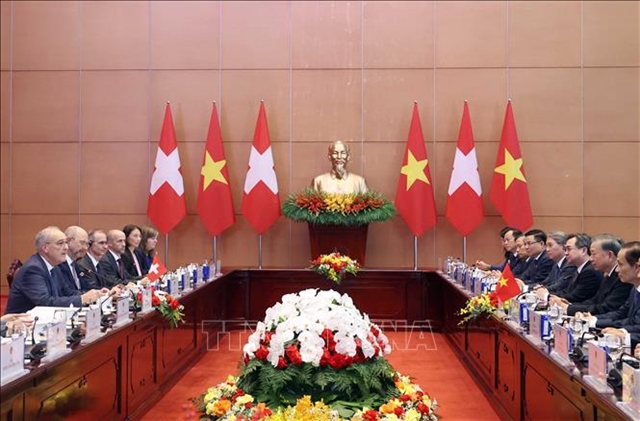
Việt Nam, Switzerland to turn education, sci-tech, innovation into cooperation focus
1.
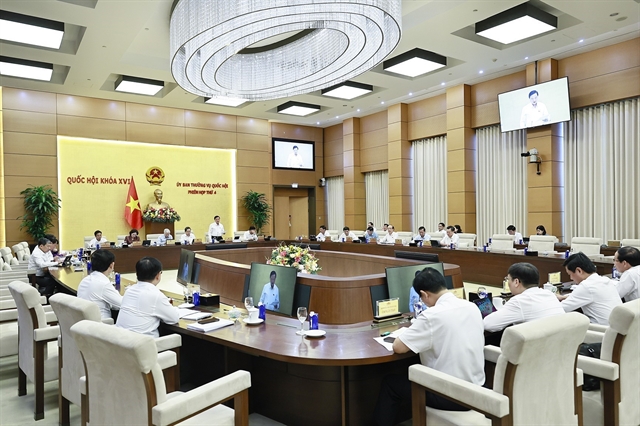 |
| A view of the fourth sitting of the National Assembly Standing Committee, which is reviewing the draft law on Urban Development, formerly known as the Law on Special-Class Cities. VNA/VNS Photo |
HCM CITY — Lawmakers on Tuesday proposed granting HCM City and Việt Nam's special-class cities greater autonomy in urban planning, development and resource mobilisation under the draft Law on Urban Development, aiming to create more room for new economic growth models.
The proposal was discussed on Tuesday during the fourth sitting of the National Assembly (NA) Standing Committee, which is reviewing the draft law, formerly known as the Law on Special-Class Cities.
According to Minister of Justice Hoàng Thanh Tùng, the draft law is intended to establish a stable and practical legal framework to promote the development of HCM City, special-class cities, other cities and special economic zones.
The draft comprises five chapters and 68 articles, focusing on two main groups of policies.
Under the proposal, HCM City and cities officially classified as special-class urban centres would be eligible to apply special development mechanisms and policies. Hà Nội would continue to be governed by the Capital Law, with the city People's Council deciding whether to apply relevant provisions of the new law.
The draft defines a special-class city as an internationally competitive urban centre with a global outlook, developed under a multi-polar, multi-centre model featuring smart infrastructure and modern governance. Such cities would also serve as national hubs for coordination, innovation and international integration.
A key feature of the draft is expanded authority for special-class city governments to decide on and carry out urban development policies. These cities would be empowered to develop international financial centres, free trade zones, integrated logistics hubs, marine economic sectors, energy infrastructure and industries, as well as education, healthcare and tourism, while attracting strategic investors and cultivating a highly skilled workforce.
The draft also grants People's Councils of special-class cities broader authority over the planning and use of urban space, including procedures for preparing, appraising and approving underground space plans, and determining the depth to which underground space may be utilised without paying additional land-use fees.
It further introduces a transit-oriented development model, allowing special-class cities to adopt policies for developing areas surrounding urban railway stations, adjust planning indicators and capture increases in land value to finance public transport infrastructure.
To strengthen resource mobilisation, local authorities would be allowed to introduce certain investment incentives and mechanisms for harnessing land resources and urban space in accordance with existing laws.
The draft also proposes allowing HCM City and other special-class cities to issue their own normative legal documents, accompanied by enhanced supervision, inspection and accountability mechanisms. It includes additional provisions on urban governance, the civil service, planning and construction, urban management, public order and safety, and socio-economic and cultural development.
Presenting the verification report, Chairman of the NA's Committee for Legal and Judicial Affairs Phan Chí Hiếu expressed broad support for allowing the NA to directly delegate powers to HCM City and special-class cities, while authorising the Government to determine the scope of application for other cities and special economic zones.
The committee recommended adding guiding principles to help the Government determine when cities that have not yet been officially recognised as special-class cities could apply the proposed mechanisms and policies.
It also called for clarification on the Government's coordinating role among ministries, sectors and local authorities in formulating, issuing and implementing special mechanisms to ensure a balanced distribution of benefits between localities covered by the new framework and those that are not.
The draft Law on Urban Development is expected to be submitted to the NA for discussion at its August session. — VNS
Politics & Law
 Politics & Law
 Politics & Law
 Politics & Law
 Politics & Law
 Politics & Law
 Politics & Law
 Politics & Law
 Politics & Law
 Politics & Law
 Politics & Law
 Politics & Law
 Politics & Law
 Politics & Law
 Politics & Law