 Politics & Law

Preserving heritage and harnessing cultural strength in a new era
1.
|
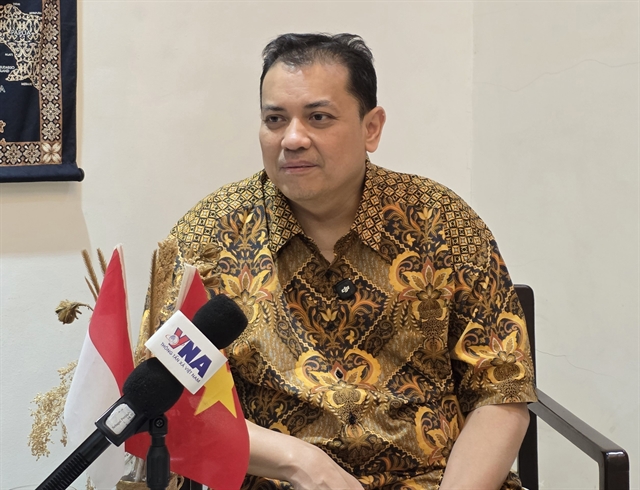
| Dr. Arisman, Executive Director of the Centre for Southeast Asian Studies (CSEAS) in Indonesia. — VNA/VNS Photo Minh Thái |
JAKARTA — After more than three decades as a member of ASEAN, Việt Nam has evolved from an active participant into a key architect of the bloc, playing an increasingly important role in promoting solidarity, cooperation and the building of the ASEAN Community, according to an Indonesian scholar.
Speaking to the Vietnam News Agency correspondent in Jakartar, Dr. Arisman, Executive Director of the Centre for Southeast Asian Studies (CSEAS) in Indonesia, said Việt Nam's contributions over the past 31 years have been evident across all three pillars of the ASEAN Community.
In the political-security pillar, Việt Nam has consistently supported ASEAN centrality, helping maintain peace and stability while contributing to conflict prevention across the region.
Economically, the country has emerged as one of Southeast Asia's most dynamic economies and an increasingly important link in regional supply chains.
Its active participation in the ASEAN Economic Community (AEC), the Regional Comprehensive Economic Partnership (RCEP) and ASEAN-led free trade agreements has strengthened regional economic integration and investment connectivity.
Citing the World Bank, Arisman noted that Việt Nam has become one of Southeast Asia's key trading hubs and ranks among the region's fastest-growing economies.
Under the socio-cultural pillar, Việt Nam has actively promoted cooperation in sustainable development, climate change response, disaster risk management, education, health care and people-to-people exchanges.
It has also taken the initiative in advancing new priorities, including green growth, digital transformation, innovation and inclusive development, helping shape ASEAN's long-term agenda.
Commenting on the outcomes of the 59th ASEAN Foreign Ministers' Meeting, recently held in Manila, the scholar said Việt Nam has once again demonstrated its role as a proactive and responsible member in reinforcing ASEAN solidarity, strengthening the bloc's strategic autonomy and advancing practical cooperation amid growing regional and global uncertainties.
Against the backdrop of intensifying major-power competition, Việt Nam has continued to stress the importance of upholding ASEAN centrality, enhancing internal cohesion and making full use of ASEAN-led mechanisms, including the East Asia Summit (EAS), the ASEAN Regional Forum (ARF) and ASEAN Plus frameworks, he said.
Việt Nam also reaffirmed its commitment to implementing the ASEAN Community Vision 2045 while advocating concrete action plans on regional connectivity, digital transformation, innovation, sustainable growth and institutional capacity-building.
On regional issues, particularly the East Sea, Việt Nam has maintained the consistent viewpoint on the peaceful settlement of disputes in accordance with international law, especially the 1982 United Nations Convention on the Law of the Sea (UNCLOS), the scholar said.
Such positions demonstrate that the country is not only an active participant in ASEAN processes but also a source of initiatives and practical solutions to strengthen the bloc's resilience and cohesion.
Looking ahead to the implementation of the ASEAN Community Vision 2045, Arisman said Việt Nam is well placed to make even greater contributions to the region's shared development goals.
He perceived that it could further advance regional economic integration by strengthening digital connectivity, facilitating cross-border trade, developing resilient supply chains and supporting the digital transformation of small- and medium-sized enterprises, thereby enhancing ASEAN's competitiveness in an evolving global economy.
Việt Nam also has valuable experience to share in renewable energy, the circular economy, sustainable agriculture and climate adaptation, which could help ASEAN achieve its sustainable development goals while reinforcing regional energy security.
As one of ASEAN's leading agricultural and aquaculture producers, Việt Nam could also contribute expertise in building climate-resilient food systems, promoting sustainable fisheries management and expanding cooperation in the blue economy.
In addition, the country is well positioned to support ASEAN's digital transformation through cooperation in digital governance, cybersecurity, artificial intelligence, digital skills development and regulatory harmonisation to facilitate cross-border digital trade.
It could also play a greater role in narrowing development gaps among ASEAN members by expanding technical cooperation, sharing development experience and strengthening subregional cooperation programmes, he added.
According to Arisman, Việt Nam's greatest strength lies in its ability to bridge diverse interests, promote meaningful cooperation and preserve ASEAN solidarity while adapting to emerging challenges.
He expressed confidence that these strengths will enable Việt Nam to continue playing an important role in advancing the ASEAN Community Vision 2045 and building a more resilient, innovative, sustainable and people-centred ASEAN. —VNA/VNS
Politics & Law
 Politics & Law
 Politics & Law
 Politics & Law
 Politics & Law
 Politics & Law
 Politics & Law
 Politics & Law
 Politics & Law
 Politics & Law
 Politics & Law
 Politics & Law
 Politics & Law
 Politics & Law
 Politics & Law