 Politics & Law
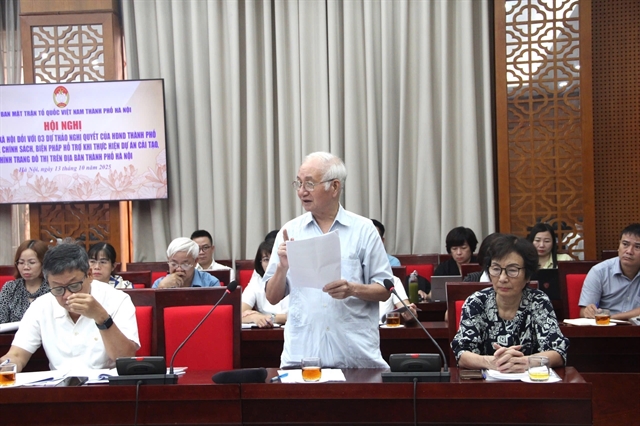
Planning strategy gives Hà Nội room to raise stature
1.
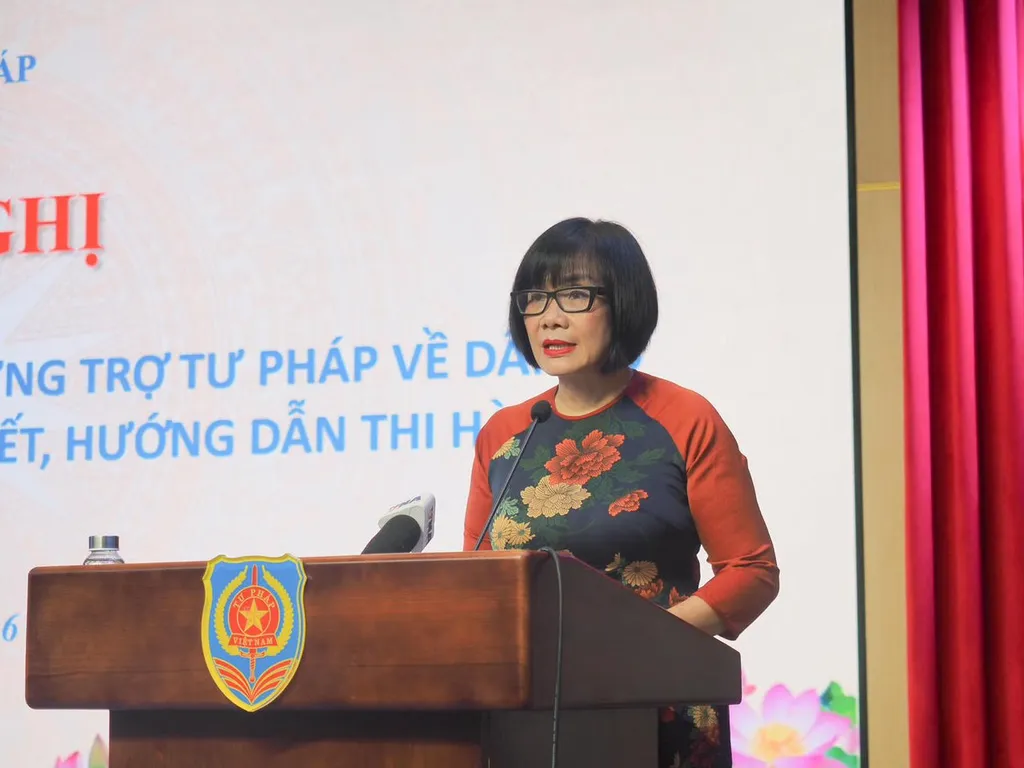 |
| Deputy Minister of Justice Dang Hoang Oanh speaks at a conference held on June 4 by the Ministry of Justice to disseminate the Law on Mutual Legal Assistance in Civil Matters and guiding documents__Photo: thanhtra.vn |
LAW No. 102/2025/QH15
On Mutual Legal Assistance in Civil Matters
Pursuant to the Constitution of the Socialist Republic of Vietnam, which has a number of articles amended and supplemented under Resolution No. 203/2025/QH15;
The National Assembly promulgates the Law on Mutual Legal Assistance in Civil Matters.
Chapter I
GENERAL PROVISIONS
Article 1. Scope of regulation
This Law prescribes the principles, competence, order and procedures for implementing mutual legal assistance in civil matters between Vietnam and foreign countries; and responsibilities of Vietnamese state agencies in mutual legal assistance in civil matters.
Article 2. Scope of application
This Law applies to Vietnamese agencies, organisations and individuals, as well as foreign agencies, organisations and individuals involved in mutual legal assistance in civil matters between Vietnam and foreign countries.
Article 3. Interpretation of terms
In this Law, the terms below are construed as follows:
1. Mutual legal assistance in civil matters means the cooperation and assistance between Vietnam and foreign countries, through competent agencies and persons of Vietnam and competent agencies and persons of foreign countries, to carry out one or more of the activities prescribed in Article 8 of this Law to resolve civil cases, bankruptcy cases, and civil judgement enforcement matters.
2. Requesting country means the country that sends a request for mutual legal assistance in civil matters for the requested State to consider and provide assistance.
3. Requested country means the country to which the request for mutual legal assistance in civil matters is made.
4. Request for mutual legal assistance in civil matters from Vietnam means a request made by a competent agency or person of Vietnam to a competent agency or person of a foreign country to provide mutual legal assistance in civil matters.
5. Request for mutual legal assistance in civil matters from a foreign country means a request made by a competent agency or person of a foreign country to a competent agency of Vietnam to provide mutual legal assistance in civil matters.
6. Documents referred to in Clause 1, Article 8 of this Law means documents related to civil cases, bankruptcy cases and civil judgment enforcement matters that need to be served in accordance with the laws of the requesting country.
7. Parties means agencies, organisations or individuals that need to be served with documents or possess evidence to be collected, witnesses and experts summoned, or agencies, organisations or individuals involved in other requests for mutual legal assistance in civil matters.
8. Diplomatic channel means a method of receiving and transferring requests for mutual legal assistance in civil matters through the Ministry of Foreign Affairs, the overseas representative missions of the Socialist Republic of Vietnam, or the Vietnam-based representative missions of foreign countries.
Article 4. Central authority of Vietnam in mutual legal assistance in civil matters
1. The Ministry of Justice serves as the central authority of the Socialist Republic of Vietnam in mutual legal assistance in civil matters.
2. The central authority of the Socialist Republic of Vietnam in mutual legal assistance in civil matters shall act as the focal point for exchanging information, receiving and transferring requests for, and monitoring and urging the implementation of, mutual legal assistance in civil matters; and for performing other duties and powers as prescribed by this Law and relevant treaties to which the Socialist Republic of Vietnam is a contracting party.
Article 5. Application of law
1. Mutual legal assistance in civil matters shall be provided in accordance with this Law; in case this Law does not provide this issue, the provisions of the civil procedure law, the bankruptcy law, the law on civil judgement enforcement, and other relevant provisions of Vietnam’s law shall apply.
2. The application of foreign law in mutual legal assistance in civil matters must comply with the provisions of treaties to which the Socialist Republic of Vietnam is a contracting party.
3. In case Vietnam and a foreign country are not both contracting parties to a treaty, or the treaty to which the Socialist Republic of Vietnam is a contracting party does not provide this issue, the application of foreign law shall be considered when the following conditions are fully met:
a/ A competent agency or person of the foreign country makes a written request for the application of law of that country;
b/ The application of foreign law is not contrary to the principle of mutual legal assistance in civil matters as prescribed in Article 6 of this Law, and the consequences of such application are not contrary to the fundamental principles of Vietnam’s law.
4. The receipt and processing of requests for mutual legal assistance in civil matters involving the application of foreign law must comply with Clause 2, Article 30 of this Law.
Article 6. Principles of mutual legal assistance in civil matters
1. Mutual legal assistance in civil matters shall be provided on the principles of respect for independence, sovereignty, unity, territorial integrity, non-interference in each other’s internal affairs, equality, and mutual benefit, ensuring the lawful rights and interests of related agencies, organisations and individuals, in accordance with the Constitution and laws of Vietnam, and treaties to which the Socialist Republic of Vietnam is a contracting party.
2. In case Vietnam and a foreign country are not both contracting parties to a treaty on mutual legal assistance in civil matters, mutual legal assistance in civil matters shall be automatically provided on a reciprocal basis, except cases in which there are grounds to believe that the foreign country will not cooperate in implementing Vietnam’s requests for mutual legal assistance in civil matters; in these cases, Vietnam may refuse to provide assistance.
Article 7. Language in dossiers of request for mutual legal assistance in civil matters
1. In case Vietnam and a foreign country are both contracting parties to a treaty on mutual legal assistance in civil matters, the language in the dossier of request for mutual legal assistance in civil matters shall be the language prescribed in that treaty.
2. In case Vietnam and a foreign country are not both contracting parties to a treaty on mutual legal assistance in civil matters, the dossier of request for mutual legal assistance in civil matters shall be accompanied by a translation into the language of the requested country or another language accepted by the requested country.
Article 8. Scope of mutual legal assistance in civil matters
The scope of mutual legal assistance in civil matters between Vietnam and foreign countries covers:
1. Service of documents;
2. Collection and provision of evidence;
3. Summoning of witnesses and experts;
4. Provision of civil status documents; extracts of the Court’s judgements and decisions on civil status;
5. Provision of legal information;
6. Other requests for mutual legal assistance in civil matters.
Article 9. Exemption from consular legalisation
Dossiers of request for and results of mutual legal assistance in civil matters from a foreign country are exempt from consular legalisation if they are signed and sealed by a competent agency or person of the foreign country, unless otherwise provided by a treaty to which the Socialist Republic of Vietnam is a contracting party.
Article 10. Summoning and protection of witnesses and experts
1. Competent civil procedure-conducting agencies of Vietnam and foreign countries may summon witnesses and experts in accordance with this Law and treaties to which the Socialist Republic of Vietnam is a contracting party.
2. A summons must clearly state the conditions for taking statements or conducting an expert assessment; a commitment to ensure the safety of life, health, accommodation, travel, and expenses for the summoned witness or expert in the requesting country; and a commitment not to examine for penal liability, temporarily detain, keep in custody, and arrest for the execution of a criminal sentence, or restrict personal freedom of, the witness or expert in the territory of the requesting country for the following reasons before he/she arrives in the requesting country:
a/ Providing statements or written expert conclusions regarding the case for which the witness or expert is summoned;
b/ Having committed a crime in the requesting country;
c/ Having a relationship with a person under investigation, prosecution or trial in a criminal case in the requesting country;
d/ Being involved in another civil or administrative case in the requesting country.
3. The agency requesting mutual legal assistance in civil matters shall coordinate with other competent agencies to facilitate entry and exit in accordance with the laws of its country for witnesses and experts.
4. The right of a witness or an expert not to be examined for penal liability, temporarily detained, kept in custody or arrested for the execution of a criminal sentence, or have his/her personal freedom restricted shall cease if that person does not leave Vietnam within 15 days from the date of receiving a written notice from a competent Vietnamese agency stating that his/her presence in Vietnam’s territory is not required. This period shall not include the time during which the witness or expert is unable to leave Vietnam for a force majeure reason.
Article 11. Costs of implementing requests for mutual legal assistance in civil matters
1. The cost of implementing a request for mutual legal assistance in civil matters is the amount paid for the implementation of mutual legal assistance in civil matters. Vietnam and foreign countries may agree on the cost of implementing a request for mutual legal assistance in civil matters when signing a treaty.
2. The cost of implementing a request for mutual legal assistance in civil matters must comply with the treaty to which the Socialist Republic of Vietnam is a contracting party.
3. In case Vietnam and the foreign country are not both contracting parties to a treaty, or the treaty to which the Socialist Republic of Vietnam is a contracting party does not provide such a cost, the cost of providing mutual legal assistance in civil matters must include charges and fees as prescribed by the law on charges and fees, and actual expenses. The cost of providing mutual legal assistance in civil matters shall be borne by the obligated party of the requesting country, except the costs of public postal services for serving foreign documents as prescribed in Clause 1, Article 12 of this Law.
4. The rates, exemption from, reduction, collection, payment, management and use of charges and fees must comply with the law on charges and fees.
5. The Government shall detail this Article.
Article 12. Funding for ensuring mutual legal assistance in civil matters
1. Funding for the state management of mutual legal assistance in civil matters, the costs of public postal services for serving foreign documents, and the costs of providing mutual legal assistance in civil matters in cases in which the obligated party is a state agency shall be covered by the state budget in accordance with the law on the state budget and other relevant laws.
2. The Government shall detail this Article.
Article 13. Electronic information system for mutual legal assistance in civil matters
1. The electronic information system for mutual legal assistance in civil matters shall be built, improved and operated to ensure the processing and storage of information on mutual legal assistance in civil matters and to ensure information security in accordance with law.
2. The Government shall guide the implementation of this Article.
Article 14. Implementation of mutual legal assistance in civil matters between Vietnam and countries sharing the border with Vietnam
1. The agencies competent to request mutual legal assistance in civil matters and the agencies competent to implement requests for mutual legal assistance in civil matters in provinces and cities sharing the border with a foreign country may directly provide mutual legal assistance in civil matters in cases provided in the treaty on mutual legal assistance in civil matters between the Socialist Republic of Vietnam and the foreign country.
2. The competent Vietnamese agencies referred to in Clause 1 of this Article are responsible for reporting to the Ministry of Justice on the provision of mutual legal assistance in civil matters for monitoring, coordination, supervision and management of activities of mutual legal assistance in civil matters.
Article 15. Responsibilities of state agencies in mutual legal assistance in civil matters
1. The Government shall perform the unified state management of mutual legal assistance in civil matters nationwide; and annually report to the National Assembly on the work of mutual legal assistance in civil matters.
2. The Ministry of Justice shall be responsible to the Government for performing the state management of mutual legal assistance in civil matters and assist the Government in preparing annual reports on the work of mutual legal assistance in civil matters for submission to the National Assembly.
3. The Supreme People’s Court, the Supreme People’s Procuracy, ministries, ministerial-level agencies, government-attached agencies and other relevant agencies shall, within the ambit of their respective tasks and powers, coordinate with the Ministry of Justice in performing the state management of mutual legal assistance in civil matters as prescribed by this Law.
4. People’s Procuracies shall supervise the compliance with the law in mutual legal assistance in civil matters as prescribed by this Law, the Law on the Organisation of People’s Procuracies and other relevant laws.
5. State agencies shall perform the task of mutual legal assistance in civil matters within the ambit of their tasks and powers as prescribed by this Law and other relevant laws.
(To be continued)
* Source: Official Gazette, Issue Nos 01-06/2026
Politics & Law
 Politics & Law
 Politics & Law
 Politics & Law
 Politics & Law
 Politics & Law
 Politics & Law
 Politics & Law
 Politics & Law
 Politics & Law
 Politics & Law
 Politics & Law
 Politics & Law
 Politics & Law
 Politics & Law