 Opinion
Việt Nam, Switzerland to turn education, sci-tech, innovation into cooperation focus
1.
|
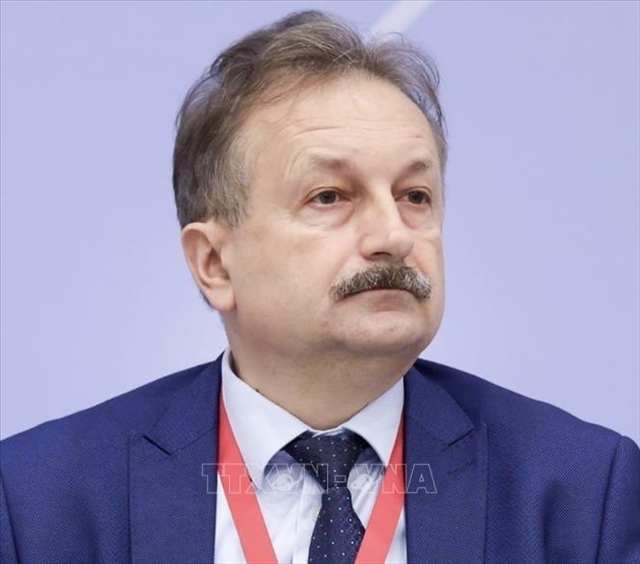
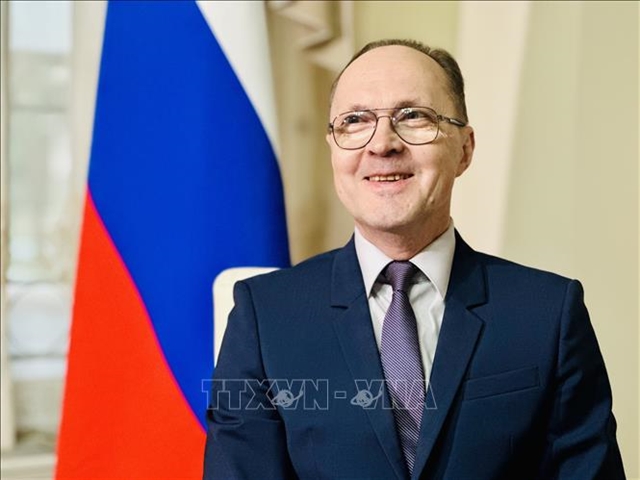
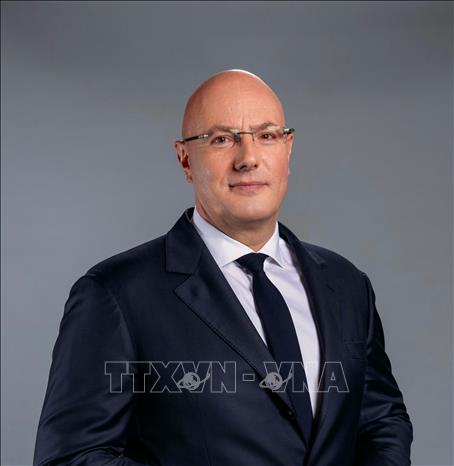
| Professor and Academician Gennady Karlov, Director of the All-Russian Research Institute of Agricultural Biotechnology (VNIISB). VNA/VNS Photo |
MOSCOW — Việt Nam and Russia have ample room to leverage their complementary strengths and deepen cooperation in high-tech agriculture, Russian and Vietnamese researchers have said.
As global agriculture shifts towards data-driven production, automation and artificial intelligence (AI), Russia's advances in digital farming are opening up new opportunities for cooperation with Việt Nam.
Professor and Academician Gennady Karlov, Director of the All-Russian Research Institute of Agricultural Biotechnology (VNIISB), said high-tech agriculture has emerged as a strategic area of Việt Nam–Russia cooperation alongside automation, AI and biotechnology.
Russia's high-tech agricultural development is built on advances in biological sciences, he said, noting that the VNIISB is applying digital phenotyping and artificial neural networks to accelerate plant breeding and genetics research.
The two countries have highly complementary strengths. Việt Nam has extensive experience in tropical intensive farming, rice cultivation and aquaculture, while Russia boasts outstanding advantages in large-scale grain and oilseed production and crop breeding under different climatic conditions.
The two sides are promoting joint research on cultivating Indica and Japonica rice varieties in Russia, and exchanging genetic resources for breeding and genomics research. Other promising areas include remote sensing, AI-based forecasting, food safety, quality control and climate change adaptation.
Karlov also highlighted a proposal to establish a Việt Nam–Russia innovation corridor for knowledge-intensive projects and joint laboratories. The VNIISB and prestigious institutions like the Russian State Agrarian University – Moscow Timiryazev Agricultural Academy are also working closely with Vietnamese partners in training and exchanges for students and young scientists.
.jpg)
|
| Phạm Thi Thu Ba, a master's student at the Russian State Agrarian University. VNA/VNS Photo |
Phạm Thi Thu Ba, a master's student at the Russian State Agrarian University, said Russia is accelerating the digitalisation and automation of its agricultural sector under its strategy for the development of the agro-industrial and fisheries complexes through 2030. It plans to launch a unified digital platform by the end of 2026, linking data on land, crops, livestock, weather and logistics. By 2030, at least 80 per cent of agricultural enterprises are expected to use domestic software for key production processes.
Russia has also expanded precision farming, with around 24,000 AI-integrated autonomous agricultural machines in operation as of 2026. Businesses are increasingly using soil mapping, drones, robotic milking systems and domestic software to improve productivity and reduce dependence on foreign technologies.
Despite strong potential, challenges remain, including the gap between cooperation plans and concrete projects, differences in natural conditions and technical standards, as well as logistics, payment and quarantine barriers, Ba pointed out.
Bilateral agricultural trade has doubled over the past five years to around US$1 billion annually, but investment in high technology remains limited, she added, perceiving that a shift from one-way transfer to joint research, co-development and technology localisation will be key to unlocking the full potential of Việt Nam-Russia cooperation in high-tech agriculture.
By combining Russia's scientific and technological capabilities with Việt Nam's advanced intensive farming expertise, the two countries can forge a mutually beneficial partnership and advance sustainable agriculture in both nations, she added. — VNA/VNS
Opinion
 Opinion
 Opinion
.jpeg) Opinion
Opinion
 Opinion
 Opinion
 Opinion
 Opinion
 Opinion
 Opinion
 Opinion
 Opinion
 Opinion
 Opinion
 Opinion