 Opinion
Việt Nam, Switzerland to turn education, sci-tech, innovation into cooperation focus
1.
|
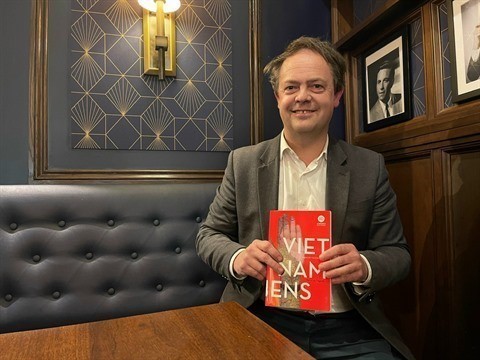
| Dr. Benoît de Tréglodé, Director (Africa - Asia–Middle East) at the Institute of Strategic Research (IRSEM) under the French Ministry of Armed Forces. — VNA/VNS Photo |
PARIS — Amid profound shifts in the balance of power in Asia, Việt Nam is seeking a balance to strengthen its strategic autonomy while diversifying relations with major partners. In this context, the comprehensive strategic partnership with France is opening up new avenues for forward-looking cooperation, according to Dr. Benoît de Tréglodé.
In an interview with Vietnam News Agency correspondents in Paris on Việt Nam's role in Southeast Asia and the Indo-Pacific, as well as prospects for bilateral relations on the occasion of General Secretary of the Communist Party of Việt Nam Central Committee and President Tô Lâm's upcoming official visit to France, the expert, who is Director (Africa - Asia–Middle East) at the Institute of Strategic Research (IRSEM) under the French Ministry of Armed Forces, said Việt Nam's strategic choices are not confined to the framework of great-power competition.
He noted that Việt Nam's strategy is based on a careful assessment of geographical constraints and a strong desire for independence. Over the years, Việt Nam has strengthened ties with the world’s leading economic powers. The elevation of Việt Nam–France relations to a comprehensive strategic partnership should be viewed in this broader context, reflecting Việt Nam's determination to diversify its strategic relations.
With a pragmatic approach, Việt Nam has significantly reoriented towards Asia over the past three decades, focusing on regional priorities and major economies that are driving Asia’s development, including China, the Republic of Korea, Singapore, and Japan.
ASEAN, home to around 680 million people, and now the world’s fifth-largest economy, has been at the heart of Việt Nam's economic reintegration with Asia. Alongside this process, Việt Nam has also built an extensive network of political and strategic partnerships internationally.
According to the French expert, as Việt Nam continues to expand its network of partners, France faces growing competition in its economic relations with the country. The increasing number of partners creates more opportunities for various sides, but also underscores the need for both countries to further consolidate and deepen economic ties, thereby creating a stronger foundation for political and strategic cooperation.
Nevertheless, the expert considered France an important partner for Việt Nam, given its status as a permanent member of the United Nations Security Council and its pursuit of “strategic autonomy”, which provides additional room for Việt Nam to balance relations with major powers. Conversely, Việt Nam holds a special position in France’s Asian policy due to historical ties as well as Paris’s economic and geopolitical interests in the Indo-Pacific.
Regarding defence and security cooperation, he noted that although this is one of the pillars of the comprehensive strategic partnership, bilateral defence cooperation remains relatively modest, leaving considerable room for expansion.
France was the first Western country to establish defence ties with Việt Nam in 1991, when it resumed posting a defence attaché in the country. Since then, cooperation has focused mainly on military medicine, French-language training for Vietnamese officers, training for Vietnamese peacekeeping forces and defence diplomacy exchanges, including French naval port calls in Việt Nam and strategic dialogues between the two defence ministries.
According to the expert, bilateral defence ties remain largely symbolic and are still far from operational cooperation. Although the comprehensive strategic partnership aims to expand collaboration into defence industry, progress has yet to match the potential.
He stressed that Việt Nam's efforts in recent years to diversify its sources of arms and defence equipment could create new opportunities for the two countries to pursue more substantive cooperation in areas of mutual importance.
Looking ahead, he said the two sides should shift greater attention towards Việt Nam's future strategic challenges in Asia. He suggested that the strategic relationship should focus more on consultations on major global issues, including multilateralism and the environment, and concretely strengthen economic and industrial exchanges.
Việt Nam and France should also build a forward-looking, mutually beneficial partnership in which stronger economic and industrial ties serve as an indispensable foundation, he added. — VNA/VNS
Opinion
 Opinion
 Opinion
.jpeg) Opinion
Opinion
 Opinion
 Opinion
 Opinion
 Opinion
 Opinion
 Opinion
 Opinion
 Opinion
 Opinion
 Opinion
 Opinion