 Opinion
HCM City attracts US$5.7 billion into export processing and industrial zones
1.
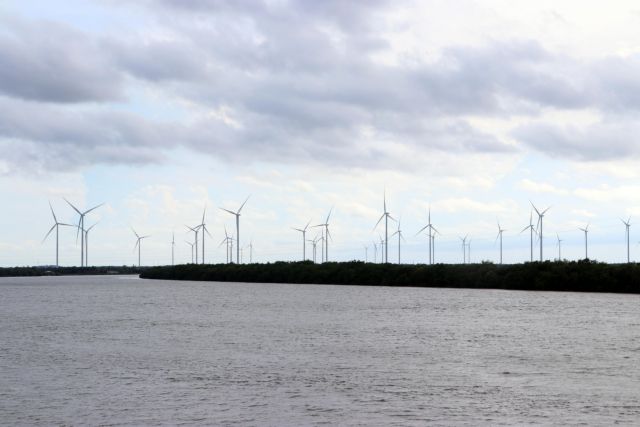 |
| Mỹ Thanh riverside wind farm in Khánh Hòa Ward, Cần Thơ City. — VNA/VNS Photo Trung Kiên |
Talking with Vietnamplus online newspaper, Associate Professor Đinh Văn Châu, rector of Electric Power University, said Việt Nam’s offshore wind potential can do more than supply renewable power. It can underpin a modern marine industrial ecosystem, boost domestic technological autonomy and help make Việt Nam a maritime power.
Việt Nam is said to have very large offshore wind potential. How should this 'energy treasure' be viewed so it becomes a driver of new industries and value chains, not just a power source?
The greatest strategic advantage of offshore wind is that it creates three layers of value at once: energy security, marine economic development and national industrial and technological capacity. If we focus only on installed capacity or electricity cost, we miss the sector’s core value.
Offshore wind diversifies supply and reduces dependence on imported fuels at a time when electricity demand is rising for industrialisation, data centres, electrified transport and green manufacturing. It is high‑density energy with good capacity factors, minimal land competition and the ability to be distributed across many sea areas. With rational planning, seasonal differences in wind across regions can complement each other and improve the system’s ability to guarantee output.
But offshore wind does not automatically ensure energy security. A large cluster tied into a weak grid or reliant on a single cable still risks widescale outages.
Only when paired with appropriate transmission infrastructure, redundancy, cable repair capacity, storage systems and restoration plans will offshore wind fully deliver.
It also helps the energy transition, supports net‑zero goals and can provide green power for export sectors facing tougher carbon rules. In future it could power green hydrogen, ammonia and synthetic fuels, green ports and coastal industrial zones, but we should not delay grid investment in the hope these markets will solve the issue.
Offshore wind is more than turbines. It can create a whole marine industrial ecosystem, from surveys and design to ports, vessels, substations, cable systems, O&M (Operation & Maintenance), finance, data services and training. Each link can become a high value‑added industry.
We must treat offshore wind as a national industrial‑technology programme, not isolated power projects. Pioneer projects should deliver power reliably while building reusable capabilities, standard designs, trained teams, test facilities and domestic suppliers, so Vietnamese firms can join regional supply chains.
This approach aligns with Party resolutions on the blue economy, energy security and technological breakthroughs. Properly organised, offshore wind will do more than provide clean energy: it will boost industrial development and energy autonomy.
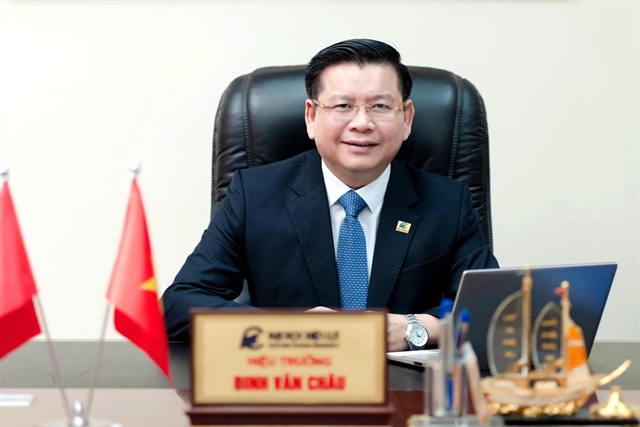 |
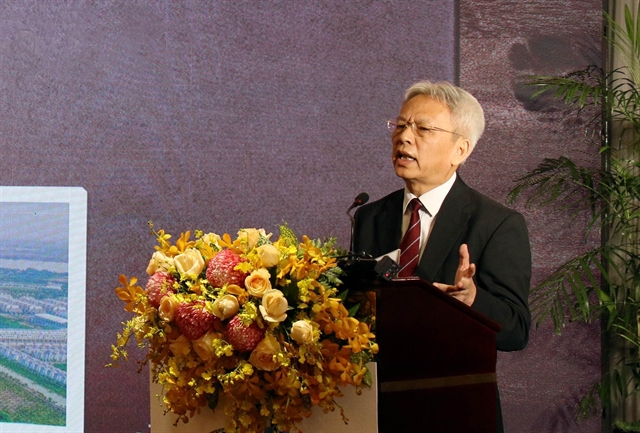
| Associate Professor Đinh Văn Châu, rector of Electric Power University. — Photo courtesy of the university |
Many believe Việt Nam’s offshore wind potential is huge but remains underdeveloped. What are the core bottlenecks that should be prioritised to build investor confidence and develop a transparent, stable market?
First, understand that the often‑quoted 600GW is technical potential, not capacity ready for immediate development.
Bringing a project online requires many steps, including marine spatial planning, resource and geotechnical surveys, environmental assessment, investor selection, power purchase agreements, financing, supply‑chain preparation, construction and grid connection. If any link is missing, the project can be delayed.
Current bottlenecks include unsynchronised institutional frameworks and procedures. Investors need a clear, end‑to‑end roadmap, from survey rights and data use, sea area allocation and environmental permits to pricing, PPAs and grid connection, with transparent timelines and accountable agencies.
Resource planning is not tightly integrated with transmission planning. Cable corridors, landing points, substation land and grid investment schedules must be defined to attract long‑term capital. Revenue structures and risk allocation are also inadequate. Offshore wind requires large up‑front investments, has long lead times, and faces currency and interest‑rate risks. Investors and lenders need contractual frameworks that specify responsibilities for delayed grid upgrades, curtailment, policy changes and force majeure.
The domestic supply chain and system‑integration capacity remain limited. Việt Nam needs to build simulation, testing and integration capabilities. Data and marine‑space management should be organised as shared infrastructure: geological, oceanographic, fisheries and environmental data must be on unified platforms with transparent sharing rules.
To build long‑term confidence, priority actions include designating development zones, cable corridors and landing points; publishing investor selection roadmaps; finalising pricing and PPA mechanisms; aligning resource and grid planning; issuing technical standards for offshore wind; and setting up a functional one‑stop office with clear, continuous responsibility for project implementation.
Should Việt Nam shift from each project connecting individually to coordinated planning by clusters, shared collection hubs and common transmission corridors and what principles should be set early to avoid fragmented investment and wasted infrastructure?
Infrastructure should lead, but 'lead' means planning first. Offshore wind infrastructure must start with marine spatial plans, surveys, offshore grid architecture, cable corridors, landing points, connection hubs and onshore transmission plans. These should be completed before projects finalise designs and procurement.
Physical large‑scale investment should match project readiness and real demand to avoid premature spending. At the start, it may be fine for each project to build its own cable and connection plan, but as deployment reaches tens of gigawatts this creates more landing points, overlapping corridors, suboptimal grid operation and higher costs.
Việt Nam should transition to coordinated planning of offshore wind clusters with shared collection centres, common cable corridors and landing points linked to the onshore 500kV transmission backbone. In the early stages, point-to-point transmission links may be used, but they should be designed for easy expansion so they can gradually evolve into a modern transmission network as the market grows.
Planning must have a 30–50‑year vision and guarantee expandability. A single empowered authority should oversee offshore grid architecture to ensure coordination across power planning, marine spatial planning, local governments and other sectors.
Resource, grid, port, logistics and load‑centre planning must be developed on a common scenario and assessed from a whole‑system perspective. System security standards, device interoperability, responsibility allocation and cost‑sharing must be set from the start.
.jpg) |
| A wind power project in Cà Mau Province. — VNA/VNS Photo Chanh Đa |
From international experience and Việt Nam’s realities, what breakthrough package of measures is needed for offshore wind to become a pillar of the country’s energy and marine economy strategy?
International experience shows that successful countries do not pursue isolated projects. They establish an integrated deployment ecosystem, including marine spatial planning, transmission infrastructure, policy frameworks, supply chains, technology, workforce development and unified governance. Việt Nam should adopt the same approach.
We must finalise marine spatial planning aligned with an offshore grid architecture. That requires clearly defining priority development zones, cable corridors, landing points, collection hubs and transmission connection nodes.
Create robust investor‑selection processes and power‑purchase agreements that will unlock capital. These mechanisms must ensure transparent developer selection, equitable risk allocation and confidence for long‑term financiers.
The next priority is to mobilise private capital at scale, using green finance, public‑private partnerships and international funding, while the state focuses its investment on strategic infrastructure, high‑quality data, technical standards and areas beyond what private actors can immediately deliver.
Over the long term, Việt Nam needs a national programme to develop domestic technology and supply chains. We should prioritise the segments where Việt Nam can realistically compete, such as offshore structures, substations and export cables, system integration, data and digital technologies, and engineering services. Data and human resources should be treated as strategic infrastructure, with systematic investment in training engineers and specialists, and in testing and certification facilities for the offshore wind sector.
If one opening move is needed, select one or two pilot offshore wind clusters within 24 months and complete all conditions for investment decisions. A successful pioneer project will deliver experience, standards, data and governance models to scale up.
Việt Nam should shift from ‘managing potential’ to ‘managing a portfolio of implementable projects'. Success will be measured by projects with full infrastructure, financing, contracts and supply chains ready to operate on schedule. Then offshore wind can become a pillar of energy security, the marine economy and national development. — VNS
Opinion
 Opinion
 Opinion
 Opinion
 Opinion
 Opinion
 Opinion
 Opinion
 Opinion
 Opinion
 Opinion
 Opinion
 Opinion
 Opinion
 Opinion