 Life & Style
Việt Nam, Denmark issue joint statement on establishment of Comprehensive Strategic Partnership
1.
|
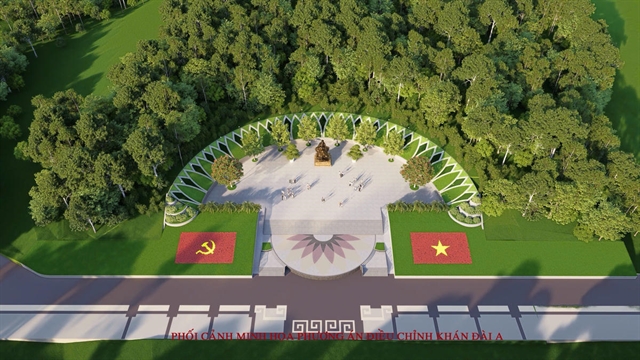
| An aerial view of the “Bác Hồ Với Ngày Hội Non Sông” (Uncle Hồ and the National Celebration) monument at the Hùng Kings Historical Site in Phú Thọ. — Photo courtesy of the Hùng Kings Historical Site |
PHÚ THỌ — A monument commemorating President Hồ Chí Minh’s historic visit to Hùng Kings Temple will be inaugurated on September 19, marking the 72nd anniversary of his visit and recalling his profound message about the responsibility to build and safeguard the nation.
A sacred symbol in the Ancestral Land
Named Bác Hồ Với Ngày Hội Non Sông (Uncle Hồ and the National Celebration), the monument is being built on Phân Bùng Hill, opposite the stone mural Ngày Hội NonSông (National Celebration), near the central axis of the festival grounds and several hundred metres from the main entrance to Hùng Kings Temple.
The site lies within the buffer zone of the Hùng Kings Historical Site and follows the approved master plan and the Law on Cultural Heritage, according to Phạm Tiến Đạt, director of the site.
The 7.5m-high bronze statue depicts President Hồ Chí Minh seated on a natural stone pedestal, creating a solid yet harmonious presence against the open landscape surrounding Nghĩa Lĩnh Mountain.
The monument is intended not only as a tribute to the beloved leader but also as a reminder of his teachings on nation-building and national defence.
According to the Phú Thọ Party Committee’s Commission for Communications and Mass Mobilisation, the monument helps highlight the enduring significance of President Hồ Chí Minh’s teaching that nation-building must go hand in hand with national defence. It is also expected to help preserve and promote the cultural and spiritual values associated with Hùng Kings Temple, while fostering a strong sense of national unity.
Nguyễn Đắc Thủy, director of the provincial Department of Foreign Affairs, said the monument had significant architectural value while symbolising patriotism, solidarity and the Vietnamese people’s aspiration for development.
A message across generations
The establishment of a Hồ Chí Minh cultural space in the Ancestral Land carries political, historical, cultural and educational significance.
Historian Nguyễn Tiến Khôi, former director of the Hùng Kings Historical Site, said Hồ Chí Minh visited the former Phú Thọ Province nine times and showed particular interest in the sacred place dedicated to the nation’s ancestors. His visits to Hùng Kings Temple, especially in 1954 and 1962, reflected his appreciation of the historical significance of the Hùng Kings era and his concern for preserving the site for future generations.
In 1946, shortly after the establishment of the Democratic Republic of Việt Nam, President Hồ Chí Minh sent Huỳnh Thúc Kháng, then Minister of the Interior, and a Government delegation to Hùng Kings Temple to burn incense and offer symbolic gifts representing national independence and the determination to defend the country.
His most memorable visit came on the afternoon of September 18, 1954, when he travelled from the Việt Bắc resistance base to the temple. He deliberately chose the sacred site to meet soldiers of the Tiên Phong 308th Division before they returned to take over Hà Nội.
“The Hùng Kings built the country; we must work together to defend it,” Hồ Chí Minh told the soldiers.
The historic message, recorded by poet Đặng Văn Đăng, better known as Bút Tre, who was present at the meeting, has become one of the most enduring expressions of Việt Nam’s tradition of nation-building and national defence.
The words carried a responsibility extending beyond that particular historical moment – from one generation to the next – to preserve, protect and develop the country while remaining worthy of the legacy left by its ancestors.
They have also helped elevate the worship of the Hùng Kings from a traditional cultural practice into a powerful symbol of national solidarity and the responsibility to safeguard the Fatherland.
The new monument thus serves as more than a reminder of a historic meeting. It creates a physical and cultural link between Việt Nam’s ancient tradition of nation-building and its present-day efforts to preserve heritage and build a stronger future.
This spirit is consistent with the Politburo’s Resolution 80-NQ/TW on Vietnamese cultural development, which places culture and people at the heart of sustainable development and emphasises cultural values as an important internal resource for national progress.
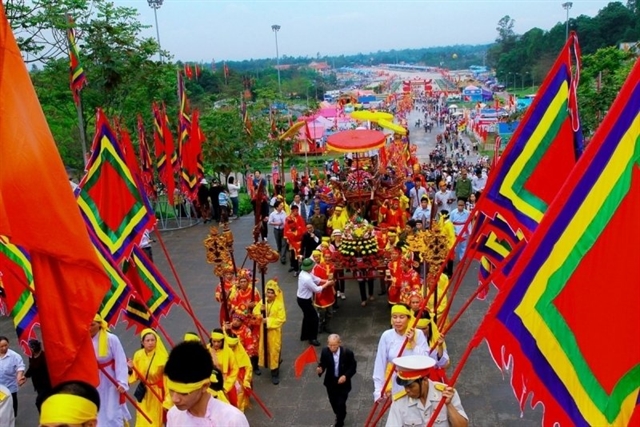
At Hùng Kings Temple, where generations of Vietnamese have gathered to honour their ancestors, the monument adds a new chapter to a continuing cultural narrative – connecting remembrance, national unity and the aspiration to build and protect the country. — VNS
Life & Style
 Life & Style
 Life & Style
 Life & Style
 Life & Style
 Life & Style
 Life & Style
 Life & Style
 Life & Style
 Life & Style
 Life & Style
 Life & Style
 Life & Style
 Life & Style
 Life & Style