 Economy


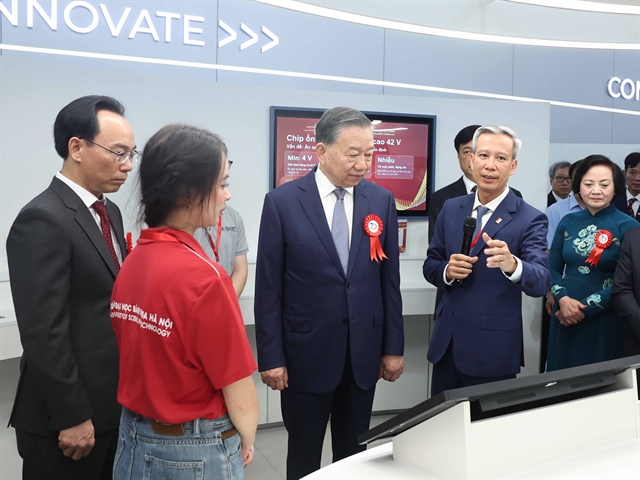
Top leader asks Hà Nội University of Science and Technology to become leading research university
1.
|
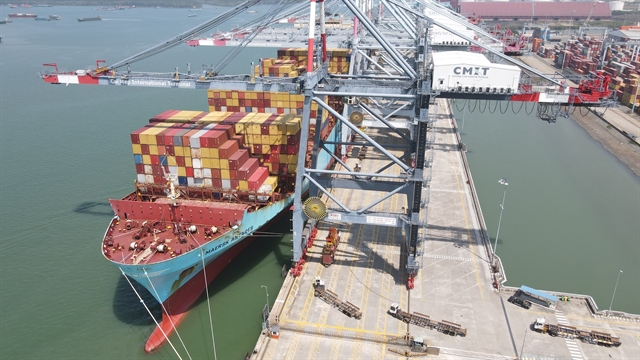
| The vessel of the Gemini Cooperation, a partnership between Denmark's A.P. Moller – Maersk and Germany's Hapag-Lloyd, at Cái Mép International Port. The BCI reflects continued investor confidence in Việt Nam. — VNA/VNS Photo Huỳnh Sơn |
HÀ NỘI — Business confidence among European companies in Việt Nam remained at a historically high level in the third quarter of 2026, despite global economic uncertainty, with the Business Confidence Index (BCI) reaching 78.3 points, the European Chamber of Commerce in Việt Nam (EuroCham) said on October 15.
The index eased 1.4 points from 79.7 in the previous quarter but remained strong, reflecting continued investor confidence alongside persistent challenges in the business environment.
About 64 per cent of surveyed businesses rated their current performance as good or very good, while 28 per cent remained neutral or cautious as international demand slowed and companies awaited clearer policies, faster administrative procedures and more predictable outcomes.
EuroCham Chairman Bruno Jaspaert said Việt Nam was maintaining strong economic momentum, with gross domestic product growing 9.95 per cent year-on-year in the third quarter and 9.01 per cent in the first nine months of 2026.
“The country is moving closer to its ambition of double-digit growth at a time of considerable global uncertainty,” he said.
“The important task now is to make growth more tangible across the economy by improving predictability, strengthening resilience and consolidating reforms, enabling businesses to devote more of their energy to creating value.”
Sector performance varied.
Agriculture and the food value chain recorded the strongest improvement, with its confidence score rising 11.7 points to 83.9 despite pressure from input costs and competition from regional imports. Trade, logistics and consumer goods also maintained strong performance, reflecting Việt Nam’s role in regional production and cross-border trade.
By contrast, tourism and hospitality fell 22.5 points to 67.9 following a strong previous quarter, highlighting the sector’s exposure to changing consumer spending, operating costs and extreme weather.
Businesses focused on Việt Nam’s domestic market reported a confidence score of 80.4, compared with 73.2 among those focused on the European Union, 70.7 for the United States and 73.9 for ASEAN.
|
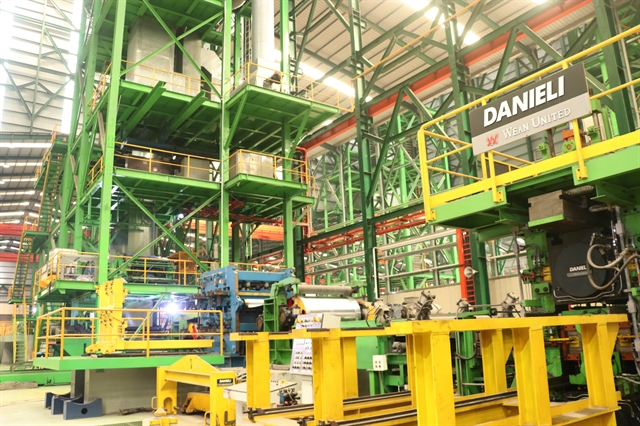
| TPV Steel in Tây Ninh Province. A transparent legal framework and consistent guidance were essential to improving the business environment. — VNA/VNS Photo Bùi Giang |
Major concerns
Despite the strong headline reading, the Q3 BCI report, conducted by DXL Research and Consulting, highlighted the pressure of administrative and regulatory hurdles.
Some 93 per cent of respondents said regulatory and administrative issues, as well as tax and financial procedures, affected their businesses.
On average, companies reported facing eight challenges to growth.
Administrative procedures and paperwork were the most frequently cited as obstacles, reported by 60 per cent of respondents, followed by unclear or inconsistently applied regulations at 53 per cent, tax administration issues at 52 per cent and talent shortages at 49 per cent.
Jaspaert said a transparent legal framework and consistent guidance were essential to improving the business environment.
“What makes the difference is knowing what is required, receiving consistent guidance, and having a reasonable sense of how long a process will take,” he added.
Another plus point from the survey was that nine out of 10 respondents said they would recommend Việt Nam as an investment destination. Some 63 per cent planned to operate in the country for more than five years, while 23 per cent had a long-term outlook extending beyond 20 years.
Businesses cited skilled workers, competitive costs and political and macro-economic stability among Việt Nam’s main advantages, alongside its domestic market, extensive network of free trade agreements and strategic position amid shifting global supply chains.
As companies reassess supply chains in response to global tensions and changing trade relationships, Việt Nam is increasingly seen not only as a competitive manufacturing base but also as a strategic hub connecting regional growth with global markets, the report said.
Registered foreign direct investment reached US$50.36 billion in the first nine months of 2026, while disbursed investment totalled $21.07 billion, the highest level in five years, further underscoring investor interest.
EuroCham said Việt Nam could strengthen its long-term appeal by speeding up administrative decisions, aligning regulations with international standards and expanding digital public services.
Faster administrative decisions were a priority for 37 per cent of respondents, while 35 per cent called for better alignment with international standards and an equal proportion sought faster, fully digitalised government services. — VNS
Economy
 Economy
 Economy
 Economy
 Economy
 Economy
 Economy
 Economy
 Economy
 Economy
 Economy
 Economy
 Economy
 Economy
 Economy




