 Economy


Việt Nam-Cambodia trade expo promotes bilateral economic cooperation
1.
|
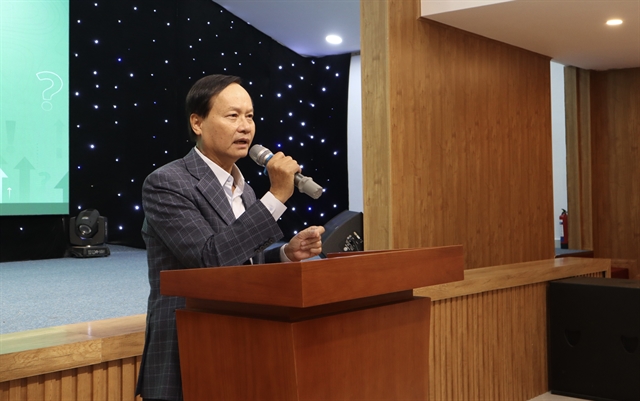
| Phùng Quốc Mẫn, chairman of Handicraft and Wood Processing Association of Ho Chi Minh City, speaks at a workshop in HCM City on Wednesday. — VNA/VNS Photos |
HÀ NỘI — Vietnamese wood businesses are facing cash-flow pressures due to difficulties obtaining value-added tax (VAT) refunds, industry representatives said at a workshop in HCM City on Wednesday.
Businesses are also reeling from the inconsistent implementation of tax policies. Industry representatives warn that the problems are disrupting the import and production of raw materials.
Phùng Quốc Mẫn, chairman of Handicraft and Wood Processing Association of HCM City (HAWA), said the wood and furniture industry wants to expand markets, improve competitiveness and achieve double-digit growth, but businesses need stable raw-material supplies, adequate working capital and clear policy guidance to meet those goals.
Obstacles connected to proving the origin of imported plantation timber, timber classification and tax treatment are affecting imports, sales and refund applications, Mẫn said. The burden is particularly heavy for small- and medium-sized enterprises, which face higher costs when capital is tied up, he added.
Nguyễn Liêm, general director of Lam Viet Joint Stock Company, said tax policies are being applied inconsistently across agencies and localities, making it difficult for businesses to calculate import costs and plan operations.
He cited cases in which a company importing timber through Quy Nhơn was not required to pay VAT, while another firm following what it considered similar procedures at Cat Lai port did have to pay the tax.
In other cases, businesses had paid VAT at a rate of 8 per cent on imported goods but were subsequently told by tax authorities that the goods were not subject to the tax when they applied for refunds, Liêm said. Companies remained unclear about which agency should handle the repayment and what procedures were applicable.
The delays are adding to working-capital pressures because his company needs to pay for raw materials, maintain production and finance new imports while awaiting a resolution, he said.
Documentation requirements for proving the origin of plantation timber are also delaying customs clearance for some shipments.
For timber imported from Costa Rica and Panama, among other countries, businesses have difficulty identifying the competent authorities responsible for issuing certificates and completing consular legalisation, Liêm said. Some shipments require additional documents and repeated explanations despite companies providing forest certification, certificates of origin and related paperwork.
Long clearance times increased container and storage costs. Some companies had amended customs declarations and paid taxes to release shipments, incurring additional penalties, he said.
The Vietnam Wood and Forest Products Association raised Lam Viet's case in a petition to the Ministry of Finance. According to the petition, on August 15, 2026, the company opened three import declarations under a tax-exempt category, but the shipments were not cleared because customs authorities did not accept the documents submitted to prove the timber's plantation origin. The company then had to amend the declarations, pay taxes and incur penalties to release the goods, the petition said.
Liêm called on authorities to clearly define the documentation required to establish the origin of imported timber, specify the agencies authorised to certify it and set out verification procedures.
|
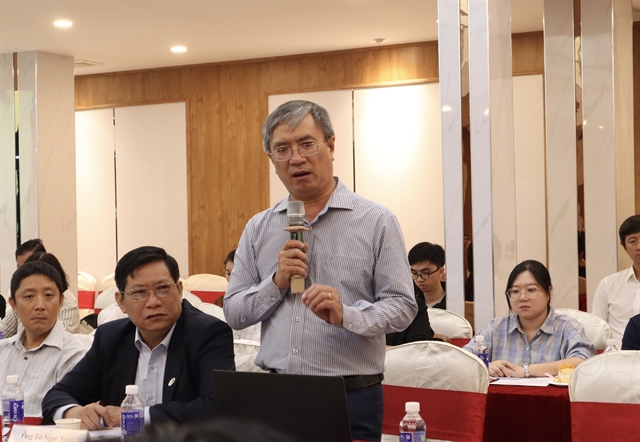
| Businesses raise concerns over documentation required to prove the origin of imported timber, the classification of semi-processed wood and the application of VAT rules. |
Five key concerns
Tô Ngọc Ngời, vice chairman of HAWA, said member feedback have identified five main areas of concern: documentation proving the origin of imported plantation timber; classification of commonly primary-processed timber; treatment of VAT already paid at point of import; input invoices and tax refund documentation; and tax rules for wood by-products, wood pellets and raw materials used for multiple purposes.
Discrepancies in wood purchase invoices have also created uncertainty, with some listing an 8 per cent VAT rate while others classifying the goods as exempt from tax declaration and payment. Businesses need specific guidance to distinguish between non-taxable goods and goods exempt from declaration and payment, he said.
He added that businesses also need clarification on the tax treatment of wood by-products used as raw materials versus those sold as processed products, particularly when they undergo further processing such as grinding, drying, bagging or pelletising, he said.
HAWA called on the relevant authorities to finalise regulations governing the verification of the origin of imported plantation timber, as well as clarify the definition of commonly primary-processed timber, to ensure consistent application of tax and customs policies. — VNS
Economy
 Economy
 Economy
 Economy
 Economy
 Economy
 Economy
 Economy
 Economy
 Economy
 Economy
 Economy
 Economy
 Economy
 Economy