 Economy


Vietnamese creators vie for honours at TikTok’s first Southeast Asia Awards
1.
|
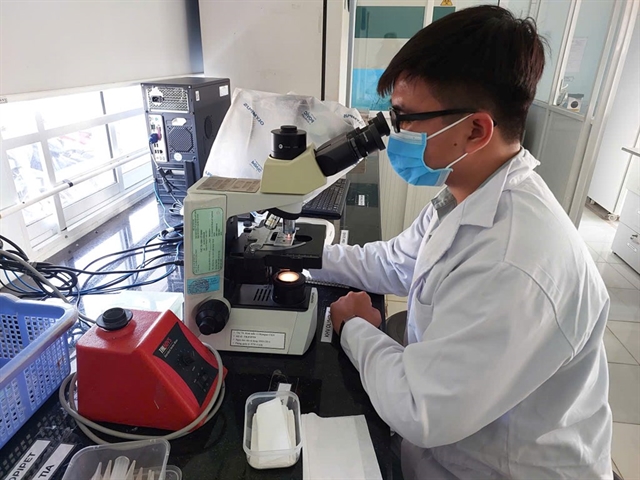
| The projects also aims to establish 30 strong research groups meeting regional standards. — VNA/VNS Photo |
HÀ NỘI — The Government has approved a project on restructuring national science, technology and innovation programmes over the next decade, targeting the development of at least 20 enterprises capable of mastering strategic technologies and products, with at least five of these having products integrated into global value chains.
Under Decision No. 1951/QĐ-TTg signed by Deputy Prime Minister Hồ Quốc Dũng on October 8, the projects also targets to produce at least 20 key strategic technological products in the 2026-35 period.
The projects also aims to establish 30 strong research groups meeting regional standards and to interconnect scientific data with the National Innovation Centre, other innovation centres and relevant innovation ecosystems; and at least 250 innovative startups based on technology testing and refinement, product development, and the commercialisation of research results and intellectual property rights.
The project designs to support the testing, application and scaling of at least 150 innovative startup products, services and solutions; as well as supporting at least 150 innovative startups in refining processes and developing prototypes for production.
Programmes under the project is organised into six groups, including programmes for developing national capacity in science, technology, and innovation; basic research programmes; national key programmes; national innovation programmes; special national programmes; and national digital transformation programmes.
The objective of Group 1 is to develop high-quality human resources, research organisations, strong research groups, research infrastructure, laboratories, databases and shared technical infrastructure, thereby enhancing capabilities in research, technology development and innovation to serve national development.
The objective of Group 2 is to develop a national scientific foundation, provide scientific evidence for policy and strategic planning and establish a basis for the development of core and strategic technologies.
The objective of Group 3 is to concentrate resources on addressing major, interdisciplinary, and cross-sectoral scientific and technological challenges that significantly impact socio-economic development, national governance, culture, society, human development and the assurance of national defense and security.
Group 4 aims to help individuals, organisations and businesses promote innovation and startups through technology application and transfer, intellectual property development, standards development, stronger innovation ecosystems, support for science and technology enterprises and a culture of innovation.
The objective of Group 5 is to concentrate resources on implementing special national programmes for science, technology and innovation, as well as special national programmes for science, technology and innovation regarding strategic technologies.
Special national programmes target major strategic objectives, including strategic technology development, high-value research, policy-making and key national projects. They also aim to improve the productivity, quality and competitiveness of domestic products and services and strengthen national defence and security. The strategic technology development programme focuses on mastering core and strategic technologies and developing strategic technology products.
Group 6 aims to implement the National Strategy and Programme on Digital Transformation, promote coordinated digital transformation nationwide, develop digital government, the digital economy and digital society, and strengthen national governance in the digital environment. — BIZHUB/VNS
Economy
 Economy
 Economy
 Economy
 Economy
 Economy
 Economy
 Economy
 Economy
 Economy
 Economy
 Economy
 Economy
 Economy
 Economy