 Economy


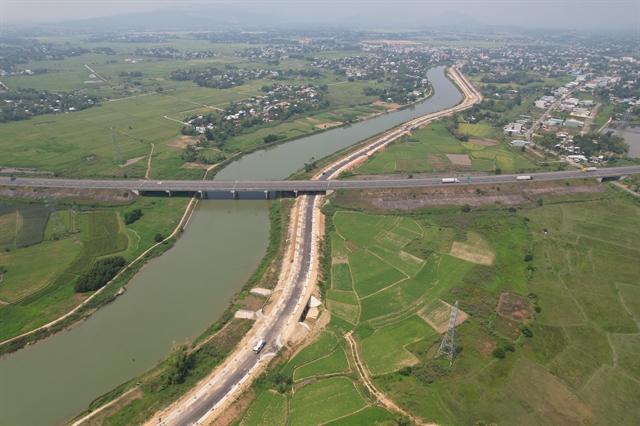
NA President sets June 2027 deadline for APEC projects, rules out delays, quality cuts and violations
1.
 |
| Enterprises are accelerating production to prepare for the peak season at the end of the year that drives up their capital demand to cover raw materials, inventory and exports. — VNA/VNS Photo |
HÀ NỘI — As enterprises have increasingly limited assets to offer as collateral for bank loans, lending policies should shift away from a primary reliance on collateral towards assessments of companies’ cash flows, contracts and repayment capacity, experts said.
Enterprises are accelerating production in preparation for the year-end peak season, increasing their demand for capital to purchase raw materials, maintain inventories and fulfil export orders. In sectors such as seafood, agricultural products, textiles, wood processing and supporting industries, even a slight delay in financing can disrupt the entire production chain.
To ensure that financing keeps pace with production, barriers to accessing credit must be addressed.
Economist Nguyễn Hoàng Dũng said this was a critical time for both exports and the production of goods for domestic consumption. However, many enterprises in urgent need of capital were still struggling to meet banks’ lending requirements because they lacked collateral.
Enterprises need new sources of financing based not on traditional collateral, but on project viability, reliable data and feasible production and business plans, he said.
According to Dũng, all loans must have a clear path to repayment. The focus should therefore shift towards assessing the health of an enterprise’s cash flow rather than relying solely on collateral. A supplier may have few fixed assets but possess stable contracts, clear receivables, a strong payment record and reputable clients. If such data can be verified, banks will have a stronger basis on which to assess risk.
The Vietnam Chamber of Commerce and Industry (VCCI) has recently also proposed preferential access to stable refinancing and priority credit facilities. These funds should be targeted at manufacturing, exports, supporting industries, supply chain enterprises and high-tech agriculture.
VCCI believes that the cost of capital and loan terms must align with business cycles. Credit assessments should be based on cash flow, contracts, orders, customer quality, accounts receivable, and compliance history, rather than relying on real estate collateral.
The VCCI also proposed streamlining policies to accept machinery, equipment, inventory, raw materials, and accounts receivable as collateral. Besides, there is a need to develop supply chain financing and contract-based financing for enterprises within the supply chains of major corporations.
The strategic direction involves shifting from financing a single enterprise to financing business flows. Businesses need to ensure cash flow transparency, digitise transactions, manage accounts receivable effectively, and develop verifiable business plans. Upstream enterprises in the supply chain should also share data regarding contracts, accounts receivable, and supplier payment schedules.
When banks can visualise the relationships between supply chain links, risk assessment can be conducted across the entire chain rather than focusing on a single enterprise. This enables capital flows to align more closely with actual production realities and the specific funding requirements of individual orders.
According to the State Bank of Vietnam (SBV), the current legal framework permits credit institutions to lend based on cash flow management rather than relying exclusively on collateral. However, scaling up this practice requires the necessary technological infrastructure and seamlessly integrated cash flow data systems. The SBV will continue to direct credit institutions to devise appropriate solutions.
Regarding the seafood sector, the SBV has also mandated that capital flows be more closely aligned with production cycles. In Document No. 6777/NHNN-TD dated July 30, 2026, the SBV required credit institutions to proactively monitor market conditions, address specific challenges faced by a single enterprise, and ensure adequate capital allocation for peak periods of procurement, processing and delivery. — BIZHUB/VNS
Economy
 Economy
 Economy
 Economy
 Economy
 Economy
 Economy
 Economy
 Economy
 Economy
 Economy
 Economy
 Economy
 Economy
 Economy