.jpg) Economy
Economy



"Thai Night Busan 2026" Makes a Grand Return, Connecting Thai Content with Global Partners to Create Business Opportunities and Strengthen Industry Collaboration
1.
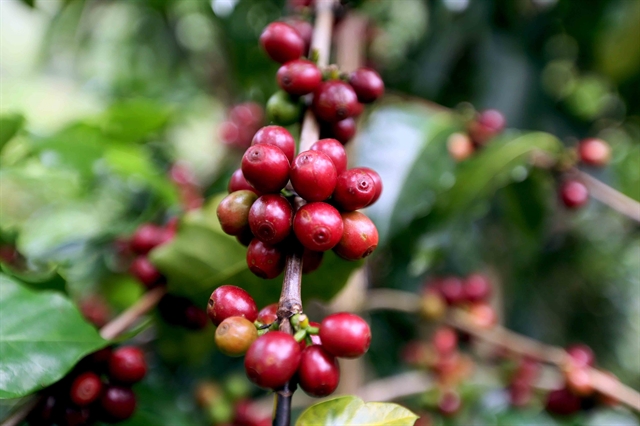 |
| Việt Nam’s exports to India reach nearly US$6 billion in the first half of this year, with coffee being the country’s leading export item. — VNA/VNS Photo Quang Quyết |
NEW DELHI — Trade between Việt Nam and India surpassed US$10 billion in the first half of 2026, equivalent to 60 per cent of last year’s total, with positive growth recorded across several key sectors.
In an interview with Vietnam News Agency (VNA) correspondents in New Delhi, Vietnamese Trade Counsellor India Bùi Trung Thướng said Việt Nam maintained a trade surplus in the first six months, with exports reaching nearly $6 billion and imports about $4 billion.
Major export items continued to see growth, with coffee posting particularly strong expansion. Vietnamese agricultural and aquatic products are also gradually gaining the trust and preference of Indian consumers, he said.
Another bright spot was growth in products linked to global value chains, including mobile phones, components, machinery and equipment, he said, noting this indicates that the Vietnamese and Indian economies continue to complement each other, and Vietnamese businesses have also shown greater interest in the Indian market.
He highlighted that economic and trade cooperation agreements signed during the State visit to India by General Secretary of the Communist Party of Vietnam Central Committee and President Tô Lâm in early May have provided fresh impetus to bilateral economic and trade ties and are gradually producing concrete results.
The official cited VinFast as an example, saying the Vietnamese automaker is investing in the Indian market and has achieved initial successes.
Promoting investment will naturally promote trade, particularly in sectors such as automobiles, he said.
However, he also pointed to barriers to bilateral trade, notably the two sides’ failure to fully tap their complementary advantages and the absence of a bilateral trade agreement.
India’s stringent standards and regulations also pose difficulties for some Vietnamese businesses seeking Bureau of Indian Standards (BIS) certification for industrial products and food safety certification for food products.
Despite these challenges, Thướng said the target of raising bilateral trade to $25 billion by 2030, though ambitious, is achievable with strong determination from both sides.
He cited untapped complementarities between the two economies and the potential spillover from leading companies to encourage others to enter the Indian market.
Many Vietnamese businesses are receiving support, while small- and medium-sized enterprises are actively exploring investment opportunities in India, he said. — VNA/VNS
Economy
 Economy
 Economy
 Economy
 Economy
 Economy
 Economy
 Economy
 Economy
 Economy
 Economy
 Economy
.jpg) Economy
Economy
 Economy
 Economy