 Economy

SBV to curb property price inflation, enforce lending rate rules
1.
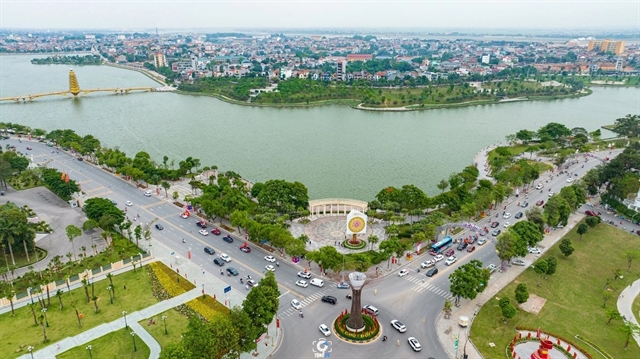
|
| A view of Phú Thọ Province. — VNS Photo |
PHÚ THỌ — The merger of the former provinces of Phú Thọ, Vĩnh Phúc and Hòa Bình is creating a larger economic and development space that is positioning the new Phú Thọ as an emerging growth pole in Việt Nam's northern midlands.
The merger has not only expanded Phú Thọ's geographical area, population and economic potential but also strengthened its capacity for international integration and economic diplomacy.
As international integration becomes more competitive and innovation-driven, the province is moving from simply participating to taking a more proactive approach, using economic diplomacy to attract investment, improve growth and strengthen its regional and international standing.
Following the merger, Phú Thọ now covers more than 9,361 square kilometres and is home to over four million people, including a workforce of around two million.
Beyond its larger market size, the province occupies a strategic location linking the Red River Delta with the northern midlands and mountainous region while serving as an important gateway along the East-West economic corridor and connecting with the country's north-south development axis.
Its geographical advantages, together with an increasingly modern transport network, are strengthening Phú Thọ's role as a key hub for manufacturing and logistics supply chains.
The province combines the manufacturing strengths of the former Vĩnh Phúc, the tourism and energy potential of Hòa Bình and Phú Thọ's processing industries, logistics infrastructure and rich cultural heritage, creating favourable conditions for diversified industrial development and stronger competitiveness in domestic and international markets.
Phú Thọ also possesses unique cultural assets.
Both the Worship of Hùng Kings and Xoan Singing have been recognised by UNESCO as Intangible Cultural Heritage of Humanity, providing an important foundation for cultural diplomacy, destination branding and tourism promotion.
The province's recent economic performance reflects the early benefits of the merger. In 2025, gross regional domestic product (GRDP) expanded by 10.52 per cent, placing Phú Thọ among the country's fastest-growing localities.
Industry remained the key growth driver, while a well-planned network of industrial parks continued to attract both domestic and foreign investors.
International integration as a driver of competitiveness
As global supply chains continue to evolve, international integration is no longer simply about expanding markets or attracting foreign investment. Increasingly, competitiveness depends on the quality of the investment environment, human capital, scientific and technological capabilities, and innovation.
In line with the Politburo's Resolution No. 59-NQ/TW, Phú Thọ has identified comprehensive, deep and effective international integration as one of the strategic solutions to realise its ambition of becoming a regional centre for industry, services, logistics and tourism.
The province is accelerating administrative reforms, promoting digital government, investing in industrial parks and logistics infrastructure, and advancing digital transformation in public administration.
At the same time, it has placed economic diplomacy at the heart of its external relations strategy, ensuring that international cooperation directly supports socio-economic development.
During a recent investment promotion visit to China, Trần Duy Đông, Alternate Member of the Party Central Committee, Deputy Secretary of the Provincial Party Committee and Chairman of the Provincial People's Committee, reaffirmed the province's commitment to further administrative reforms, high-quality workforce development and modern infrastructure investment.
He also emphasised the province's commitment to supporting investors, saying: "The success of businesses is also our success."
This business-centred approach is being translated into concrete measures to improve the investment climate, strengthen governance and expand international cooperation in science and technology, innovation, education, healthcare and environmental protection.
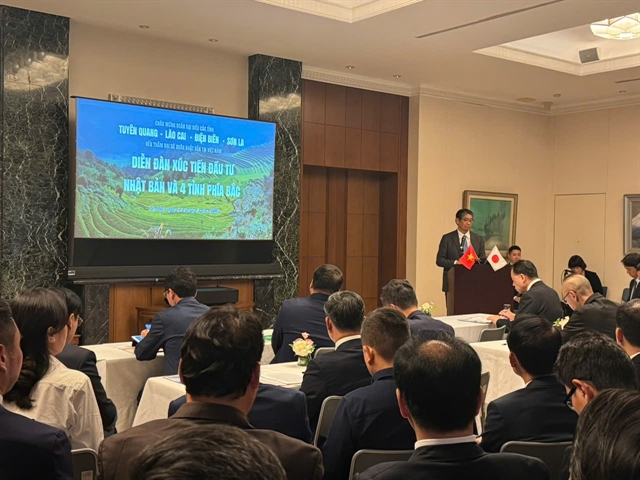
The province has organised a series of investment, trade and tourism promotion events involving major international corporations, including BYD, AMATA, Aeon and MM Mega Market.
Notably, the signing of a memorandum of understanding with Thailand's AMATA Group is expected to support the development of modern industrial parks, smart urban areas and high-quality workforce training, further enhancing Phú Thọ's appeal as an investment destination.
Businesses at the heart of integration
Alongside increasing foreign direct investment, Phú Thọ is also focusing on improving the quality of investment projects. Many international investors bring with them networks of supporting industries, creating opportunities for local enterprises to become part of global supply chains.
However, authorities acknowledge that the journey from being an attractive investment destination to becoming an indispensable link in global value chains remains challenging.
Most enterprises in the province are still small- and medium-sized businesses with limited technological capacity, management expertise and ability to meet international standards.
According to Lê Thanh Thủy, chairman of Vĩnh Yên Shoes JSC, opportunities for local companies to join the supply chains of foreign-invested manufacturers have never been greater. However, businesses must invest in technology, quality management and human resources, as even minor shortcomings in technical standards or delivery schedules can result in lost opportunities.
In agriculture, Hoàng Thị Thùy Linh, deputy general director of DBFOOD Food JSC, said new-generation free trade agreements have opened access to larger markets while also imposing stricter requirements on product traceability, carbon emissions, environmental standards and corporate social responsibility.
She noted that international integration is therefore not simply about market access but about comprehensively upgrading production methods and business management.
According to Trần Quang Tuấn, director of the provincial Department of Industry and Trade, international integration now extends beyond industrial production to agriculture, tourism, logistics and e-commerce.
He said the province's expanded development space following the merger would help attract more high-quality investment while increasing the value of locally produced goods and services.
Driven by deeper international economic integration, the foreign-invested sector continues to contribute significantly to the province's growth. At the same time, local agricultural products, OCOP products and processed goods are gradually expanding into overseas markets, enhancing the reputation of the ancestral land of the Hùng Kings.
Building a new regional growth pole

|
| A farmer harvests tea in Phú Thọ Province. — VNS Photo |
In 2026, Phú Thọ is focusing on addressing six major development priorities built around three strategic pillars: improving governance capacity, promoting economic development based on local strengths, and advancing sustainable growth while adapting to climate change.
The province will continue refining policies and institutions, developing a business-centred innovation ecosystem, accelerating digital transformation, establishing shared databases and digitising investment and business procedures to improve administrative efficiency and reduce costs for enterprises.
International integration has therefore become more than an external relations agenda. It is now regarded as a strategic driver for improving competitiveness, restructuring the growth model and unlocking new development opportunities.
The merger of the three former provinces has created a larger development space while strengthening regional connectivity and enhancing the province's ability to attract investment and mobilise resources for long-term growth.
With its strategic location, reform drive and focus on economic diplomacy, innovation and business, Phú Thọ is emerging as a new growth pole and increasingly important regional hub in northern Việt Nam.— VNS
Economy
 Economy
 Economy
 Economy
 Economy
 Economy
 Economy
 Economy
 Economy
 Economy
 Economy
 Economy
 Economy
 Economy
 Economy