 Economy



European higher education week opens new opportunities
1.
|
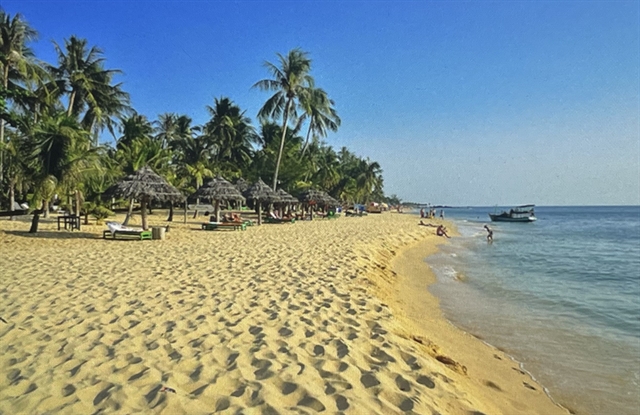
| Tourists visit Mũi Nai Beach in Hà Tiên Ward, which attracts around 70,000 visitors each year. — VNA/VNS Photo |
AN GIANG — An Giang Province’s Hà Tiên Ward is emerging as a bright spot in digital transformation, with ambitions to become a smart urban area, a digital government hub and a major border trade and tourism centre in the Mekong Delta.
Located at the country’s southwestern gateway bordering Cambodia, Hà Tiên holds strategic importance in terms of national defence, security and regional connectivity.
Local authorities are now accelerating efforts to build a comprehensive digital ecosystem, particularly in tourism promotion and management.
Nguyễn Thị Mộng Quyên, director of the Hà Tiên Trade and Tourism Promotion Centre, said the locality is implementing Resolution No. 57-NQ/TW of the Politburo on breakthroughs in science, technology, innovation and national digital transformation.
Under the strategy, Hà Tiên is gradually digitising tourism services and building an integrated digital ecosystem to promote destinations, manage tourism data and improve visitor experiences.
The ward has digitised information related to tourist attractions, festivals, cuisine and accommodation services, enabling visitors to easily access information online.
Virtual reality and augmented reality technologies are also being applied to provide online tours of well-known destinations such as Mũi Nai Beach, Thạch Động Cave, Đông Hồ Memorial House, Tam Bảo Pagoda, Phù Dung Pagoda and the Mạc Cửu historical and cultural complex.
Traditional festivals, including the Mạc Cửu Commemoration Festival and the Tao đàn Chiêu Anh Các Festival, are also being promoted through digital platforms.
QR code systems have been installed at tourist sites and historical relics, allowing visitors to quickly access multilingual information via smartphones.
Digital libraries and smart tourism maps are helping international tourists navigate destinations more conveniently.
At the same time, Hà Tiên is strengthening connections between businesses and tourists through online booking platforms, electronic payment systems and digital tourism services.
According to Quyên, the digital ecosystem not only improves visitor convenience and transparency, but also helps local businesses expand marketing channels, reduce promotion costs and better analyse customer demand.
Phạm Quý Hùng, Executive Director of the GBi business ecosystem under GBi Ecoz Co Ltd, said many localities currently operate fragmented digital systems that cannot effectively connect with one another.
“In Hà Tiên, the digital ecosystem is not simply a website containing tourism information.
It is a synchronised platform connecting provincial promotion agencies with accommodation providers, travel companies and tourism businesses into a unified operating system,” Hùng said.
|
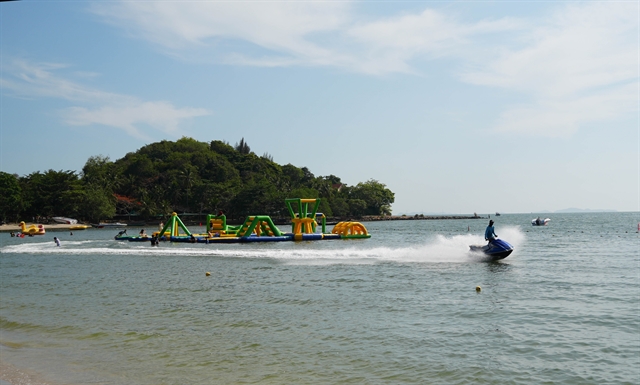
| Jet skis serve tourists along the coast of An Giang Province’s Hà Tiên Ward.— VNA/VNS Photo |
He added that the platform can be directly installed on smartphones like a banking application, enabling users to quickly access information on destinations, hotels and dining services.
The system currently supports up to 150 languages, allowing foreign visitors to search for information and select tourism services without requiring interpreters.
Quyên said more than 90 per cent of administrative documents at the centre have already been digitised and integrated with digital signatures.
At major tourist sites such as Mũi Nai and Thạch Động, ticket control systems have been fully digitised, helping authorities accurately monitor visitor numbers while promoting orderly and civilised tourism practices through QR code scanning.
The locality is also deploying electronic tour guide systems at historical and cultural destinations to provide visitors with deeper insights into the region’s heritage.
Thanks to search engine optimisation and AI supported communication strategies, the keyword “Tourism in Hà Tiên” now generates more positive and official tourism information on Google, helping strengthen the locality’s online presence.
Hùng noted that the digital ecosystem has helped establish a connected tourism business community and create a seamless tourism value chain while improving Hà Tiên’s visibility on digital platforms.
Through the digital tourism map, visitors can directly explore destinations across Hà Tiên in an intuitive and interactive format.
Nguyễn Lưu Trung, Secretary of the Hà Tiên Ward Party Committee, said that by 2030, Hà Tiên, together with Rạch Giá, Long Xuyên and Châu Đốc wards, would form a key development quadrangle of An Giang Province in logistics, cultural tourism, marine economy and border trade.
The ward aims to become an important marine economy, tourism and border trade centre in the southwestern region, contributing to regional connectivity and international economic integration.
Hà Tiên is also prioritising science and technology applications and digital transformation to develop the digital economy, digital society and digital government, with a focus on building smart urban infrastructure and creating favourable conditions for residents, businesses and investors, especially in tourism development. — VNS
Economy
 Economy
 Economy
 Economy
 Economy
 Economy
.jpg) Economy
Economy
 Economy
 Economy
 Economy
 Economy
 Economy
 Economy
 Economy
 Economy