 Economy


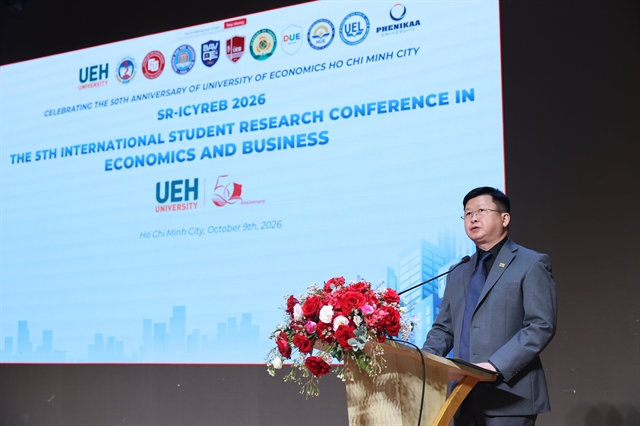
University of Economics HCM City hosts international student research conference
1.
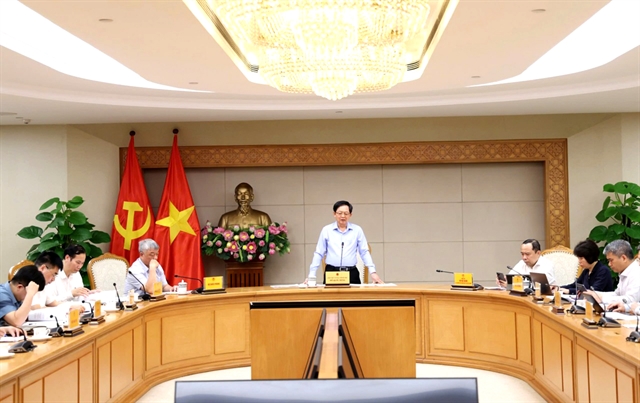 |
| Deputy Prime Minister Hồ Quốc Dũng chairs the meeting. — Photo VGP |
HÀ NỘI — Deputy Prime Minister Hồ Quốc Dũng chaired a meeting with the Ministry of Science and Technology (MoST) and relevant ministries and agencies to review a draft decree detailing and guiding the implementation of several provisions of the Law on High Technology.
Resolution 57 of the Politburo identifies science and technology as a new growth driver for the country, making it necessary to introduce sufficiently strong mechanisms and policies to encourage enterprises to invest in this field.
“If policy implementation is not carried out decisively and effectively, it will be difficult to create sufficient momentum to attract businesses,” the Deputy Prime Minister said.
According to the MoST, the draft decree provides detailed regulations on research and development of high technologies, strategic technologies, high-tech manufacturing enterprises, high-tech enterprises and strategic technology enterprises.
The draft also sets out criteria for high-tech start-ups and strategic technology startups, standards for high-tech human resources, and policies to attract skilled personnel in high-tech industries.
In addition, it includes incentive and support policies for organisations and individuals engaged in scientific research, technological development and innovation in high technology, including tax incentives, workforce support, intellectual property assistance and commercialisation of research outcomes.
Speaking at the meeting, Deputy Minister of Finance Nguyễn Thị Bích Ngọc said that if effectively designed and implemented, the decree would help attract businesses, experts and social resources to participate in high-tech projects.
These would be foundational projects that would play a key role in creating breakthroughs in national competitiveness while also promoting economic growth and development, she noted.
The Ministry of Finance proposed introducing special and superior mechanisms beyond current regulations.
Deputy Minister of Justice Nguyễn Thanh Tú also agreed on the need for high-level incentives and support policies for high-tech sectors, especially strategic technologies.
However, alongside incentive policies, he stressed the importance of strict post-audit mechanisms to monitor and prevent policy abuse. Implementation should also focus on priority areas to ensure efficient use of resources.
Deputy Prime Minister Dũng requested that the MoST study the application of the highest possible incentive policies for the high-tech sector.
Policies relating to corporate income tax, personal income tax, and import-export tax exemptions for machinery and equipment used in research and production should continue to be improved to support the establishment of domestic high-tech research and manufacturing centres, he noted.
He also called for additional support policies related to land access, housing for experts, procurement mechanisms, and preferential treatment for domestically-produced technology products in public procurement.
At the same time, policies on interest rate support, credit guarantees, and financial incentives would be needed to help enterprises access capital in this high-risk yet strategically important sector.
The Deputy Prime Minister also supported proposals to introduce mechanisms to attract overseas Vietnamese experts in strategic technologies to return and contribute to the country.
Policies must be attractive enough to encourage experts currently working in developed countries such as the US and the UK to come back to Việt Nam, said Dũng.
While emphasising that tax, financial and procurement policies should be designed with exceptional incentives, he reiterated that eligibility criteria, conditions and post-audit mechanisms must remain strict to ensure that policies benefit the right subjects and are not exploited.
The MoST was also tasked with developing a clear and rigorous set of criteria while ensuring administrative procedures remain simple and accessible. — VNS
Economy
 Economy
 Economy
 Economy
 Economy
 Economy
 Economy
 Economy
 Economy
 Economy
 Economy
 Economy
 Economy
 Economy
 Economy