 Economy



Vietnamese Prime Minister meets Cambodian National Assembly President
1.
|
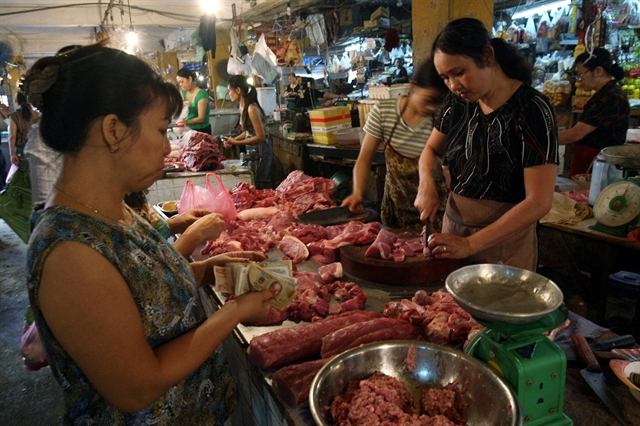
| Traders sell pork at a traditional market in Cần Thơ City as food prices remain stable despite growing pressure from fuel price fluctuations. — VNA/VNS Photo |
CẦN THƠ — Volatility in fuel prices is placing growing pressure on consumer goods, particularly food and agricultural products, as rising transport and production costs ripple through supply chains.
While prices at traditional markets in the Mekong Delta city of Cần Thơ remain largely stable for now, both traders and consumers are increasingly concerned about unpredictable fluctuations in the days ahead.
At major food markets across the city, a sense of caution is evident despite the absence of immediate price hikes.
Traders say they are trying to maintain stable prices to retain customers, but acknowledge that sustained increases in fuel costs could soon force adjustments.
According to the management board of Ô Môn Market in Ô Môn Ward, food and agricultural prices in mid-April have remained steady, with no significant increases or decreases recorded.
Prices for green mustard vegetables are around VNĐ16,000 (US$0.63) per kilogramme, while green beans and lettuce are sold at VNĐ30,000 per kilogramme.
Rice prices have also held firm at various markets. Jasmine rice, IR50404 and Sóc Miên varieties are sold at VNĐ13,000 per kilogramme, while ST25 rice ranges from VNĐ18,000 to VNĐ20,000 per kilogramme.
However, market observers warn that rising fuel prices are creating a classic case of cost push inflation, directly and indirectly affecting food prices, particularly in urban centres such as Cần Thơ.
Transport costs are the most immediate impact. Agricultural products transported from production areas to wholesale markets rely heavily on diesel powered trucks.
As fuel prices rise, traders are forced to factor additional costs into retail prices.
Bulky and heavy goods such as rice, vegetables and fruit are expected to see the most noticeable increases.
Production costs in agriculture are also rising. Fuel is essential for machinery such as tractors and combine harvesters, meaning higher diesel prices translate into increased costs for land preparation and harvesting.
Input costs, including fertilisers and pesticides, are also edging up, while irrigation systems consume more fuel or electricity. As a result, farmers are likely to raise selling prices, pushing up retail costs.
In addition, storage and processing expenses are affected.
Cold storage systems for meat, fish and vegetables often depend on electricity or diesel powered generators, making them vulnerable to fuel price fluctuations.
A pork vendor at a market in Tân An Ward said she is trying to keep prices unchanged for now but is uncertain about the coming days, noting that prices had already increased once earlier in the month without falling back.
The impact is also being felt in the transport sector. Businesses operating at Cần Thơ Central Bus Station report that fuel accounts for around 35 to 40 per cent of total service costs.
Frequent fuel price changes are making it difficult to maintain stable pricing structures, with some companies delaying plans to invest in new vehicles.
|
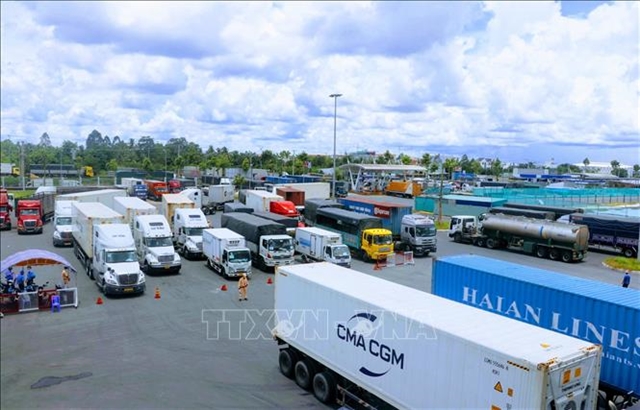
| A large number of trucks and container vehicles queue at Cần Thơ Central Bus Station. — VNA/VNS Photo |
Ride hailing drivers and delivery workers are among those hardest hit.
Many drivers say they now have to work 10 to 12 hours a day to offset higher fuel expenses and maintain their income.
A five tonne truck transporting vegetables from Cái Răng wholesale market to retail points in Ninh Kiều and Bình Thủy districts incurs an additional VNĐ150,000 to VNĐ200,000 ($5.9–7.9) per day in fuel costs.
This increase, when distributed across goods, could push vegetable prices up by VNĐ500 to VNĐ1,000 per kilogramme.
In response, local authorities have introduced a range of measures to stabilise the market.
The city People’s Committee, in coordination with the Department of Industry and Trade, has stepped up inspections and monitoring, ensuring strict compliance with price listing regulations and preventing hoarding or unreasonable price increases, particularly for fuel and essential goods.
Efforts are also being made to strengthen supply chains. Trade authorities are promoting programmes that connect suppliers directly with distributors and expand initiatives to bring Vietnamese goods to rural areas, reducing intermediaries and helping lower costs.
Experts forecast that prices in Cần Thơ and across the Mekong Delta will continue to be influenced by global geopolitical developments affecting crude oil prices.
Although the region benefits from abundant food supply, the indirect impact of fuel price fluctuations is expected to become more apparent over time.
Consumers are advised to adopt flexible spending plans, while transport businesses are encouraged to explore energy transition options and optimise logistics operations to reduce dependence on fossil fuels. — VNS
Economy
 Economy
 Economy
 Economy
 Economy
 Economy
 Economy
 Economy
 Economy
 Economy
 Economy
 Economy
 Economy
 Economy
 Economy