 Economy


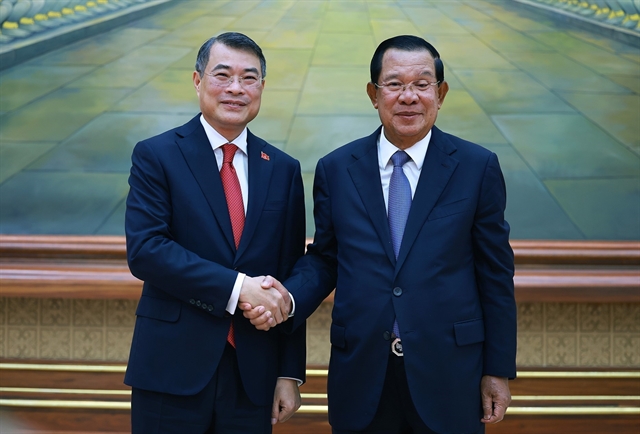
PM Hưng meets with Cambodian People's Party, Senate leader Hun Sen
1.

|
| Delegates cut the ribbon to open the 2026 Vietnam Saigon Textile & Garment Industry – Fabric & Garment Accessories Expo in HCM City on April 8. — Photo courtesy of VCCI |
HCM CITY — The 2026 Vietnam Saigon Textile & Garment Industry – Fabric & Garment Accessories Expo (SaigonTex – SaigonFabric 2026) opened at the Saigon Exhibition and Convention Centre in HCM City on April 8, showcasing the latest technologies and trends shaping the sector.
The 30,000sq.m exhibition brings together over 1,000 companies from 22 countries and territories, including Australia, Belgium, China, Germany, Hong Kong (China), India, Italy, Japan, South Korea, the US, and is expected to attract more than 32,000 trade visitors.
The event covers the full textile and garment supply chain, from machinery, spare parts and technologies to fabrics, non-woven materials, garment accessories, yarns, fibres and cotton. It also features fashion products, alongside chemicals, dyes and quality control solutions.
To run until April 11, the exhibition will feature specialised seminars and product showcases aimed at promoting knowledge-sharing, business connections and more sustainable development across the sector.
Speaking at the opening ceremony, Deputy Minister of Industry and Trade Nguyễn Thị Thắng said the textile and garment sector has made significant contributions to Việt Nam’s economic development, while strengthening confidence among international partners and investors.
In 2025, the industry recorded exports of US$46.2 billion, up 6 per cent year-on-year to retain its position among the world’s top three exporters. It achieved a surplus of around $21 billion, with products reaching 138 markets worldwide.
The domestic value-added ratio rose to around 52 per cent, reflecting greater self-reliance in raw material supply, she said.
She also pointed to the potential of the domestic market of more than 100 million people, worth an estimated $5.5 billion last year, slightly higher than in 2024.
Demand is gradually recovering, supported by trade promotion policies, stimulus programmes and the “Vietnamese people prioritise using Vietnamese goods” campaign, she said.
|
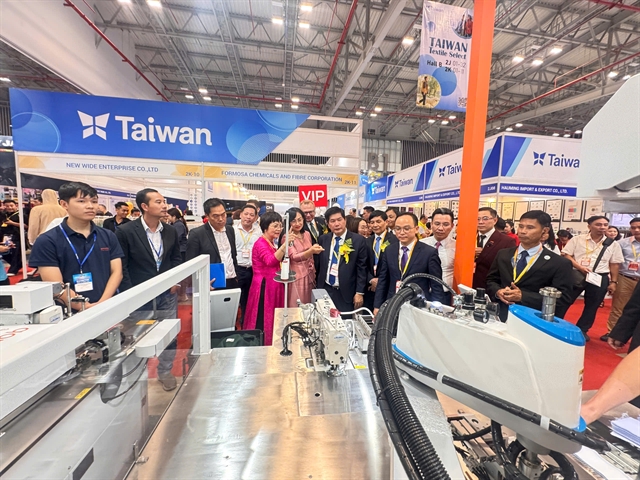
| Visitors at a booth at the SaigonTex – SaigonFabric 2026. — Photo courtesy of VCCI |
Consumers are increasingly favouring locally made products offering quality, safety, sustainability, and diverse designs, she said.
“Việt Nam aims to balance export and domestic market development, tapping local potential while enhancing global competitiveness.”
The exhibition provides a platform for businesses to access advanced technologies, expand partnerships and increase localisation while meeting rules-of-origin requirements under trade agreements, she added.
Trương Văn Cẩm, vice-chairman of the Vietnam Textile and Apparel Association, said the industry faces growing uncertainty amid global geopolitical tensions.
To maintain its position, the sector must diversify markets and products, strengthen supply chains and better leverage FTAs, he said.
Companies also need to invest in technology and human resources, accelerate green transformation and build strong Vietnamese brands, with the exhibition supporting these efforts, he added.
Cao Hữu Hiếu, general director of the Việt Nam National Textile and Garment Group (Vinatex), said the industry faces mounting challenges in 2026.
In the first quarter, logistics costs rose sharply and delivery times lengthened, while demand in several markets was shaky, affecting businesses’ performance.
To cope, many are restructuring operations, improving flexibility and optimising costs, he said. With an export target of $49 billion in 2026, the industry is focusing on diversifying markets and accelerating transformation.
Investment in technology, digital transformation and higher value-added products would be decisive, he said. — BIZHUB/VNS
Economy
 Economy
 Economy
 Economy
 Economy
 Economy
.jpg) Economy
Economy
 Economy
 Economy
 Economy
 Economy
.png) Economy
Economy
 Economy
 Economy
 Economy