 Economy



ECO Expo Asia opens at Hong Kong AsiaWorld-Expo in late October
1.
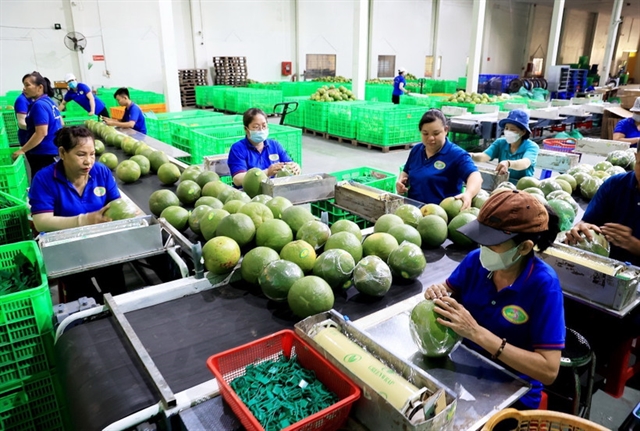 |
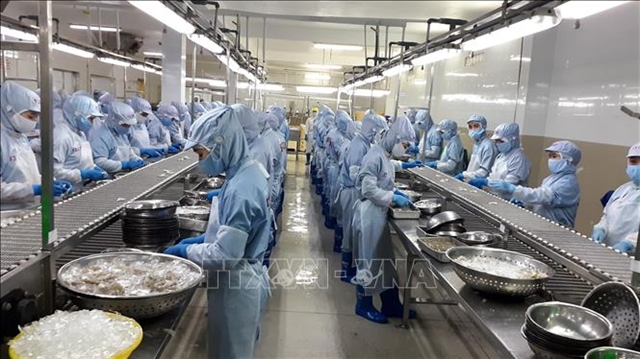
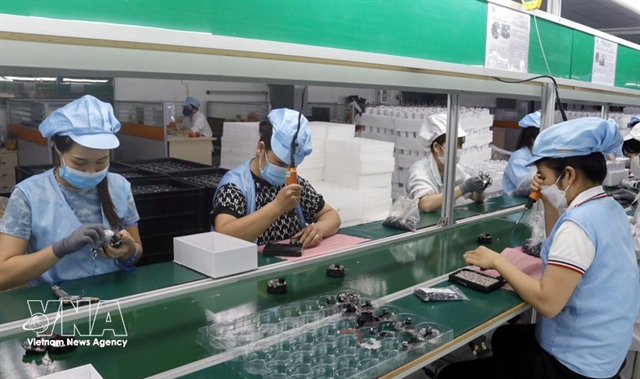
| Workers at a fruit packaging factory in Vĩnh Long Province. VNA/VNS Photo Hồng Đạt |
HÀ NỘI — Redirecting idle capital held by households into production and business activities instead of speculative assets could become a key driver of economic growth, experts said at a recent policy seminar.
Speaking at a workshop titled 'Drivers for double-digit economic growth and the outlook for agriculture in 2026' organised by the Nông thôn Ngày nay (Countryside Today) newspaper, economist Võ Trí Thành said Việt Nam’s economy has moved beyond the period often described as the “new normal” following the pandemic.
According to Thành, the country is now entering a phase focused on recovery and development, requiring stronger action and mobilisation of resources. He noted that even the lowest growth scenario of around 8 per cent would be considered an ambitious target under current global conditions.
Economic growth should not be viewed purely in numerical terms, but must aim for sustainable and inclusive development while strengthening innovation and economic resilience, he said, adding that this also relates to economic security, strategic autonomy, technological capability and control over supply chains.
Attracting investment is often easier than fostering genuine innovation, as many businesses still struggle to access core technologies. However, he said Việt Nam still has solid grounds to pursue a high-growth strategy.
One key factor is the country’s ambition to become a high-income economy. Another opportunity comes from the Fourth Industrial Revolution, which may allow Việt Nam to master new technologies rather than simply follow global trends.
At the same time, the economy faces growing external risks, including trade fragmentation, tariff policies from major markets and geopolitical conflicts that could push inflation higher and place pressure on exchange rates and interest rates.
To navigate these uncertainties and maintain long-term growth, Thành suggested that Việt Nam focus on four core policy priorities.
First is adopting a flexible approach to global economic relations, particularly in economic diplomacy and energy cooperation, while positioning the country’s advantages to attract international investors. Another priority is maintaining macroeconomic stability, with priority given to risk management, inflation control, exchange rate stability and appropriate interest rate policies.
Third is supporting markets and businesses through timely stimulus measures to help companies restore production. The last priority is accelerating institutional reforms, including administrative reforms and the development of a coherent legal framework, especially policies related to foreign direct investment.
According to Thành, the economy still holds significant untapped potential if domestic resources can be mobilised more effectively.
One major source lies in household savings and idle capital currently circulating outside productive sectors. Estimates suggest that this idle capital could amount to roughly VNĐ500 trillion, equivalent to nearly US$19 billion. In addition, resolving legal obstacles for around 800 to 1,000 large projects currently stalled could inject hundreds of trillions of đồng into the economy, creating an important short-term growth stimulus.
Nguyễn Quốc Hùng, vice chairman and secretary general of the Vietnam Banks Association, said financial resources will play a decisive role in achieving the goal of double-digit economic growth.
A key step is building a transparent, stable and sustainable capital market capable of attracting idle funds and providing long-term investment capital for the economy, he said.
Another urgent task is dealing with approximately VNĐ1 quadrillion in bad debts, which he described as a major bottleneck restricting the flow of capital. In the agricultural and rural sectors, credit should prioritise deep processing activities to enhance the value of farm produce. VNS
Economy
 Rikkeisoft ký kết MOU với LAC.Co, LTD - thúc đẩy hợp tác kinh doanh toàn diện trong lĩnh vực an ninh mạng.jpg) Economy
Economy
 Economy
 Economy
 Economy
 Economy
 Economy
 Economy
 Economy
 Economy
 Economy
 Economy
 Economy
 Economy
 Economy