 Economy


Việt Nam steps up fight against counterfeits, IP violations
1.
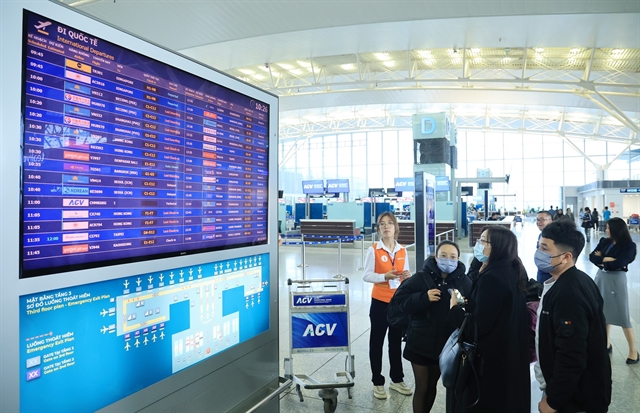 |
| Passengers look for flight information at Nội Bài International Airport. The aviation and tourism sectors are under mounting pressure from surging fuel prices. — VNA/VNS Photo Quốc Khánh |
HÀ NỘI — The aviation and tourism sectors are under mounting pressure from surging fuel prices, prompting calls for flexibility, cost-cutting measures, policy support and ways to boost competitiveness to stabilise airfares and sustain growth.
The Government has taken swift action to cushion the impact of rising oil prices related to the Middle East conflict, including tax cuts and an advance of VNĐ8 trillion (US$304 million) to the fuel price stabilisation fund.
Without these steps, domestic fuel prices could have fluctuated more sharply, according to Thanh Niên (The Youth) newspaper Editor-in-Chief Nguyễn Ngọc Toàn.
However, he warned that even if geopolitical tensions in the Middle East ease, global oil prices are likely to remain high due to damage to production facilities, with recovery expected to take months or longer.
The prolonged impact is rippling across aviation and tourism, sectors seen as critical to Việt Nam’s double-digit growth ambitions for the next few years, Toàn said.
Airlines have reported flight cancellations, route consolidations and reduced flight frequencies due to fuel shortages, while also considering fuel surcharges on international routes and higher domestic fare caps. Travel firms, meanwhile, are struggling with losses on pre-sold tours and rising input costs.
“Increasing airfares is almost inevitable, but higher prices will affect demand and, in turn, airlines’ business performance,” said Toàn.
Cutting costs
Domestic carriers say that as fuel now accounts for a significant share of operating costs, there is little room to absorb further increases.
Đào Đức Vũ, deputy general director of Sun PhuQuoc Airways, said the fuel price surge represents a major shock for the young airline, with fuel costs making up around 40 per cent of total expenses.
“We are focusing on optimising all operations, from flight schedules to aircraft turnaround times and technical solutions to reduce fuel consumption,” Vũ said, adding that fare adjustments are difficult to avoid but will be managed to limit the burden on passengers.
He noted that the airline’s integration with a broader tourism and resort ecosystem offers an advantage, helping ease pressure from standalone transport operations.
The airline has called on regulators to consider further policy support, particularly related to fuel taxes and fees, as well as more flexible regulatory mechanisms so businesses can better adapt to market volatility, Vũ said, going on to confirm the airline’s commitments to sustainable development.
Vietravel Airlines deputy director Lê Tiến Dũng said the firm plans to cut underperforming routes and reduce flight frequencies in early April as fuel costs, which typically account for up to 35 per cent of airlines’ operating expenses, rise.
However, he said the carrier intends to increase flights during the peak holiday travel period from April 30 to May 1 to meet demand.
Describing the current energy shock as faster and less predictable than the COVID-19 pandemic, deputy director of Bamboo Airways Võ Huy Cường warned of potential fuel shortages that could disrupt operations.
The airline is prioritising domestic routes integrated with tourism and resort ecosystems and short-haul regional markets, while focusing on fuel-efficient aircraft to navigate the crisis.
Despite higher airfares, passenger demand remains strong, Cường said. He noted that the core issue is not only pricing, but also customer confidence in stable operations, which is key to the recovery of both aviation and tourism amid the uncertainty.
Bamboo Airways also called for more transparent mechanisms in accessing aviation fuel to ensure fair competition among carriers, which it said is essential for maintaining a stable market and supporting broader economic growth.
Vietnam Airlines is also feeling the strain. Đặng Anh Tuấn, deputy general director of the national flag carrier, described the surge in fuel prices as a major post-pandemic shock, with Jet A1 prices tripling compared to the airline’s initial forecasts.
He said that for every $1 increase in oil price above planned fuel costs, the airline incurs an additional cost of VNĐ300 billion per year.
Tuấn added that the airline is implementing a flexible pricing strategy, maintaining fares below the ceiling while balancing operational sustainability and consumer affordability, to meet travel demand and contribute to the country’s economic growth.
Tourism adapts
 |
| Foreign tourists visit a floating market in Cần Thơ City. Tourism firms are shifting from price competition to product diversification, focusing on short-haul, domestic and urban tourism, as well as cost-efficient travel options. — VNA/VNS Photo Ngọc Thiện |
Tourism authorities and businesses are also adjusting strategies to cope with rising costs.
Trần Ngọc Đông Quân from the HCM City Department of Tourism said that while tourism posted strong growth in 2025 and early 2026, rising fuel costs since March have affected both aviation and maritime transport, increasing overall travel expenses.
In response, tourism firms are shifting from price competition to product diversification, focusing on short-haul, domestic and urban tourism, as well as cost-efficient travel options. Some companies are also separating fuel costs from tour prices to improve transparency.
Quân said that steps have been taken to promote restructuring of the demand market, product diversification and service quality improvement.
HCM City plans to roll out monthly stimulus programmes offering 10,000 packages of up to VNĐ2.5 million per international visitor, he added.
Vinpearl, Việt Nam’s largest hospitality group, said it will maintain stable prices despite rising costs to support demand.
Vinpearl market development director Nguyễn Văn Hải said travellers are increasingly opting for shorter trips, closer destinations and bundled packages, while remaining cautious about spending.
However, he noted that Việt Nam’s reputation as a safe and stable destination presents opportunities, particularly in attracting visitors from nearby markets like India, China, South Korea and elsewhere in Southeast Asia.
Domestic tourism continues to serve as a key buffer to help sustain demand and stabilise the industry, he added.
“We aim to maintain competitiveness by optimising value while keeping prices stable,” Hải said. “We are not increasing prices, but instead offering integrated packages to help customers access complete travel experiences at a reasonable cost.”
He also called for policies to help airlines optimise operating costs and expand regional routes, as well as more flexible visa policies to attract diverse international markets.
Looking ahead, Hải expressed confidence that Việt Nam’s tourism sector can weather the current challenges, supported by infrastructure investment, improved connectivity and integrated tourism models.
As for a proposal to adjust the ceiling price on airfares, deputy director of the Civil Aviation Authority of Việt Nam Hồ Minh Tấn said that this is not a priority solution at the moment.
Adjustments of airfare ceilings must comply with the Law on Prices and involve a lengthy process, making them unsuitable for rapid market fluctuations, he said, adding that instead, tax, fee and operational measures are more effective.
Flexible, timely solutions that balance the interests of businesses and consumers while minimising negative impacts on the market will be prioritised, he said. — VNS
Economy
 Economy
 Economy
 Economy
 Economy
 Economy
 Economy
 Economy
 Economy
 Economy
 Economy
 Economy
 Economy
 Economy
 Economy