 Economy



Sơn La holds second coffee festival, targeting stronger businesses in future
1.
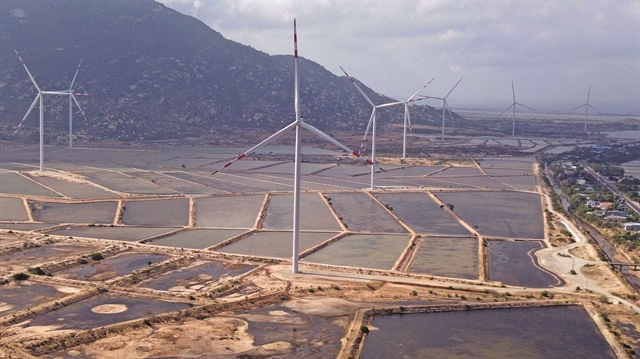 |
| BALANCED MIX: A wind power plant in Thuận Nam Commune, Khánh Hòa Province. Việt Nam is working to develop a diversified energy mix, prioritising efficient use of renewable and clean energy sources. VNA/VNS Photo Trần Việt |
By Mai Hương
HÀ NỘI — The conflict in the Middle East has entered its fourth week with tentative signs of de-escalation, as oil prices fell back below US$100 per barrel on expectations of a possible ceasefire.
Brent crude dropped to around $99 per barrel early on March 25, while US WTI fell to about $88 after earlier surges that had pushed prices above $110 – the highest level since 2022.
Markets are reacting quickly to diplomatic signals, but underlying risks remain. The Strait of Hormuz is only partially reopened, and the threat of renewed disruption continues to weigh on markets. Some analysts say the impact could exceed the oil shocks of the 1970s, prompting countries to urgently secure supply and stabilise their economies.
For many economies, this is not merely a temporary fluctuation. It is a stress test of energy security systems under real conditions of geopolitical disruption. The current crisis has shown that even without a complete supply cut, the mere risk of disruption is enough to destabilise markets, increase costs and affect economic stability.
For Việt Nam, a fast-growing economy with rising energy demand and increasing integration into global supply chains, the implications are immediate and significant. The ongoing crisis is not only a challenge to short-term management but also a wake-up call for long-term structural reform.
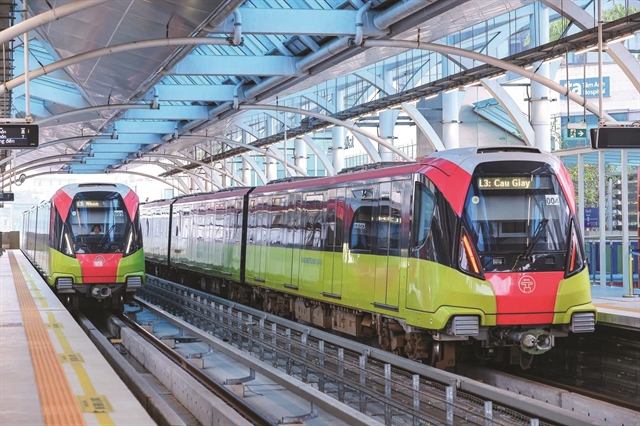 |
| CHANGING HABITS: The elevated railway in Cầu Giấy of Hà Nội. Residents are encouraged to use public transport to save energy. VNA/VNS Photo Hoàng Hiếu |
The surge in global oil prices has quickly been transmitted into the domestic economy. Rising import costs have put pressure on retail fuel prices, production expenses and inflation expectations.
Fuel prices in Việt Nam rose sharply, with current retail prices of RON 95-III petrol rising to nearly VNĐ34,999 per litre and diesel to nearly VNĐ40,000 per litre on March 24 – up more than 60 per cent compared to levels in late February before the conflict began.
These developments highlight how sensitive the domestic market is to global shocks. While Việt Nam has made progress in building domestic refining capacity, structural dependence on imports remains high.
The country currently imports around 19 million tonnes of crude oil annually for refining and an additional 10 million tonnes of refined petroleum products to meet demand. Total spending on fuel imports is estimated at about $18 billion per year, not including over $2 billion for liquefied gas imports.
Decisive policy response
In this context, the Government has moved quickly to stabilise the situation. A series of coordinated measures has been deployed, reflecting both urgency and flexibility in policy response.
At the highest level, the Politburo called for close monitoring of global fuel markets and proactive scenario planning. Authorities were instructed to use a full range of policy tools, including fiscal measures such as tax and fee adjustments, monetary support mechanisms and price management policies, alongside stricter market supervision.
The Government also established a dedicated task force on energy security to provide daily monitoring and rapid policy coordination. This reflects a shift towards more centralised and responsive crisis management.
Prime Minister Phạm Minh Chính set out four key objectives: ensuring no energy shortages under any circumstances; maintaining macroeconomic stability; supporting economic growth targets of at least 10 per cent; and managing potential risks effectively.
To achieve these goals, authorities have actively used the fuel price stabilisation fund and adjusted import taxes to cushion price increases. At the same time, they have considered using State budget resources to support the stabilisation fund if necessary, demonstrating a willingness to deploy fiscal capacity in response to market shocks.
Market management has also been tightened. Inspections have been intensified to prevent hoarding, speculation and smuggling, while supply chains have been closely monitored to ensure continuous distribution.
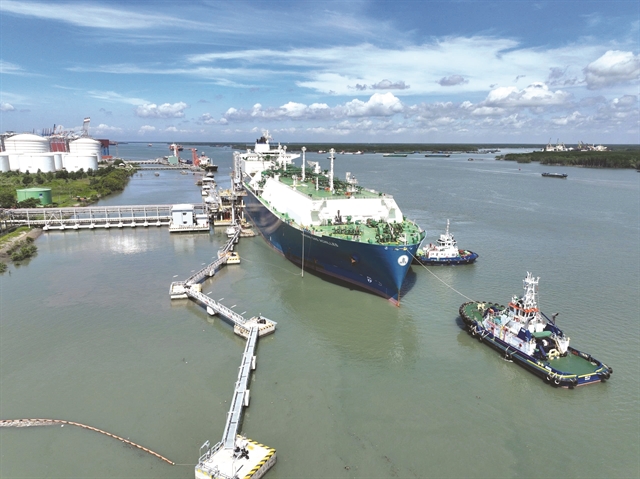 |
| KEY IMPORTS: A carrier docks at Thị Vải LNG terminal in greater HCM City to import liquefied natural gas, supplementing domestic energy supply. VNA/VNS Photo |
Economist Võ Trí Thành told Việt Nam News that fiscal policy should play a more active role in cushioning external shocks. He stressed the need to allocate part of fiscal resources to ensure energy supply, while supporting production and consumption during periods of volatility.
According to Thành, such measures are essential not only to stabilise the domestic market in the short term, but also to sustain economic activity amid rising global uncertainties.
A notable policy under consideration is the proposed reduction of environmental protection tax on fuel – accounting for 6.7 per cent of fuel price, reflecting a more proactive use of fiscal tools. The Ministry of Finance has put forward a plan to halve the tax on petrol and diesel until the end of June, aiming to ease cost pressures.
While the measure would reduce State budget revenue, it is viewed as a necessary trade-off to support businesses, protect household purchasing power and contain inflation. More broadly, it signals a shift towards greater policy flexibility in managing external volatility.
On the supply side, major State-owned energy groups have moved early to reinforce domestic capacity. Petrovietnam has activated response measures, including proposing a temporary halt to crude exports to prioritise domestic refining and reviewing all feedstock sources to ensure stable operations. It has also worked with international partners to secure additional crude supplies for key refineries.
The Dung Quất refinery is operating above capacity to boost output, while plans to expand biofuel blending, including E10RON95, aim to ease pressure on conventional fuel supply as imports face disruption.
Import activity has also increased. In the first half of March, Việt Nam imported more than 533,000 tonnes of petroleum products, up over 40 per cent, reflecting efforts to diversify supply and maintain stock levels.
Major distributors such as Petrolimex and PVOIL have secured ethanol supplies from both domestic and international sources and are expanding blending capacity to accelerate the shift towards biofuels, reducing reliance on traditional fuels. Authorities have also required traders to meet minimum supply plans under all scenarios, ensuring market stability.
According to Bùi Ngọc Bảo, chairman of the Vietnam Petroleum Association, improving supply resilience will require not only diversification but also more flexible policies, including facilitating fuel storage in bonded warehouses to reduce delivery time and costs.
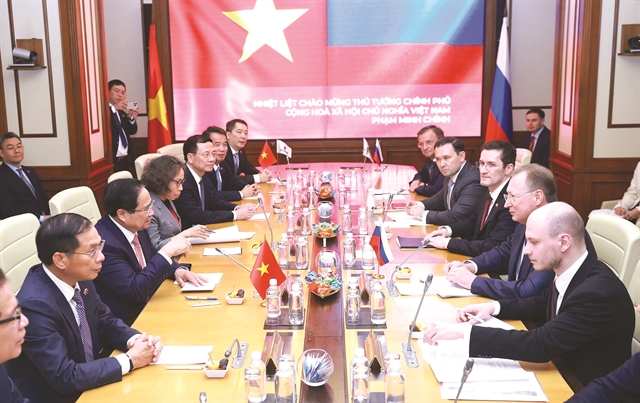 |
| COOPERATION: Prime Minister Phạm Minh Chính meets representatives of Zarubezhneft in Moscow as part of efforts to secure international partners for Việt Nam’s energy supply. VNA/VNS Photo Dương Giang |
At the same time, diplomatic efforts have been expanded. The Government has engaged with international partners to secure stable supply sources, leveraging Việt Nam’s established foreign relations to ensure continued access to fuel imports.
During an official visit to Russia this week, Prime Minister Phạm Minh Chính met with Zarubezhneft, a key partner in the oil and gas sector, reaffirming energy as a strategic pillar of bilateral ties.
The two sides agreed to expand cooperation in exploration and production, while exploring joint projects in third markets and long-term supply arrangements, including the development of oil storage infrastructure in Việt Nam. They also discussed extending cooperation into new areas such as offshore wind, linking immediate energy security needs with longer-term transition goals.
Long-term solutions
Short-term measures, however, are not enough. The recent crisis highlights the need for a comprehensive and forward-looking strategy to ensure energy security in both the present and the future.
At present, Việt Nam’s fuel reserves are relatively limited and largely based on commercial obligations rather than national strategic stockpiles. Plans are in place to increase reserves to 75–80 days of net imports and eventually to 90 days, but progress needs to be accelerated.
Experts have emphasised that strategic reserves are not merely a financial investment but a safeguard against systemic risk.
Economist Thành stressed that strengthening national reserves would be essential given Việt Nam’s continued dependence on fuel imports.
While the country already has fuel stockpiles, these are largely held by major enterprises such as Petrolimex and PVOIL under the State cost-supported mechanisms, serving mainly as short-term solutions.
In the longer term, he argued, Việt Nam needed an independent national reserve system, separate from commercial storage, with gradually expanded capacity to create a strategic buffer against global shocks.
Another key area is diversification of supply sources. While Việt Nam currently imports energy from multiple regions, supply chains remain vulnerable to disruptions in key markets. Expanding partnerships and negotiating long-term contracts can help reduce risks.
Alongside fossil fuel supply, authorities are accelerating the shift towards alternative energy. The Ministry of Industry and Trade is promoting biofuels as a strategic solution to reduce dependence on traditional fuels, with Petrolimex preparing to expand E10RON95 nationwide as early as April, aiming to gradually replace conventional petrol.
Energy security pressures are also evident in the power sector, which still relies heavily on coal and gas. The Government has pressed Vietnam Electricity to keep pace with rising demand, ensuring reliable power for strategic sectors such as high-tech industry, semiconductors and data centres, while fast-tracking Power Development Plan VIII to close gaps between generation and transmission.
In the longer term, Việt Nam is stepping up regional cooperation and diversification, including expanding electricity imports from Laos, China and Cambodia, with a target of around 8,000 MW from Laos by 2030. At the same time, preparations for the Ninh Thuận 1 nuclear power project are being advanced to support future energy security.
The development of liquefied natural gas infrastructure is also a strategic priority. Under current plans, liquefied natural gas is expected to account for a significant share of the energy mix by 2030. This requires investment in storage facilities, terminals and transport systems to ensure stable supply.
Equally important is the transition to renewable and alternative energy sources. The rapid growth of solar and wind power in recent years has already contributed to diversifying the energy mix. The expansion of biofuels, particularly E5 and E10 gasoline, is also being promoted as a way to supplement supply and reduce reliance on fossil fuels.
However, experts caution that this transition must be carefully managed. While biofuels offer potential benefits, challenges remain in terms of supply capacity, pricing mechanisms and consumer acceptance.
Energy efficiency is also critical. Encouraging businesses and households to reduce consumption can help mitigate demand pressures. As experts suggest, even simple measures such as optimising transport use or shifting to electric vehicles can contribute to overall energy savings.
Institutional reform is another important component. The establishment of specialised bodies to manage energy risks and coordinate crisis response could improve preparedness. Policymaking must be supported by data-driven analysis and clear communication to ensure timely and effective action.
At a broader level, energy security must be integrated into national development strategy. It is not only an economic issue but also a matter of national resilience and strategic autonomy.
The Middle East crisis has revealed both the strengths and weaknesses of Việt Nam’s energy system. On the one hand, the country has demonstrated an ability to respond quickly and effectively to external shocks. On the other hand, structural vulnerabilities – particularly dependence on imports and limited reserves – remain significant challenges.
The key lesson is that energy security cannot rely solely on short-term interventions. It requires a long-term, multi-layered approach that combines domestic capacity, diversified supply, strategic reserves and energy transition. — VNS
Economy
 Economy
 Economy
 Economy
 Economy
 Economy
 Economy
 Economy
Economy
Economy
 Economy
 Economy
 Economy
 Economy
 Economy
 Economy