 Economy


Ministry eyes data architecture as quality becomes key to deeper digital transformation
1.
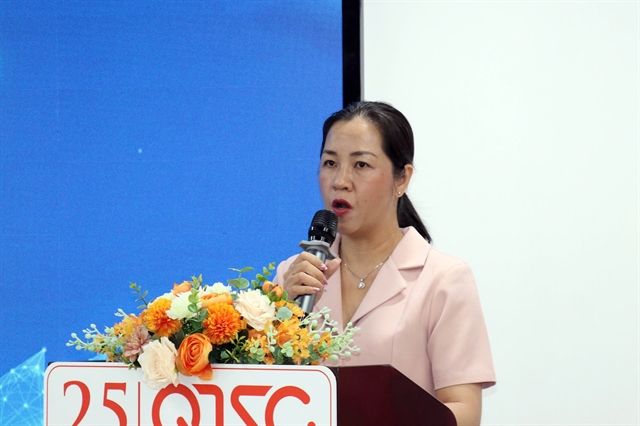 |
| Phạm Thị Kim Phượng, deputy director of QTSC, speaks at the “Eco-Industrial Parks – A Platform for Attracting Investment and Integrating into Global Supply Chains” seminar in HCM City on March 27. — Photo courtesy of QTSC |
HCM CITY — Transforming industrial parks into eco-industrial models is no longer optional but a necessity to maintain competitiveness and attract high-quality investment, speakers said at a seminar in HCM City on March 27.
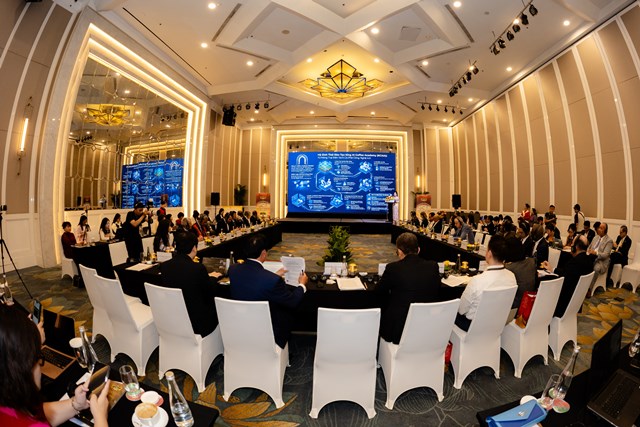
Organised by Quang Trung Software City Development Co., Ltd (QTSC), the HCM City Digital Transformation Consulting and Support Centre (DXCenter), and other partners, the seminar titled “Eco-Industrial Parks – A Platform for Attracting Investment and Integrating into Global Supply Chains” aimed to share practical models, exchange transformation experiences, and strengthen linkages in investment, technology and innovation across industrial parks in HCM City and the southern key economic region.
Participants agreed that the shift from traditional to eco-industrial park is an inevitable trend as Việt Nam moves toward its commitment to achieving net-zero emissions by 2050.
They also stressed that this transition is now a prerequisite for businesses to remain part of global supply chains. Industrial symbiosis through sharing energy, water, and waste resources can reduce energy costs by 10–20 per cent and water consumption by 20–30 per cent, they noted.
Phạm Thị Kim Phượng, deputy director of QTSC, said under its new development strategy, QTSC aims to develop into a green, smart science urban area linked to research, innovation, and technological advancement, contributing to net-zero goals.
QTSC has already deployed technologies such as the Internet of Things (IoT) and artificial intelligence (AI) in energy management, helping cut electricity costs by 35 per cent, reduce management costs by 10–15 per cent, and lower data storage costs by 30 per cent. It has also developed an automated environmental monitoring system, with a strong emphasis on cybersecurity to ensure safe and sustainable digital operations.
She added that as global investors increasingly prioritise ESG (Environmental, Social, and Governance) criteria, eco-industrial parks have become a decisive factor in attracting high-quality FDI and generating higher value for Việt Nam.
Nguyễn Hữu Nghị, deputy CEO of AMATA City Biên Hòa JSC, said that the push for eco-industrial parks is driven by both external market requirements, particularly from the EU, the US, and Japan, and internal pressures to survive in a low-carbon economy.
Without timely transformation, Vietnamese enterprises risk being excluded from global supply chains, especially in indusries such as steel, textiles, plastics, chemicals, and electronics. However, early adopters stand to secure export markets, enhance brand value, attract strategic investment, and reduce long-term operating costs.
Amata Biên Hòa is among the pioneering industrial parks in Việt Nam participating in the Global Eco-Industrial Parks Programme (GEIPP), funded by the Swiss Government, which promotes circular economy practices and climate mitigation.
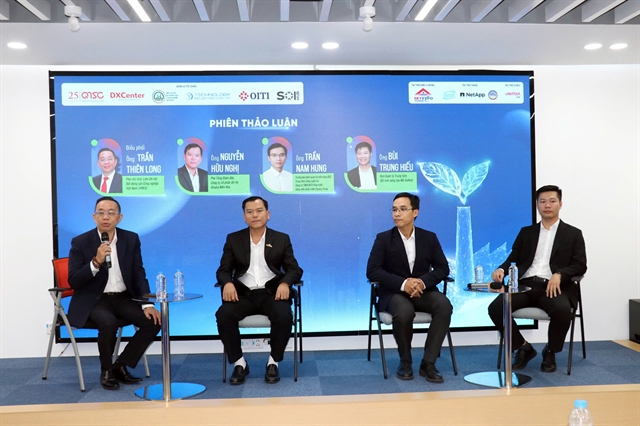 |
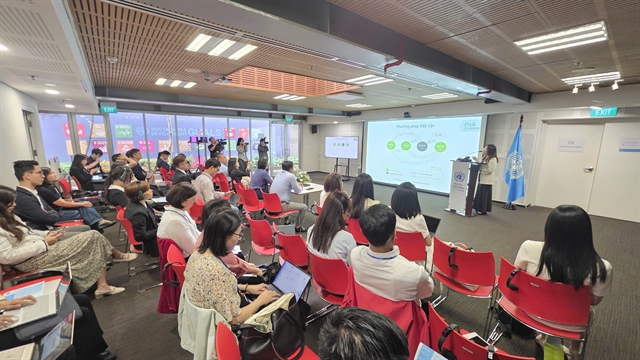
| Businesses and experts share insights on eco-industrial park transformation at the seminar. — Photo courtesy of QTSC |
Nghị noted that eco-industrial models help businesses optimise resources, cut energy and water use, reduce environmental treatment costs, and improve efficiency, while also enabling access to green finance and international climate funds.
However, challenges remain, including inconsistent regulations, limited coordination among enterprises, and high upfront investment costs. Many businesses have yet to fully recognise the long-term benefits, he said.
He added that while FDI enterprises have shown stronger alignment with green transformation, local small- and medium-sized enterprises (SMEs) face greater difficulties in standardising production processes and reducing emissions due to cost constraints, highlighting the need for tailored solutions.
According to PwC Vietnam’s 2025 ESG Progress Tracker Survey, 89 per cent of businesses have committed or plan to commit to ESG within the next two to four years, up from 80 per cent in 2022. However, around 60 per cent report challenges related to limited human resources and expertise. While 82 per cent of enterprises have begun collecting ESG data, only 10 per cent are effectively analysing and using it for decision-making or sustainability reporting.
Trần Nam Hưng, a representative of QTSC’s Digital Technology Centre, said that digital technologies such as IoT, big data, cloud computing, data monitoring and cybersecurity systems form the backbone of eco-industrial parks, enabling integrated and sustainable operations.
“With experience in developing technology solutions, we are ready to partner with businesses and provide tailored applications to support the development of eco-industrial parks,” he said.
HCM City currently manages 58 industrial parks and export processing zones, covering a total area of 22,400 hectares. To sustain its competitive edge and attract green foreign direct investment (FDI), which exceeded US$5 billion in 2025, the city is accelerating its transition from traditional to eco-industrial park models. — VNS
Economy
 Economy
 Economy
 Economy
.jpg) Economy
Economy
 Economy
 Economy
 Economy
 Economy
 Economy
 Economy
 Economy
 Economy
 Economy
 Economy