 Economy


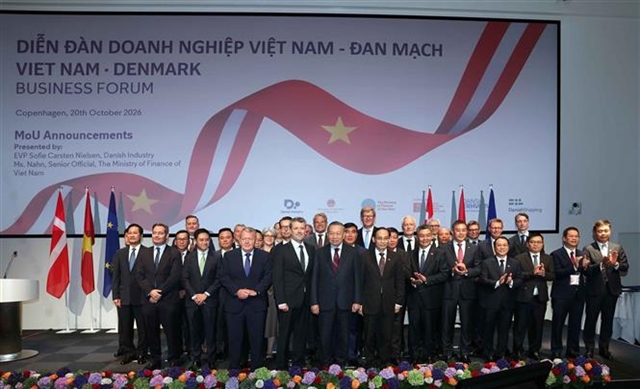
General Secretary and President Tô Lâm witnesses exchange of Việt Nam-Denmark cooperation agreements
1.
|
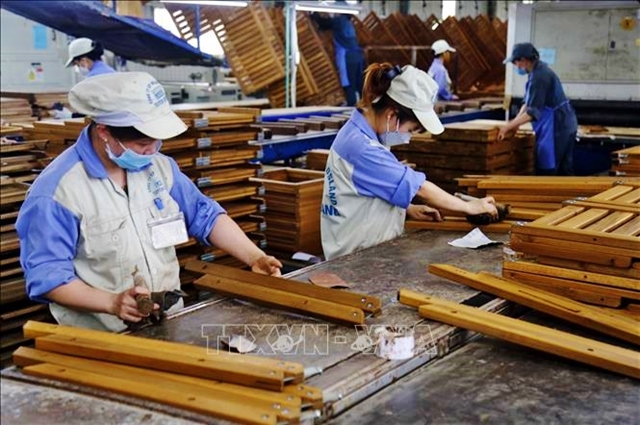
| Việt Nam's wood industry is focusing on market diversification. — VNA/VNS Photo |
HCM CITY — Việt Nam’s wood industry is reducing its heavy reliance on the US market while also shifting towards market diversification and sustainable green standards.
Trần Ngọc Liêm, director of the Việt Nam Chamber of Commerce and Industry (VCCI), said while wood and wooden products are exported to 45 markets, the country is still reliant on a few major markets such as the US, Japan and China.
The US remains the largest buyer, with Việt Nam’s exports to it last year being worth US$9.06 billion, a 45 per cent share, which means market fluctuations or trade barriers there could directly impact the entire wood industry, he said.
The US has suspended broad reciprocal tariffs, replacing them with a supplemental duty of 10-15 per cent, providing local businesses with the time to reorganize supply chains and improve product value, he said.
Trần Quốc Mạnh, deputy chairman of the Việt Nam Handicraft Exporter Association, said Việt Nam’s wood industry maintains a strong long-term growth foundation.
Liêm urged businesses to diversify markets, build a brand for Việt Nam’s wood industry and prioritise sustainable values alongside environmental and social responsibility.
Not relying on a single market is critical to enhancing resilience against policy shifts and global demand fluctuations, he said.
In recent years the US’ demand for Vietnamese wood products has been slowing down.
But there was huge growth in exports to Japan, China and the EU in 2025, with shipments to Japan surging by 23 per cent.
Notably, Việt Nam is able to meet Japan’s high quality requirements, which also enables its businesses to enter other demanding markets.
According to Đặng Quốc Hùng, director of Liên Minh Handicraft Wood Joint Stock Company, sustainable growth requires diversifying into niche segments and emerging markets such as the Middle East, India, Africa, and South America.
Furthermore, investments in product quality, green standards, digital transformation, and cross-border e-commerce are key to capturing a global customer base, he said.
Green consumption, legal wood traceability and carbon emission reductions have become mandatory requirements across multiple global markets.
Participation in the carbon market represents a long-term strategy to enhance the value and brand reputation of Việt Nam wood. — VNS
Economy
 Economy
 Economy
 Economy
 Economy
 Economy
 Economy
 Economy
 Economy
 Economy
 Economy
 Economy
 Economy
.jpg) Economy
Economy
 Economy