 Economy


Việt Nam, Singapore promote cooperation through Party-to-Party channel
1.
|
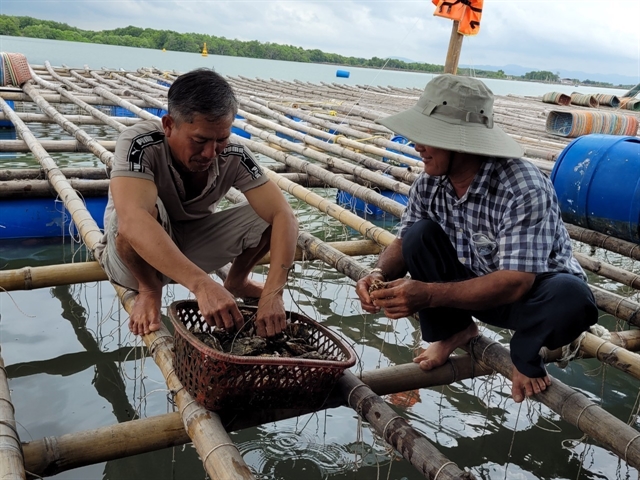
| Farmers harvest oyster in Long Sơn Ward, HCM City. The city is ramping up the development of its aquaculture sector. — VNA/VNS Photo |
HCM CITY — Blessed with natural advantages and a modern logistics network, the city is accelerating the development of high-tech, sustainable aquaculture to boost economic growth and strengthen its export capacity.
HCM City is a key link in the South's export seafood value chain, with direct access to a state-of-the-art logistics network and the Cái Mép - Thị Vải deep water port system.
HCM City's coastline region is ideal for aquaculture since it features mangrove forests and sandy terrain, as well as numerous rivers and canals that pour deep into the mainland, along with a mild climate and lack of major storms.
This location provides ideal circumstances to grow aquaculture into a major economic industry, helping to ensure food security and livelihoods for the people.
According to Nguyễn Kim Chuyên, director of Quyết Thắng Agricultural Cooperative (Long Hương Ward), the cooperative's shrimp ponds are situated close to the Dinh River estuary, have an ideal salinity level, and are ideal for the large-scale implementation of a high-tech aquaculture.
Thanks to an abundant and clean water source that requires minimal chemical treatment, the cooperative can regularly renew its ponds, allowing the shrimp to grow quickly. As a result, its high-tech shrimp farming model generates annual profits worth billions of đồng.
Meanwhile, Long Sơn Island is regarded as the "oyster capital" of the South, with an average production of 15,000 tons annually, generating high incomes and work for hundreds of households. A distinctive brand for seafood in this area is created by the more than 3,000 tons of fish raised in cages annually, which also helps to diversify products.
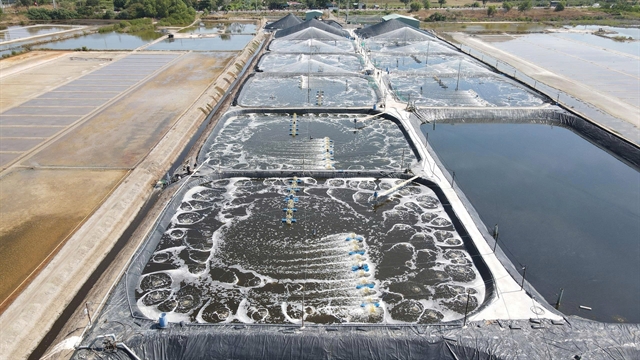
At roughly 300 hectares, Minh Phú Aquaculture Company Limited (Phước Hải Commune) is one of the province's biggest high-tech shrimp farming operations. In order to produce three shrimp crops annually, the company uses the model of floating round ponds with steel frames, bottom lining, and Minh Phú Bio bio tech.
In addition to satisfying domestic demand, these businesses offer a reliable supply of raw materials for businesses engaged in exporting and processing.
A policy to expand marine aquaculture while encouraging the use of approved farming practices and traceability for important products like black tiger shrimp and white-leg shrimp was also previously issued by the former Bà Rịa – Vũng Tàu Province.
Associate Professor Dr Nguyễn Chu Hồi, permanent deputy chairman of the Vietnam Fisheries Association, said there is a great potential for marine development around HCM City's coastline.
If this sector receives proper investment, it will contribute to limiting Illegal, Unreported and Unregulated (IUU) violations, reducing overexploitation of marine resources, and promoting sustainable and responsible fisheries development, he said.
|
| A hi-tech shrimp farm model in Long Điền Ward. — VNA/VNS Photo |
Overcoming challenges
According to the HCM City Sub-Department of Fisheries, the marine aquaculture area reaches around 6,400 hectares, with an average annual output of more than 32,700 tonnes. Of this total, freshwater farming covers 930 hectares, while saltwater and brackish-water farming account for over 5,500 hectares.
Many businesses, cooperatives and local farmers have pro-actively invested in high-tech aquaculture farms, covering a total area of nearly 430 hectares.
However, the city’s marine aquaculture sector is still facing numerous challenges.
Phan Văn Đức, a member from a high-tech whiteleg shrimp farming household in Phước Hải Commune, told the Vietnam News Agency that the lack of concentrated land remains a major obstacle for developing high-tech aquaculture, as many businesses and individuals are reluctant to invest or expand production due to short land lease terms and significant risks during the farming process.
Đào Quốc Tuấn, CEO of Tứ Hải Seafood Co Ltd said it is necessary to complete the planning of concentrated farming zones and seafood processing areas, ensuring synchronised infrastructure, convenient transportation connections, and long-term stability.
Lê Thị Thu Cúc, a marine cage fish farmer on the Chà River in Long Sơn Commune, said she hopes the locality will soon establish a central, high-quality aquaculture breeding centre to provide fingerlings for local farmers. Many local households, businesses, and aquaculture cooperatives in coastal areas also hope the city’s authorities will soon announce clear farming zone plans, enabling them to expand production and confidently invest in modern technologies.
According to the Fisheries and Fisheries Surveillance Sub-department, to achieve the goal of sustainable aquaculture development, the city’s Department of Agriculture and Environment is continuing to encourage high-tech shrimp farming models, and boost shrimp production across the city.
At the same time, the department is developing plans to survey suitable marine areas to serve the planning of high-tech cage aquaculture zones. It is also encouraging farmers to adopt Good Aquaculture Practices (GAP) standards, while promoting policies that support cooperation and linkages.
It is mobilising businesses and financially capable farming facilities to establish close value chains connecting production, processing and distribution.
The Fisheries and Fisheries Surveillance Sub-department also regularly provides guidance and disseminates technical solutions to help farmers respond to climate change and adopt proper feeding practices.
Assoc. Prof. Dr. Nguyễn Chu Hồi, Standing Vice Chairman of the Vietnam Fisheries Society, noted that when planning marine farming zones, coastal localities in HCM City should pay attention to criteria such as cage density to ensure clean, sustainable, and well-managed aquaculture.
He said: “For HCM City’s aquaculture sector to develop sustainably, it is essential to improve farming infrastructure and invest in water treatment systems, embankments, power supply and transport connectivity. At the same time, support should be provided to help farmers access capital, receive technical training, and build distinctive local product brands.”
In 2025, the city’s fisheries sector aims for a growth rate of 3.25 per cent, ensuring aquaculture development follows a multi-value and multi-species approach, contributing to the GRDP growth targets of both the city and the Department of Agriculture and Environment. — VNS
Economy
 Economy
 Economy
 Economy
 Economy
 Economy
 Economy
 Economy
 Economy
 Economy
 Economy
 Economy
 Economy
 Economy
 Economy