 Economy



Visit Vietnam app to showcase AI-powered platform at ITB Asia 2026
1.
|
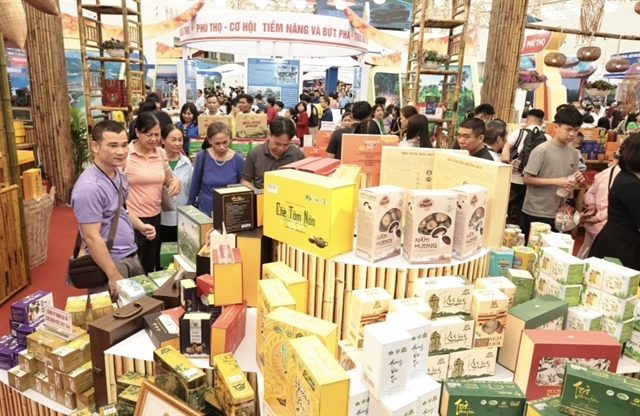
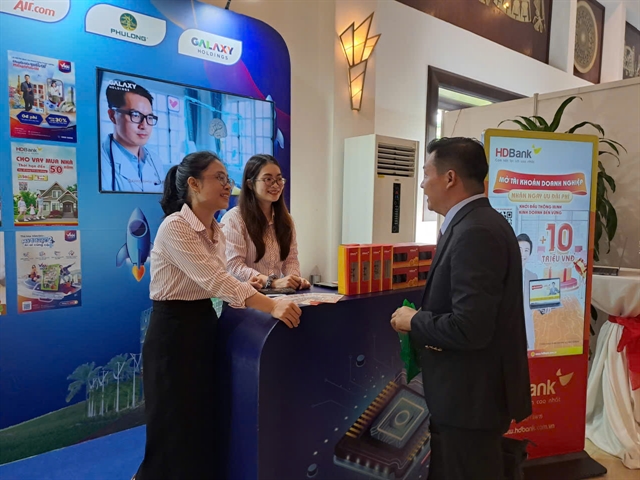
| Autumn Fair 2025 marks the biggest trade promotion event to date. — Photo vneconomy.vn |
HÀ NỘI — The Autumn Fair 2025 wrapped up on November 3 at the National Exhibition Centre in Đông Anh District, Hà Nội, marking the close of an ambitious 10-day showcase that has redefined Việt Nam’s approach to trade, investment and cultural promotion.
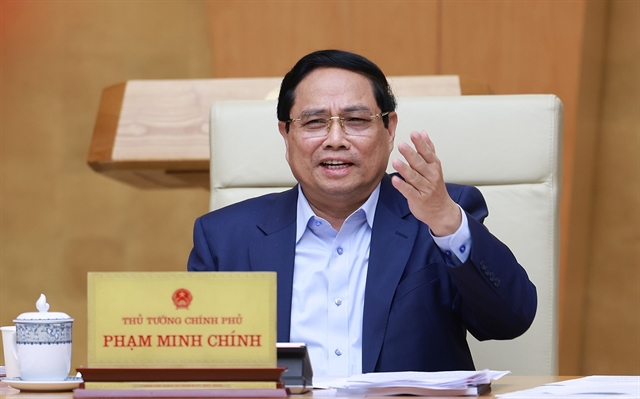
Prime Minister Phạm Minh Chính attended the closing ceremony and launched a nationwide fundraising campaign to support communities hit by natural disasters, underscoring the event’s social significance alongside its economic impact.
Held from October 25 to November 4, the inaugural Autumn Fair was the country’s largest trade promotion programme to date – both in scale and influence – and is now widely regarded as a turning point in how Việt Nam organises and leverages national trade fairs in the era of deepening global integration.
With the theme “Connecting People with Production and Business,” the fair became a major meeting point for enterprises, localities and international partners. It showcased Việt Nam’s evolving strategy: moving beyond traditional trade promotion toward a modern, integrated platform that combines commerce, investment, culture, tourism and technology.
This year’s Autumn Fair brought together more than 2,500 domestic and international organisations and enterprises, featuring some 3,000 standard booths – making it the largest trade promotion event ever held in Việt Nam. The fair attracted an average of 100,000 visitors per day, the highest footfall among national trade promotion events to date.
According to Vũ Bá Phú, Director of the Việt Nam Trade Promotion Agency (Vietrade) under the Ministry of Industry and Trade (MoIT), the fair delivered “breakthrough results” that demonstrated the effectiveness of a new, comprehensive trade promotion model.
Direct retail (B2C) sales increased by 40–50 per cent compared to traditional fairs, while business-to-business (B2B) activities recorded nearly VNĐ5 trillion in agreements, contracts and memoranda of understanding – tangible proof of the fair’s ability to facilitate real commercial connections and stimulate investment.
The event also featured more than 30 conferences, forums, cultural shows and thematic exhibitions, while 34 provinces and cities showcased their specialities, geographic indications, and cultural identities. In total, nearly 2,000 trade matching sessions took place.
International participation was also strong, with enterprises from 16 countries and territories – including Japan, the Republic of Korea, China, Singapore, New Zealand and members of the European Union – occupying around 100 booths. A delegation organised by the Việt Nam Trade Office in Australia received recognition among the Top 30 Outstanding Exhibition Spaces, reflecting the fair’s growing international reputation.
Beyond a fair: a cultural, investment and innovation festival
PM Chính said the Autumn Fair 2025 was not only a major trade and investment forum, but also “a substantive marketplace” where people remained central to all economic and social activities. He emphasised that the fair served as a festival of creative technologies and cultural expression, showing that economic growth must go hand in hand with cultural and social development.
The PM described the fair as a “cross-Việt Nam journey,” where each booth represented “a cultural mosaic” telling the story of local identities, unique products and the ingenuity of Vietnamese enterprises. Displays ranged from hi-tech innovations and green energy solutions to handicrafts and regional delicacies, offering a vivid portrait of Việt Nam’s production strengths and cultural richness.
Organisers reported that this year’s fair set six notable records: largest scale, most modern exhibition space, widest product diversity, highest quality standards, most engaging activities and strongest package of incentives for participating businesses.
Alongside economic events, the fair became a focal point for humanitarian efforts. Responding to the call of the Việt Nam Fatherland Front and government directives, the organisers launched the campaign “Autumn of Hope – Sharing Love” to support people in central and northern mountainous provinces affected by storms and floods.
In just 10 days, more than VNĐ2 billion was donated at the fair. By the closing ceremony, total contributions mobilised through the PM’s nationwide appeal had reached VNĐ316 billion, demonstrating strong public and corporate solidarity.
The PM also reiterated his call for continued support, especially as central provinces brace for the strengthening Tropical Storm No 13.
Turning trade fairs into a strategic national pillar
|
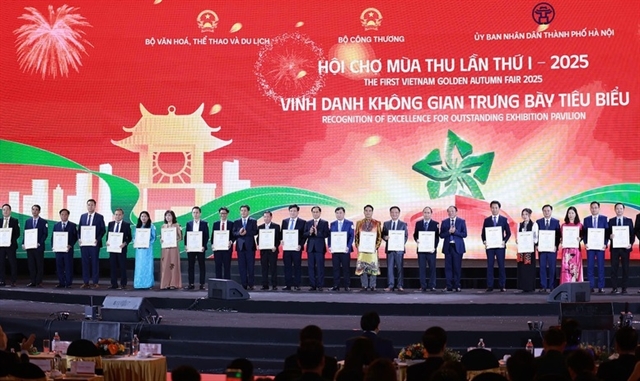
| Deputy Prime Minister Bùi Thanh Sơn presents certificates honouring 30 organisations and businesses with “Outstanding Exhibition Spaces” at the fair. — Photo chinhphu.vn |
The success of the Autumn Fair aligns with Việt Nam’s broader shift in trade promotion strategy. At a policy dialogue on November 26, Phú emphasised that national fairs must evolve into a “strategic pillar” for trade, investment and cultural diplomacy.
He outlined a comprehensive vision for the fair’s future development, emphasising a shift from traditional trade promotion toward a more integrated model that combines commerce, investment attraction, technology innovation, tourism and cultural exchange. According to him, this transformation would allow major events to serve multiple purposes at once, backed by a more professional organisational approach with stronger coordination, modern infrastructure and meticulous preparation to ensure that “one destination satisfies multiple objectives”.
He also stressed the need for stronger policy incentives to sustain long-term growth. This includes establishing a well-resourced National Trade Promotion Fund drawing from the State budget, contributions by leading corporations and revenues generated from fairs. Complementary tools such as tax reductions and reduced or waived booth fees would help broaden participation, especially among small and medium-sized enterprises.
Another key priority is the development of a robust Big Data system to support trade fairs nationwide, enabling better post-fair digital connectivity. By improving how partners stay connected, match supply chains and access market intelligence, the sector can enhance the lasting impact of each event rather than limiting its value to the days on site. He added that expanding international marketing efforts through multimedia channels and English-language platforms will be essential to strengthen global outreach and position Vietnamese trade fairs more prominently on the world stage.
Economist Dr Nguyễn Minh Phong noted that trade fairs must now be treated as part of Việt Nam’s cultural and economic industry. He stressed that organisation should follow the Government’s highest-level planning, with clearly assigned responsibilities based on the “five clears”: clear persons, clear tasks, clear responsibilities, clear timelines and clear outcomes.
Looking ahead, the MoIT has developed a five-year masterplan for a national fair ecosystem. Beginning in 2026, Việt Nam will host a trio of major seasonal fairs – Spring, Summer and Autumn – each integrating specialised exhibitions that highlight complete value chains rather than standalone products.
“With this orientation, Việt Nam will gradually emerge as a regional hub for trade fairs, exhibition services and investment promotion,” Phú said.
Human resources will remain central. Experts emphasised the need to build a capable workforce for Việt Nam’s growing exhibition industry, turning it into a high-value service sector aligned with regional and global standards.
For enterprises, he advised maintaining stable product quality, studying target markets more deeply and adopting long-term strategies for international expansion.
At the closing ceremony, the organising committee honoured 30 enterprises and organisations with outstanding exhibition spaces and completed donation handovers to support disaster-affected communities.
The PM Chính affirmed that the fair’s achievements reflected the country’s strong governance, economic resilience and rising international reputation.
“This success stems from the Party’s leadership, the Government’s flexible and decisive management, the engagement of the entire political system, the pioneering spirit of businesses, the shared efforts of the public and the support of international friends,” he said.
He called on businesses and associations to continue innovating, enhancing competitiveness and expanding the presence of Vietnamese brands globally, while upholding social responsibility.
International partners were encouraged to deepen co-operation with Việt Nam in trade, investment, technology transfer, human resource development and green growth, contributing to shared peace, prosperity and sustainable development.
As the Autumn Fair 2025 closes, it leaves behind not only impressive numbers but also renewed momentum for a modern, integrated trade promotion ecosystem. The ideas, connections and collaborative spirit sparked at the event are expected to drive new growth opportunities and strengthen Việt Nam’s path toward becoming a dynamic, innovative and globally integrated economy.
The success of the inaugural Autumn Fair, the PM said, “marks not an ending, but the beginning of a new journey of connection – one that fuels innovation, cooperation and national aspiration in the new era.” — VNS
Economy
 Economy
 Economy
 Economy
 Economy
 Economy
 Economy
 Economy
 Economy
 Economy
 Economy
 Economy
 Economy
 Economy
 Economy