 Politics & Law
.jpg)
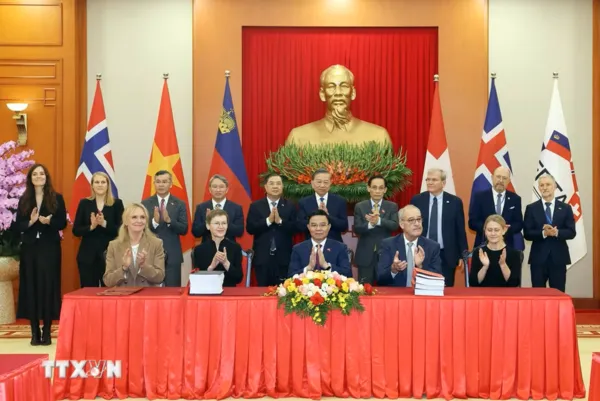
HCM City to host Nordic-Việt Nam Business Summit
1.
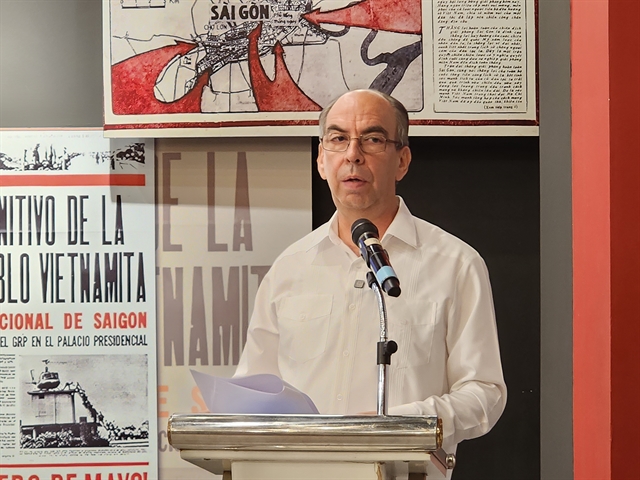 |
| Cuban Ambassador to Việt Nam Rogelio Polanco Fuentes reflects on six decades of close bilateral ties at the ceremony on Friday. — VNS Photo Lê Việt Dũng |
HÀ NỘI — Six Cuban military officers killed in a US bombing raid in Hà Nội 60 years ago were honoured on Friday at a ceremony that also launched a new Spanish-language book documenting six decades of defence cooperation between Việt Nam and Cuba.
The event was held at the Military History Museum, where Cuban Ambassador to Việt Nam Rogelio Polanco Fuentes and senior defence officials unveiled '60 Years of Việt Nam-Cuba Defence Relations History (1960–2020).'
The six officers arrived in Việt Nam in July 1966 as part of a senior Cuban delegation studying air-defence tactics against US bombing. On July 19 that year, while inspecting an anti-aircraft position on the outskirts of Hà Nội, the group was caught in a surprised US air strike.
All six were killed alongside several Vietnamese soldiers manning the position.
Ambassador Polanco Fuentes recalled that late President Fidel Castro had made a pledge in January 1966, telling a rally in Havana's Plaza de la Revolución that Cuba was ready to 'give even its own blood' for Việt Nam's cause – a readiness he said became reality just months later, when the six officers were killed in the July 19 raid.
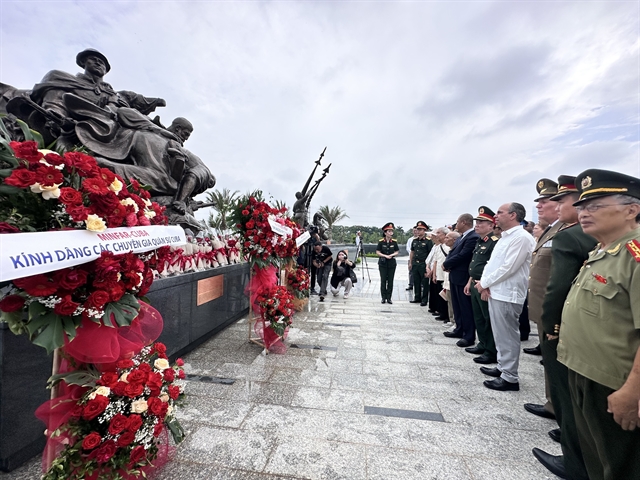 |
| Ambassador Polanco Fuentes and military officers lay flowers at the memorial for Cuban soldiers who fell in Việt Nam during the country's resistance war against the US. — VNA/VNS Photo |
Cuba, he noted, was the first country in Latin America and the Caribbean to establish diplomatic relations with the Democratic Republic of Việt Nam on December 2, 1960, a partnership that quickly grew to include embassies in both capitals and a Havana office representing the South Việt Nam's National Liberation Front.
In the years that followed, Cuban specialists trained Vietnamese forces in a range of military disciplines and, according to the ambassador, helped build the Hồ Chí Minh Trail – a wartime supply network that carried northern Vietnamese troops and equipment south.
The diplomat also said Cuba's former leader Raúl Castro credited Việt Nam's doctrine of 'all-people war' – in which the entire population, not just the regular army, is organised into national defence – as a lasting influence on Cuban military thinking.
That history is the backbone of the new book, which Colonel Lê Văn Cường of the Institute of Defence Strategy and History said was commissioned because no earlier study had traced the full 60-year arc of the two countries' defence relations in one place.
Published in 2021 by the People's Army Publishing House, the book now appears in Spanish through the National Political Publishing House Sự Thật (the Truth), aimed at reaching Cuban readers and militaries across the region.
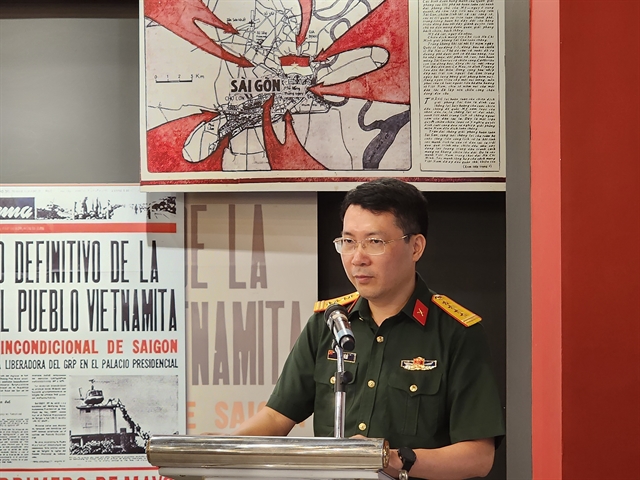 |
| Colonel Lê Văn Cường of the Institute of Defence Strategy and History outlines details of the book at the ceremony. — VNS Photo Lê Việt Dũng |
The book runs to five chapters, moving from the ideological common ground between President Hồ Chí Minh's and President Castro's revolutions, through the founding years of cooperation during Việt Nam's resistance war against the US, to the 1976–2000 period, when a 1982 Treaty of Friendship and Cooperation kept bilateral ties strengthening despite global uncertainties and economic embargoes facing both countries.
Later chapters cover the expansion of officer exchanges, training programmes and technical cooperation since 2000, closing with an assessment of what the authors call the durability of the relationship.
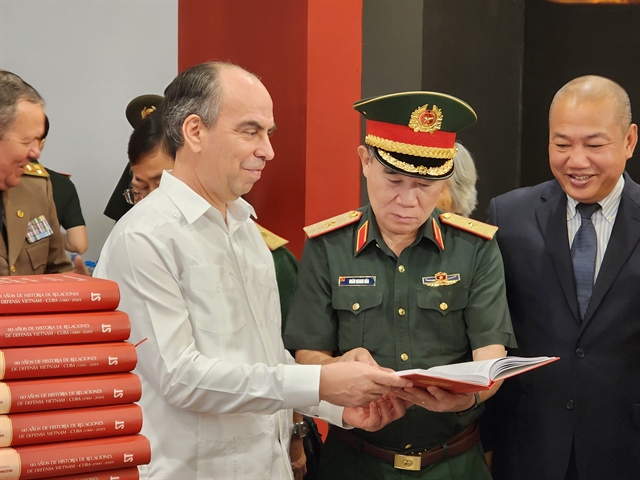 |
| Ambassador Polanco Fuentes and a Vietnamese military officer look through the book together. — VNS Photo Lê Việt Dũng |
Colonel Cường described defence cooperation as one of the most stable pillars of trust between the two countries, one that has persisted through decades of changing international circumstances.
He believes the book will play its role as a reference for military researchers, officials, lecturers and students within and outside the military, and help spread the history of solidarity between Việt Nam and Cuba to a wider readership.
Ambassador Polanco Fuentes closed his remarks by thanking Việt Nam's defence ministry and the Military History Museum for organising the ceremony, calling it a tribute to the two countries' honourable shared history. — VNS
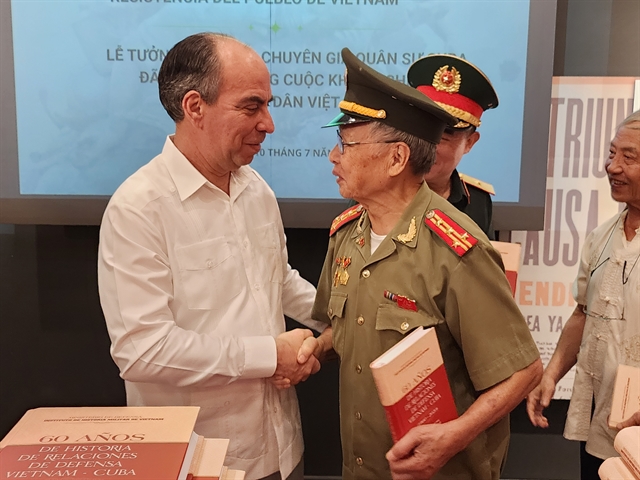 |
| Ambassador Polanco Fuentes gives a copy of the book to a Vietnamese veteran. — VNS Photo Lê Việt Dũng |
Politics & Law
 Politics & Law
 Politics & Law
 Politics & Law
 Politics & Law
 Politics & Law
 Politics & Law
 Politics & Law
 Politics & Law
 Politics & Law
 Politics & Law
.jpg) Politics & Law
Politics & Law
 Politics & Law
 Politics & Law
 Politics & Law