 Politics & Law
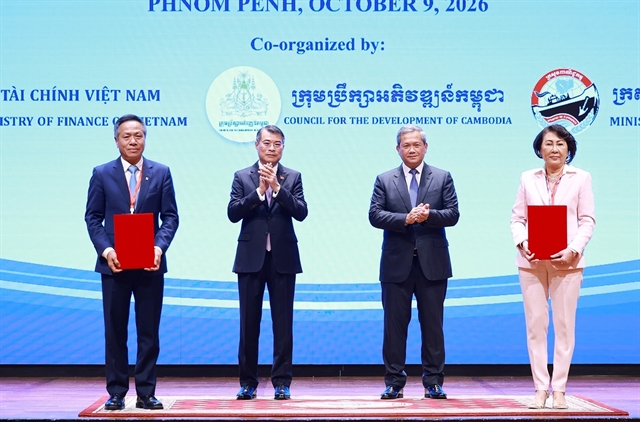
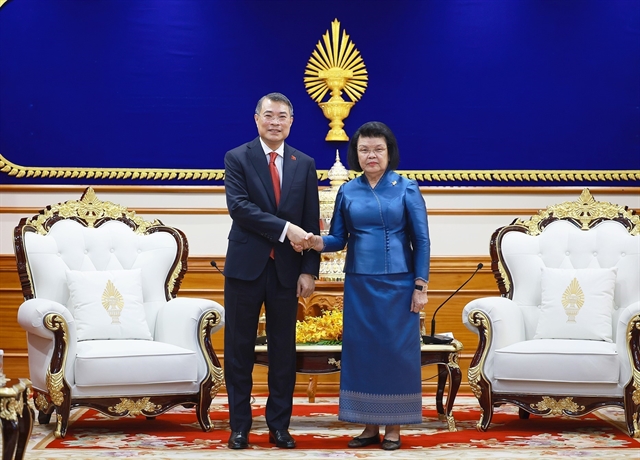
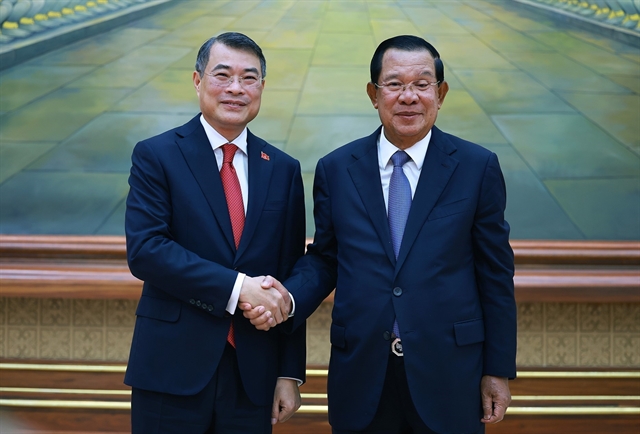
Vietnamese Prime Minister meets Cambodian National Assembly President
1.
|
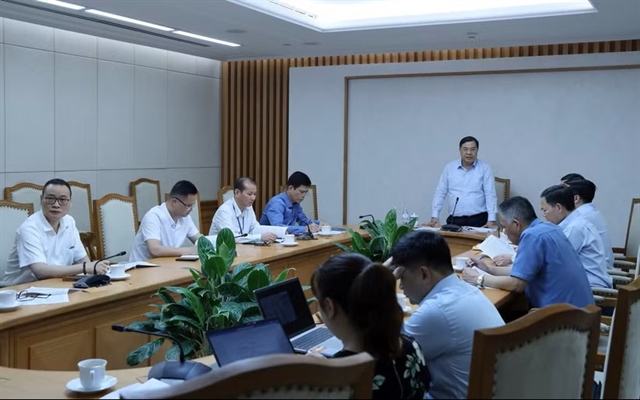
| Standing Deputy Prime Minister Phạm Gia Túc said during a meeting on Thursday. Photo courtesy of the Government News |
HÀ NỘI – Any additions or adjustments to the national airport system planning for the 2021–2030 period must be considered within the broader framework of the national master planning and the six regional planning schemes recently revised, while ensuring consistency with sectoral transport planning schemes, Standing Deputy Prime Minister Phạm Gia Túc has said.
He stressed that the airport system planning must be strategic, comprehensive and synchronised, with a long-term vision extending to 2050 and even 100 years ahead, in order to avoid repeated revisions. It should also be closely linked with other modes of transport, the national master planning, regional planning schemes and relevant sectoral planning schemes.
According to the official, implementation must clearly define priorities and be aligned with overall planning and socio-economic development objectives, while ensuring an appropriate investment roadmap in terms of airport scale and classification.
Localities, ministries and sectors proposing airport investment projects must commit to investment efficiency and ensure adequate resources not only for the airport projects themselves but also for transport infrastructure connecting them.
Regarding proposals to include Măng Đen and Vân Phong airports in the master planning, he requested careful study within the broader regional development framework, particularly their connectivity with road transport networks and inter-regional routes, as well as their development potential. Investment plans must also carefully assess the ability to attract domestic and foreign investment, dual-use factors, and overall connectivity with nearby airports and regional transport systems.
He also noted that the private sector's participation in airport construction must be calculated carefully. Overinvestment, with every locality seeking its own airport without guaranteed efficiency, could create operational difficulties. In addition, air cargo transport should be developed in tandem with tourism, services and synchronised infrastructure.
The Deputy PM assigned the Ministry of Construction to incorporate feedback from ministries and sectors.
The national airport system planning was approved by the Prime Minister under Decision No 648/QD-TTg dated June 7, 2023. Under the planning, 30 airports (14 international and 16 domestic) are to be developed during the 2021–2030 period, with a vision to 2050 expanding the network to 33 airports (14 international and 19 domestic), including major gateway airports such as Nội Bài International Airport, Đà Nẵng International Airport, Tân Sơn Nhất International Airport and Long Thành International Airport. Decision No. 648 also identified 12 potential sites for further study and inclusion.
Following a review, the Ministry of Construction proposed further study into the addition of Măng Đen and Vân Phong airports, as well as adjustments to the scale of Quảng Trị airport.
Măng Đen has been proposed to support tourism development, local economic growth and national defence-security requirements, with a planned 4C classification and capacity of around one million passengers per year by 2030. Vân Phong is intended to serve the economic zone and high-end tourism sector, with a planned 4E classification and capacity of approximately 1.5 million passengers annually by 2030. VNA/VNS
Politics & Law
 Politics & Law
 Politics & Law
 Politics & Law
 Politics & Law
 Politics & Law
 Politics & Law
 Politics & Law
 Politics & Law
 Politics & Law
 Politics & Law
 Politics & Law
 Politics & Law
 Politics & Law
 Politics & Law