 Politics & Law

OPPO Find X10 Pro Max to Debut Globally with MediaTek’s 2nm Flagship Dimensity 9600 Pro
1.
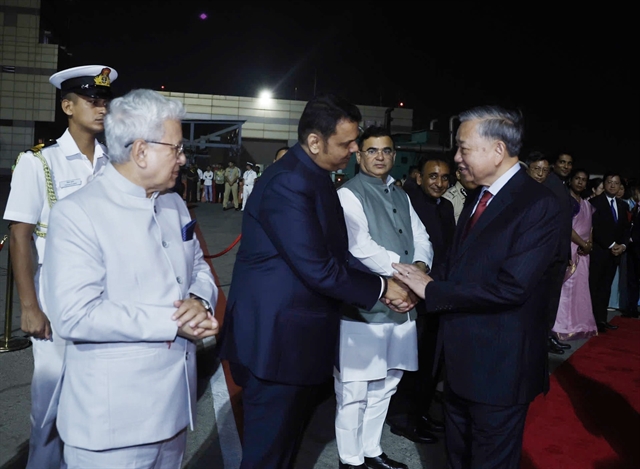 |
| Party General Secretary, President Tô Lâm departed from Chhatrapati Shivaji Maharaj International Airport in Mumbai on May 7 evening. — VNA/VNS Photo |
MUMBAI — After concluding activities during his state visit to India from May 5–7, General Secretary of the Communist Party of Việt Nam Central Committee and State President Tô Lâm and a high-ranking Vietnamese delegation departed Mumbai International Airport on May 7 evening (local time) for a state visit to Sri Lanka from May 7–8.
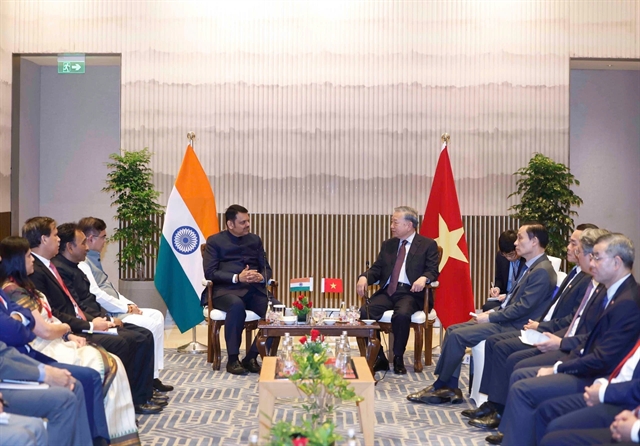
While in New Delhi, General Secretary and President Lâm held talks with Indian Prime Minister Narendra Modi, witnessed the exchange of cooperation documents and met with the press; met with Indian President Droupadi Murmu; received Indian National Security Advisor Ajit Dovala and President of the India–Việt Nam Friendship Association Kusum Jain; delivered a policy speech at the Indian Council of World Affairs; and attended the Việt Nam–India Innovation Forum.
On the occasion, the Vietnamese leader laid wreaths at the Mahatma Gandhi memorial site and the statue of President Hồ Chí Minh, and met with staff of the Vietnamese Embassy as well as representatives of the Vietnamese community in India.
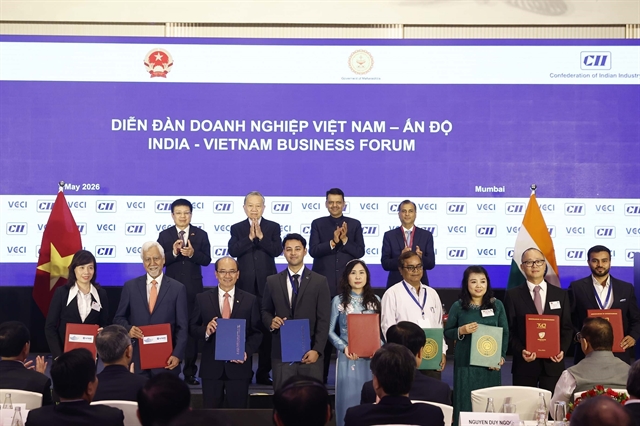
After concluding activities in the Indian capital, the top leader travelled to Mumbai, where he received Chief Minister of Maharashtra state Devendra Fadnavis and Governor of Maharashtra Jishnu Dev Varma, held meetings with leaders of several Indian corporations and businesses, addressed the India–Việt Nam Business Forum, and rang the bell at the National Stock Exchange of India.
At the meetings, talks and receptions, both sides expressed satisfaction at the remarkable progress across multiple fields over the past decade since the establishment of the Việt Nam–India Comprehensive Strategic Partnership. Political trust has continued to strengthen, while defence and security cooperation has deepened and become a strategic pillar of the bilateral ties. Economic, trade and investment cooperation has maintained positive growth momentum, with bilateral trade turnover increasing steadily each year to exceed US$16.4 billion in 2025. Cultural and people-to-people exchanges have also remained a bright spot, with growing numbers of tourists from each country choosing the other as a travel destination.
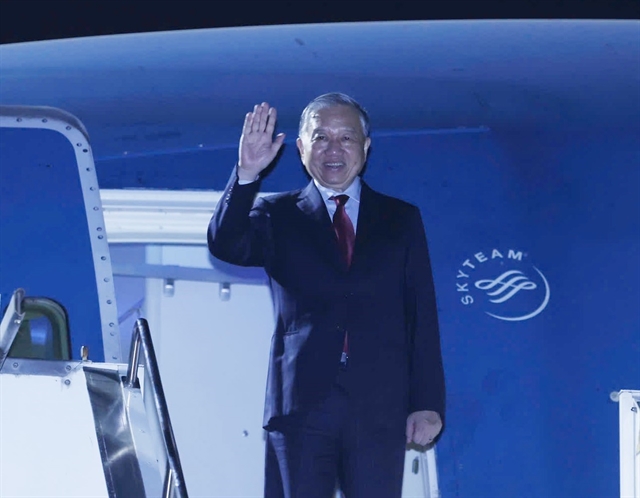 |
| Party General Secretary, President Tô Lâm left Mumbai, India, for Sri Lanka on May 7. — VNA/VNS Photo |
The two sides agreed to elevate bilateral ties to an “Enhanced Comprehensive Strategic Partnership” under the spirit of “shared vision, strategic convergence and substantive cooperation”, opening a new phase in the bilateral relations.
To concretise the Enhanced Comprehensive Strategic Partnership, the two sides held in-depth discussions and mapped out strategic directions to expand cooperation across sectors.
In economic, trade and investment cooperation, they agreed to create new breakthroughs and enhance complementarities in the spirit of mutual benefit and win-win cooperation, particularly through stronger integration into global supply and value chains.
They set a target of lifting two-way trade to $25 billion by 2030 in a balanced and sustainable manner, while stepping up efforts to remove trade barriers, improving market access for each other’s products.
Việt Nam and India also identified science and technology, innovation and digital transformation as major drivers of the next phase of bilateral ties. The two countries agreed to broaden cooperation in core technologies, including semiconductors, artificial intelligence (AI), information technology, 6G, healthcare, critical minerals, and the peaceful use of nuclear energy. Both sides will encourage stronger links between technology enterprises, with plans to develop joint ventures, R&D centres and shared innovation hubs.
On regional and global issues, the two sides reaffirmed close coordination and mutual support at multilateral forums, especially the United Nations, Association of Southeast Asian Nations (ASEAN) and ASEAN-led mechanisms. They also reiterated the importance of maintaining peace, stability, security, safety and freedom of navigation and overflight, while stressing that disputes must be resolved peacefully in line with international law, including the United Nations Convention on the Law of the Sea (UNCLOS 1982).
During the visit, General Secretary and President Lâm and PM Modi witnessed the signing and exchange of a series of cooperation agreements spanning science and technology, critical minerals, healthcare, tourism and culture, finance, cybersecurity, local cooperation and auditing. — VNA/VNS
Politics & Law
 Politics & Law
 Politics & Law
 Politics & Law
 Politics & Law
 Politics & Law
 Politics & Law
 Politics & Law
 Politics & Law
 Politics & Law
 Politics & Law
 Politics & Law
 Politics & Law
 Politics & Law
 Politics & Law