 Politics & Law
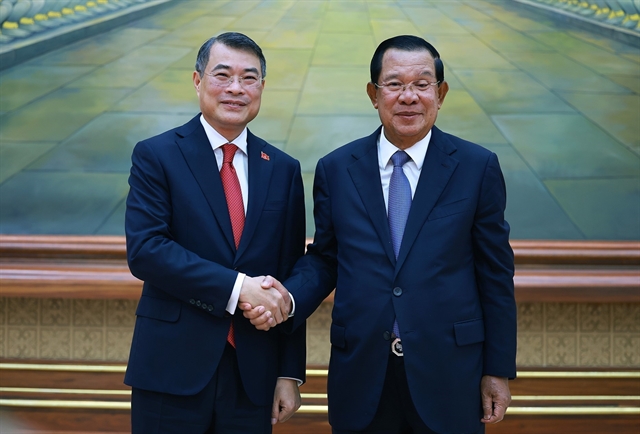
Vietnamese Prime Minister meets Cambodian National Assembly President
1.
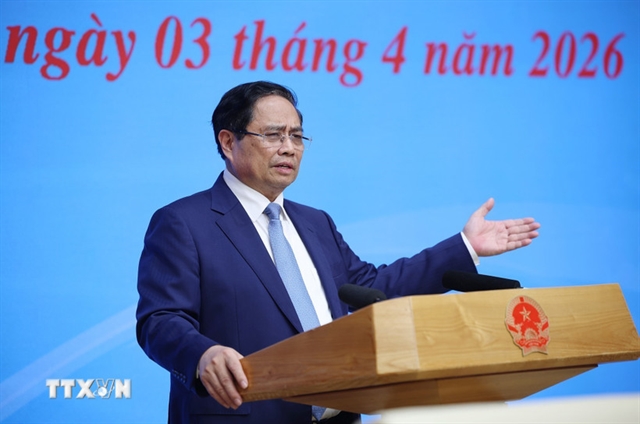 |
| Prime Minister Phạm Minh Chính at the meeting. — VNA/VNS Photo |
HÀ NỘI — Prime Minister Phạm Minh Chính has stressed that foreign affairs and international integration activities must closely follow the country’s development requirements, making a direct contribution to the goal of achieving double-digit economic growth.
PM Chính, who is also Head of the National Steering Committee for International Integration, made the request while chairing the committee's hybrid meeting in Hà Nội on Friday. The meeting reviewed the institutionalisation of major foreign policy orientations outlined at the 14th National Party Congress, as well as the Politburo’s Resolution No. 59-NQ/TW on international integration in the new context.
In his conclusion, the PM observed that the global situation since the beginning of the year has evolved rapidly, with complex and unpredictable developments. Domestically, Việt Nam has successfully organised the 14th National Party Congress and election of deputies to the 16th National Assembly and People’s Councils at all levels, while effectively handling both routine and unforeseen tasks.
The government leader noted that key targets have largely been achieved, with macroeconomic stability maintained, inflation kept under control, growth promoted and major economic balances ensured, including energy security, with no fuel shortages despite ongoing tensions in the Middle East. Foreign affairs and international integration have remained a bright spot, contributing to a peaceful and stable environment for national development, he stressed.
Looking ahead, the PM underscored the need to uphold a proactive, dynamic and innovative approach in adapting to changing circumstances by enhancing forecasting capacity to avoid being caught off guard, maintaining sound relations with partners worldwide, and adjusting policies in line with evolving conditions.
He highlighted the importance of upholding multilateralism, promoting international solidarity to generate strength, fostering cooperation to mobilise resources and wealth, and engaging in consultations and global forums to build trust. The overarching objective is to serve the goal of double-digit growth, with international integration placed within a broader strategy and linked to rapid and sustainable national development, in pursuit of the country’s long-term centenary goals, PM Chính stressed.
The government leader called for improving the quality of economic integration to support the development of strategic sectors; stepping up economic diplomacy; diversifying markets, supply chains and products; and reducing reliance on a limited number of partners and low value-added segments.
He also emphasised the need to attract high-quality foreign investment with advanced technologies and strong value-added potential, particularly projects capable of transferring technology and integrating domestic enterprises into global production chains.
At the same time, PM Chính urged deeper, more substantive and effective political integration to enhance strategic trust with partners, while actively contributing to key regional and international multilateral mechanisms.
Among priorities, he highlighted the importance of consolidating strong ties with neighbouring countries and Southeast Asian nations, maintaining balanced and harmonious relations with major powers, and making tangible progress in relations with key partners and traditional friends. These efforts would help expand Vietnam’s strategic space and utilise it effectively for sustainable development.
The PM also directed stronger international integration in the fields of science and technology, innovation, digital transformation, green transition, circular economy and knowledge economy. He stressed the need to shift from passive technology adoption to proactive cooperation in mastering and developing new technologies, making science, innovation and digital transformation key pillars in relations with capable partners.
He further called for comprehensive integration in the spheres of culture, society, tourism, environment, healthcare and education, while stepping up international cooperation in human resource training in critical fields such as artificial intelligence, semiconductors, nuclear energy and quantum technology.
Last but not least, PM Chính underlined the importance of improving the quality of personnel engaged in foreign affairs and international integration across ministries and sectors. — VNA/VNS
Politics & Law
 Politics & Law
 Politics & Law
 Politics & Law
 Politics & Law
 Politics & Law
 Politics & Law
 Politics & Law
 Politics & Law
 Politics & Law
 Politics & Law
 Politics & Law
 Politics & Law
 Politics & Law
 Politics & Law