 Politics & Law
Việt Nam, China seek stronger substantive parliamentary cooperation
1.
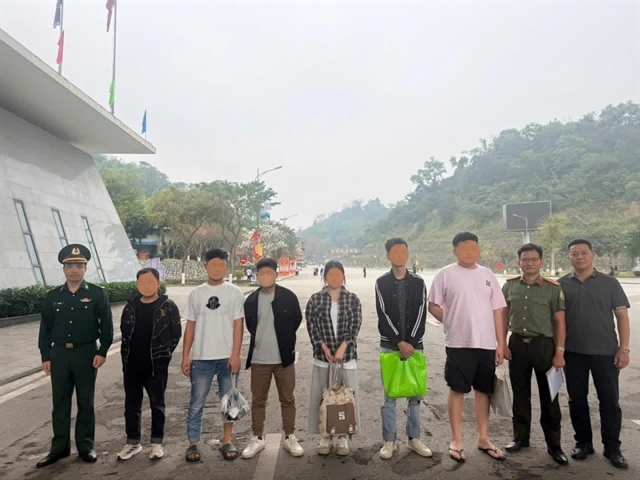 |
| Lạng Sơn provincial authorities on March 30, 2026, deported six Chinese nationals found to have entered Việt Nam illegally. — Photo from Lạng Sơn Police |
HÀ NỘI — Việt Nam has overhauled its deportation regulations for foreign nationals, with a new decree starting effect on April 1, aimed at streamlining procedures while strengthening human rights protections.
Decree 59/2026/NĐ-CP, issued by the Government, replaces earlier provisions under Decree 142/2021 and sets out updated rules on deportation as an administrative sanction, as well as procedures for temporary detention, escort and management of foreign offenders awaiting removal.
The regulation, consisting of six chapters and 44 articles, applies to foreign nationals committing administrative violations within Việt Nam's territory, contiguous zones, exclusive economic zone and continental shelf.
One of the most notable changes is the full digitalisation of the deportation process. For the first time, procedures ranging from case handling to detention and escort will be conducted electronically, enabling faster data processing and reducing reliance on paperwork.
The decree also introduces clearer provisions to protect women and children, embedding principles of gender equality and safeguarding lawful rights. This marks a more explicit and human-centred approach compared to previous regulations, which focused primarily on general protections of life and health. Minors awaiting deportation must now be held separately from adults, a measure aimed at preventing negative psychological and social impacts.
Foreign nationals subject to deportation are granted broader rights under the new rules. They may directly contact their country’s diplomatic or consular representatives and request a review of deportation decisions, going beyond the previous framework of general complaints and denunciations.
They are also entitled to legal representation or assistance, as well as interpreters when working with Vietnamese authorities.
Additionally, deportees must be informed of the reasons for their removal and receive the decision at least 48 hours before enforcement.
The decree clearly defines which authorities can issue deportation decisions, including the Director General of the Immigration Department under the Ministry of Public Security, provincial police chiefs and heads of immigration divisions.
At the same time, it simplifies enforcement by allowing these officials to directly decide on management measures for individuals awaiting deportation, removing multiple layers of approval that previously slowed responses.
To prevent prolonged illegal stays, the new rules allow immediate deportation for individuals unable to pay administrative fines, with enforcement of financial penalties suspended in such cases.
The decree also expands circumstances under which deportation may be delayed. These include situations where the individual is involved in legal proceedings, suffers from serious illness or is affected by force majeure events such as natural disasters, epidemics or conflict.
Notably, the authority that issues the deportation decision is also empowered to approve postponements, streamlining the process.
Standards for detainees awaiting deportation have been raised, with daily food rations doubled in some categories, including an increase in meat from 0.1kg to 0.2kg and drinking water allowances from 1l to 2l.
Authorities are also required to provide detailed background information on deportees to designated accommodation facilities, enhancing monitoring and security.
Officials say the decree reflects Việt Nam's broader effort to align domestic regulations with international human rights standards, particularly in handling vulnerable groups and ensuring due process. — VNS
Politics & Law
 Politics & Law
 Politics & Law
 Politics & Law
 Politics & Law
 Politics & Law
 Politics & Law
 Politics & Law
 Politics & Law
 Politics & Law
 Politics & Law
 Politics & Law
 Politics & Law
 Politics & Law
 Politics & Law