 Economy



Vietnamese scientist wins ASEAN-US Science Prize for Women
1.
|
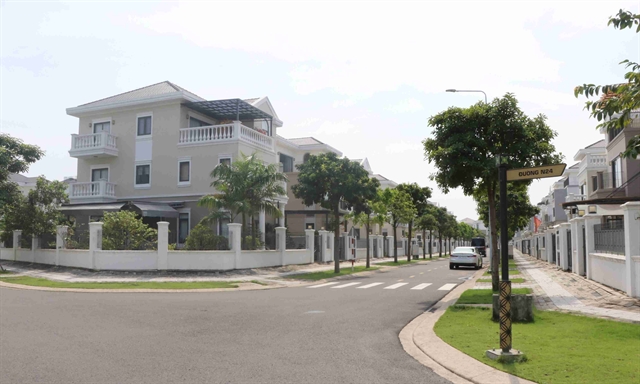
| Novaland's property project in Đồng Nai Province. Novaland has completed the transfer of four assets worth about VNĐ11.27 trillion, aimed at raising funds for debt repayment. VNA/VNS Photo |
HÀ NỘI — Việt Nam's property developers are scrambling for capital as weak sales, rising inventories and tighter credit squeeze liquidity, forcing some to sell assets, transfer projects or seek partners to stay afloat.
The pressure is challenging a business model long reliant on expanding land banks and high leverage. As capital costs rise and sales slow, developers are increasingly putting new projects on hold and focusing on completing existing ones to recover cash.
Real estate inventories exceeded 39,000 units in the second quarter, with inventories of low-rise homes rising more than 46 per cent, according to the Ministry of Construction.
Absorption in the first half of 2026 fell 62 per cent from the second half of 2025, while the average absorption rate dropped to 20-30 per cent, about 30 percentage points lower, according to Dat Xanh Services.
For developers, slow sales tie up capital in unfinished or unsold projects while land use fees, construction, labour, operating costs and interest payments continue to accrue.
With bank credit harder to access, corporate bonds remain an important source of funding despite their high cost.
Real estate companies issued four bond tranches in August, raising nearly VNĐ4 trillion (US$154 million) at an average annual interest rate of about 12.2 per cent, according to data from the Hanoi Stock Exchange.
One of Việt Nam's leading property developers recently raised VNĐ3 trillion through two bond tranches carrying annual rates of 11 per cent and 12.5 per cent. Kinh Bắc raised VNĐ700 billion through a three-year bond, with a first-year rate of 12 per cent.
The borrowing costs show how much developers are paying to keep projects moving. But bonds offer only a temporary solution if companies cannot generate sufficient future cash flow.
Issuing new debt mainly to refinance existing obligations or support an inefficient business model could instead deepen financial strain.
That is pushing more developers towards asset sales and project transfers.
Novaland has completed the transfer of four assets worth about VNĐ11.27 trillion, or about 72 per cent of its planned VNĐ15.62 trillion asset-sale programme aimed at raising funds for debt repayment.
The company still has five assets on offer. Four, worth a combined VNĐ3.93 trillion, have preliminary agreements in place.
Phát Đạt is transferring its remaining stake in Đồng Nai Riverside, while An Gia continues to receive transfers of stakes in companies linked to the The Gió Riverside project, thuongtruong.com.vn reported.
Shakeout intensifies
The scramble for cash is also changing how developers view land banks.
Large land holdings were once seen as a key measure of future growth. But with financing becoming more expensive and sales slowing, land that cannot be developed or monetised quickly can become a financial burden.
Developers are thus increasingly willing to sell assets, transfer stakes in projects or bring in partners, sacrificing part of future profits in exchange for financial stability.
Nguyễn Văn Tiến, an owner of a property company in Hà Nội's Đông Anh district, said his company had delayed new project plans to focus resources on projects already under construction, with the aim of completing and handing them over sooner and recovering capital.
At current absorption rates, continuing to invest in land that cannot generate sales would only add to financial pressure, he said. The company is instead seeking partners to co-develop projects or considering partial transfers.
Võ Hồng Thắng, deputy general director of DKRA Group, said weak demand was exposing financial pressure at developers with weak capital positions.
Many developers had already sold assets or transferred projects during previous downturns, leaving them with fewer options now, he said.
A total of 1,463 real estate businesses completed dissolution procedures in the first six months of the year, an average of about 243 a month and more than double the figure a year earlier, highlighting the scale of the shakeout.
VCBS said access to credit for the property sector would be less favourable this year, particularly for companies with weak finances, high leverage or projects with low liquidity.
Developers are now relying on a mix of bond issuance, asset sales, project transfers, investment partnerships, cash recovery from ongoing projects and cost cuts.
The shift marks a departure from expansion driven by leverage and land accumulation. Financial strength is becoming a more important competitive advantage.
Developers with cash, low debt, legally viable projects and products suited to market demand can afford to wait for better opportunities. Those heavily dependent on borrowing and sales proceeds face growing pressure. VNS
Economy
 Economy
 Economy
 Economy
 Economy
 Economy
 Economy
 Economy
 Economy
 Economy
 Economy
 Economy
 Economy
 Economy
 Economy