 Economy



Việt Nam, Suriname promote substantive cooperation across multiple fields
1.
|
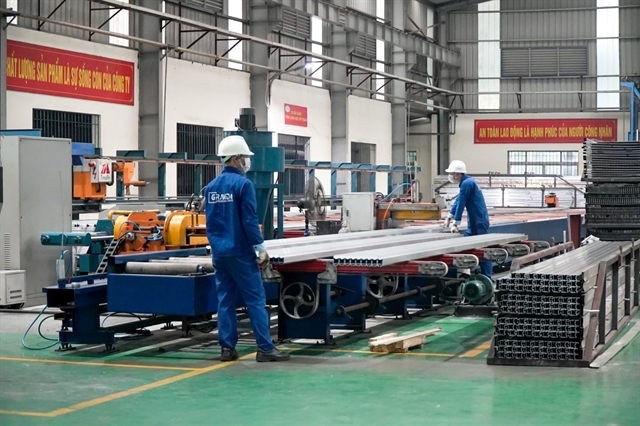
| A factory of Do Thanh Aluminum JSC in Hà Nội. — VNA/VNS Photos |
HÀ NỘI — Hà Nội is stepping up support for private businesses, particularly small- and medium-sized enterprises (SMEs), as the city seeks to boost investment, innovation and participation in domestic and global supply chains.
The city views businesses as a key driver of economic growth and is shifting towards a more service-oriented role, while introducing policies to improve access to land, finance, technology and markets.
Hà Nội recorded more than 32,400 newly registered businesses in 2025, maintaining its position as the country’s leading city by number of registered firms, according to city data.
Over the past six months of 2026, about 19,000 new businesses were registered in the capital, with total registered capital of nearly VNĐ398 trillion (US$15.1 billion), up 21 per cent and 145 per cent, respectively, from a year earlier.
Trần Văn Minh, vice chairman and general secretary of the Hanoi Young Business Association, said SMEs, despite their limited scale, play a vital role in sustaining the vitality and growth momentum of the capital’s economy.
With strong leadership from the city government, support from relevant departments and agencies, and efforts by the business community, existing bottlenecks could be overcome, he said.
This would provide a foundation for Hà Nội's businesses to achieve stronger growth in the coming period and contribute to the capital’s goal of rapid, sustainable and high-quality economic development.
Hà Nội has introduced a range of measures to support SMEs and other private businesses in line with national policies on private-sector development.
Under Resolution 48/2026/NQ-HĐND, the city will provide support for production and business premises; access to credit, science and technology, digital transformation; participation in supply and value chains; and expansion into international markets.
The measures include reductions in land rents and preferential loans from the Hanoi Development Investment Fund for investment in machinery, equipment and technology. The city will also cover up to 70 per cent of international training costs and provide preferential access to laboratories and digital transformation facilities.
It also plans to support access to production and business premises by reducing rents or allowing businesses to sublease land with existing infrastructure in industrial parks, industrial clusters and technology incubators.
The Hanoi Department of Finance said the measures would provide more specific mechanisms for private businesses to access land and production facilities, as well as financial and credit support envisaged under Politburo Resolution 68-NQ/TW and National Assembly Resolution 198/2025/QH15.
Preferential access to land and production premises could help businesses reduce initial investment costs and free up capital for product development and market expansion, the department said.
Preferential loans could also give private businesses more resources to invest in machinery and technology, expand production and develop new markets, particularly in manufacturing, supporting industries, high technology, digital transformation and the green economy.
The measures are expected to help increase private investment and support sustainable economic growth, the department said.
Supporting startups and small businesses
|
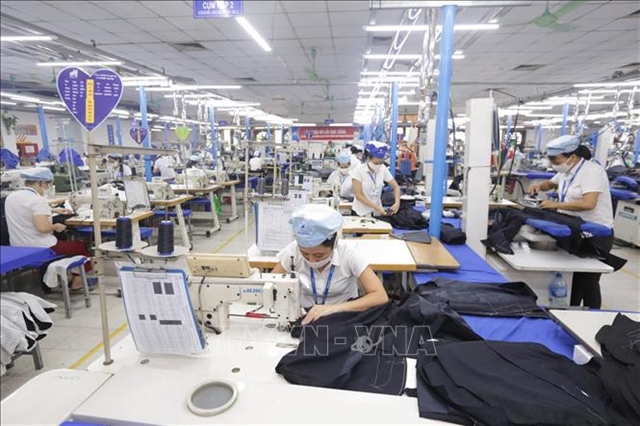
| Garment products are made at a factory in Hà Nội. |
Hà Nội is also expanding policies to support start-ups and SMEs, with a focus on creating a broader business-support ecosystem rather than providing one-off assistance.
Under a 2026-30 project approved in November 2025, the city has set out three groups of measures covering 94 tasks, including reforming the management of business support, developing business ecosystems and providing direct assistance to enterprises and household businesses.
The first group focuses on improving the management of business support through a digital system that allows authorities to monitor implementation in real time, with the aim of improving transparency and ensuring policies are delivered more efficiently.
The second seeks to develop industry clusters and value chains in areas including mechanical engineering, supporting industries and high technology. The city expects businesses operating within common ecosystems to improve resource sharing, cooperation and competitiveness.
The third group provides direct support for businesses and household enterprises, particularly in digital transformation and innovation, while encouraging household businesses to convert into formal enterprises.
Mạc Quốc Anh, vice chairman and general secretary of the Hanoi Association of Small and Medium Enterprises, said SMEs faced growing pressure from rising input costs, interest rates and compliance expenses, while weak consumer demand made it difficult to raise prices.
He called for lower borrowing costs, wider access to preferential credit and simpler lending procedures, as well as measures to reduce compliance costs and administrative burdens.
Support policies should also focus on retaining existing businesses and helping them restructure or change their business models, rather than concentrating solely on encouraging new firms, Anh said. — VNS
Economy
 Economy
 Economy
 Economy
 Economy
 Economy
 Economy
 Economy
 Economy
 Economy
 Economy
 Economy
 Economy
 Economy
 Economy