 Economy



Ambassador pledges every effort to promote Việt Nam–Sweden ties
1.
|
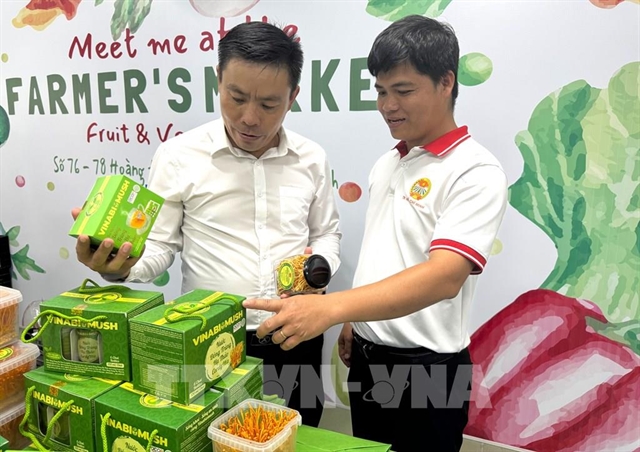
| Cordyceps products produced by Vinabiomush. — VNA/VNS Photo |
HCM CITY — After nearly a decade of implementing the One Commune One Product (OCOP) programme, HCM City has developed more than 1,000 products rated three stars or higher.
With the goal of expanding the number of certified products largely achieved, the city is now shifting its focus to improving quality, adding value and expanding market access.
For many businesses, OCOP certification is no longer the final destination but the starting point for further growth.
Viet Nam Biological Mushroom Company Limited (Vinabiomush) has four OCOP-certified products, including two rated four stars. The company is now aiming for the highest five-star certification, which would demonstrate its ability to compete in international markets.
Director Trần Tài said the company had targeted exports since its establishment nearly a decade ago, investing in high-tech production from mushroom breeding and cultivation to processing and factory construction.
"Our products already meet almost all the requirements for five-star certification," Tài said.
"Stable export performance is the only remaining criterion, and we are negotiating with partners in the US and Singapore to meet it."
He said maintaining strict quality control through an integrated production system has enabled the company to meet demanding international standards.
Other OCOP producers are following a similar path. Vũ Minh Dương, director of Phú Mỹ A Food, said the company's seven three-star OCOP products have strengthened consumer confidence and improved brand recognition, while creating new market opportunities.
The company is now investing in biotechnology and production upgrades to achieve four-star certification by replacing food additives and preservatives in traditional products while preserving their authentic flavours and meeting stricter food safety standards.
As OCOP standards evolve, producers are placing greater emphasis on sustainable production, traceability, raw material development and commercial potential rather than focusing solely on certification.
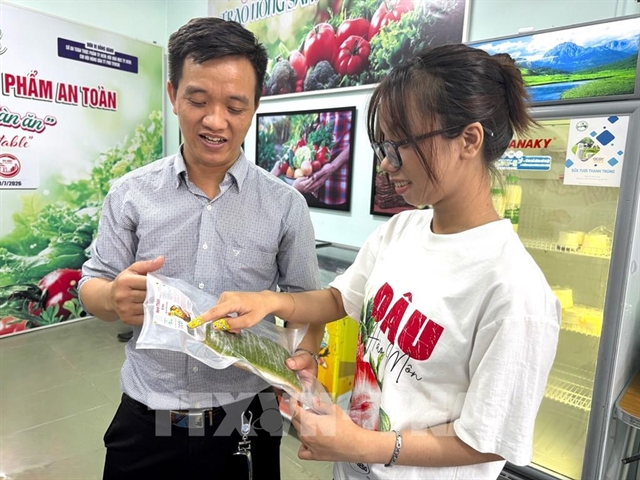
The Cần Giờ Tương Lai Cooperative is improving farming areas, applying new technologies and strengthening quality control throughout production, while Tu Bon Lacquerware has shifted towards natural materials and reduced the use of industrial paints to meet growing demand for environmentally friendly products.
|
| Businesses and cooperatives in HCM City are adopting new technologies and expanding value-added processing to enhance the value of their OCOP products. — VNA/VNS Photo |
Quality takes priority
Nguyễn Hồng Quyết, head of the HCM City High-income Farmers' Branch, said that about 70 per cent of the association's members now have OCOP-certified products.
To help improve product quality, experienced producers are supporting newcomers in preparing certification applications, while a team of experienced farmers provides technical guidance and helps strengthen quality control in raw material production.
Quyết said HCM City still has significant potential to expand the OCOP programme but lacks dedicated spaces to display and promote local OCOP products. Many retail chains have yet to establish dedicated OCOP sections, while support for product testing, branding, marketing and trade promotion remains limited.
He called on authorities to prioritise products with the potential to achieve four- and five-star ratings by expanding support for financing, digital transformation, trade promotion and communications to help consumers better understand the value of OCOP products.
The OCOP evaluation system is also becoming more demanding. In addition to product quality and packaging, greater emphasis is now placed on raw material sourcing, traceability, sustainability, digital transformation and commercial viability, making higher ratings more difficult to achieve while providing a more accurate measure of competitiveness.
Vũ Ngọc Đăng, director of the Rural Development Sub-Department, HCM City Department of Agriculture and Environment, said most OCOP producers are small businesses, cooperatives and farming households. Besides improving product quality, they should invest in branding, packaging and product storytelling to market not only their goods but also the cultural values behind them.
"The value of an OCOP product lies not only in its quality but also in its cultural identity, origin and story," Đăng said.
"With proper investment, OCOP products can expand into international markets while promoting local culture and improving rural incomes."
Việt Nam had more than 21,000 OCOP products rated three stars or above as of the end of June this year, nearly 2,000 more than at the end of last year. HCM City accounted for more than 1,000 certified products, including 141 rated four stars and 660 rated three stars.
After years of expanding the number of certified products, the OCOP programme is entering a new phase focused on improving quality, competitiveness and export potential.
The challenge is no longer how many products earn OCOP stars, but how many can achieve higher standards and succeed in both domestic and international markets. — VNS
Economy
 Economy
 Economy
 Economy
 Economy
 Economy
 Economy
 Economy
 Economy
 Economy
 Economy
 Economy
 Economy
 Economy
 Economy