 Economy



HCM City honours fallen soldiers with solemn musical tribute
1.
|
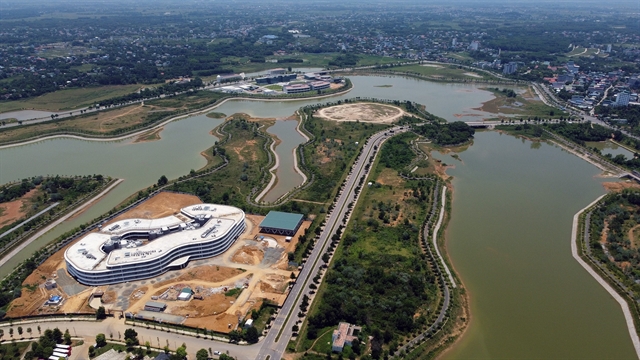
| A view of Hoà Lạc Hi-Tech Park. The capital is focusing on removing obstacles for businesses, accelerating the development of industrial parks, high-tech zones and logistics infrastructure, and prioritising investment in high-tech projects and research and development. — VNA/VNS Photo Huy Hùng |
HÀ NỘI — Hà Nội is laying the groundwork to develop the semiconductor industry into a new growth driver with the capital city accelerating investment in high-tech infrastructure, research capacity and skilled workforce.
The aim is to position the capital as a major semiconductor research and development hub in Việt Nam.
Chairman of the Hà Nội People's Committee Vũ Đại Thắng recently called for efforts to unlock production capacity as part of a boarder effort to achieve double-digit growth in the next period. Among the key sectors identified as future growth drivers, the semiconductor industry has emerged as a strategic priority for the capital.
“To achieve its full-year growth target of 11 per cent, Hà Nội must deliver growth of 13.44 per cent in the second half of the year, which is requiring stronger efforts to unlock growth drivers and clearer accountability for each sector and locality,” Thắng said.
Current growth momentum has laid the foundation, but stronger and more substantive changes are needed in the second half of this year to transform potential and available resources into new production capacity, to meet market demand and orders and to increase added value, he said.
Võ Nguyên Phong, director of the municipal Department of Industry and Trade, said that the capital city has identified electronics, semiconductors, automation as one of four priority industries, alongside high-tech processing and manufacturing, supporting industries and digital industries to drive double-digit growth.
The capital is focusing on removing obstacles for businesses, accelerating the development of industrial parks, high-tech zones and logistics infrastructure, and prioritising investment in high-tech projects and research and development (R&D) centres.
The municipal authorities are also encouraging companies to upgrade technology, improve management capabilities and integrate more deeply into global supply chains.
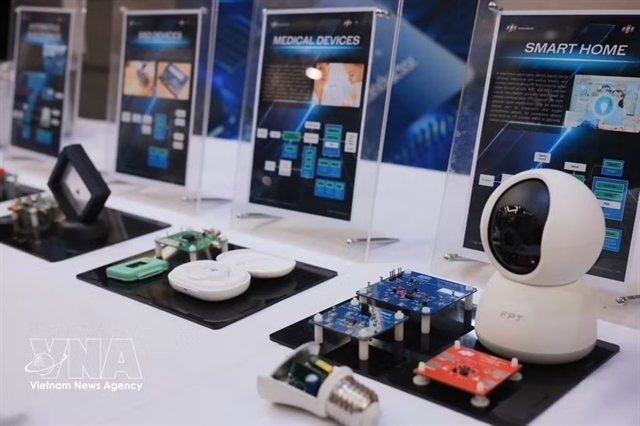
According to the report of the Hà Nội Department of Industry and Trade, a number of projects involving semiconductors, electronic components, robotics, artificial intelligence (AI) and smart devices are already under way in Hòa Lạc Hi-Tech Park and other industrial zones across the city, laying the groundwork for a broader high-tech industrial ecosystem.
Notably, in January 2026, military-run technology group Viettel began construction of Việt Nam's first high-tech semiconductor chip manufacturing plant in Hòa Lạc Hi-Tech Park.
The 27-ha facility is expected to serve as national infrastructure for semiconductor research, design, testing and manufacturing to lay the foundation for a "Make in Vietnam" semiconductor ecosystem.
Building a semiconductor ecosystem
|
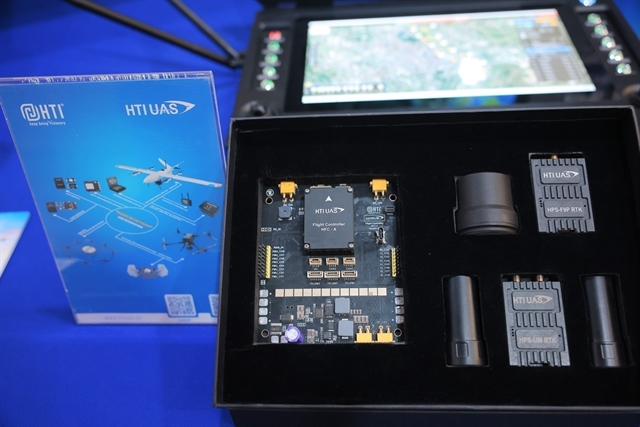
| Semiconductor chips and related products are displayed at the launch ceremony of the National Centre for Semiconductor Chip Prototyping Support in Hà Nội. — VNA/VNS Photo Hoàng Hiếu |
Hà Nội is stepping up effort to establish itself as a centre for semiconductor research, development and workforce training.
At an investment promotion conference in late June, the municipal People's Committee, G-Group Technology, the Molecular Electronics Research Institute (MERI) of Russia, Hanoi University of Science and Technology and the National Security Technology Joint Stock Company signed cooperation agreements on semiconductor technology development.
The agreements help connect government agencies, technology companies, universities and international partners to develop the semiconductor ecosystem and build long-term technological capacity.
The city has also signed 18 memoranda of understanding with domestic and foreign enterprises and research organisations on digital infrastructure, artificial intelligence (AI), semiconductors, chip design, technology transfer and workforce training.

|
| The ground breaking ceremony of Viettel semiconductor chip manufacturing plant in Hoà Lạc Hi-Tech Park in January. — VNA/VNS Photo Thống Nhất |
To implement the Government's semiconductor industry development strategy to 2030 with a vision to 2050, Hà Nội has issued its own plan to develop the semiconductor sector by 2030 with an aim to become a national centre for semiconductor research, development and human resource training.
Under the Plan No.212/KH-UBND issued on June 2, Hà Nội targets training at least 22,000 semiconductor workers of university level or higher by 2030, establishing an international technology university in Hòa Lạc Hi-Tech Park, and developing research and training centres for semiconductor engineers and technicians.
The capital city also aims to attract at least 20 chip design companies and develop advanced semiconductor packaging and testing projects.
Experts said Hà Nội possesses significant advantages to develop semiconductor industry. The capital has been selected as the location for the national centre for semiconductor chip prototyping support and hosts a series of programmes aimed at promoting AI, semiconductor technology, and research and development (R&D).
Hòa Lạc Hi-Tech Park is continuing to expand as a hub for research, innovation and high-tech investment and playing critical role in strengthening the foundations for the development of Hà Nội's semiconductor industry.
According to Nguyễn Trần Thuật from Vietnam National University, Hanoi, the capital city has favourable conditions to become a semiconductor workforce training centre thanks to its strong network of universities and research institutions.
|
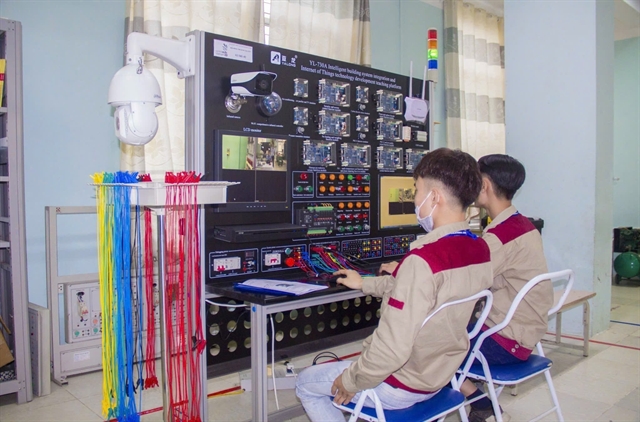
| Training at Hanoi High-Tech Vocational College. Hà Nội aims to establish a semiconductor technician training centre to develp human resource for the semiconductor industry. — VNA/VNS Photo Diệu Thuý |
Phạm Xuân Khánh, rector of Hanoi High-Tech Vocational College, said the school was expanding international cooperation and working with companies including Amkor and Samsung to develop training programmes aligned with industry demand as part of efforts to establish a semiconductor technician training centre.
Khánh added that the involvement of international experts would help transfer knowledge, strengthen teaching capacity and gradually bring local training programmes closer to international standards.
According to the Hà Nội Department of Finance, the capital city will work more closely with neighbouring provinces and cities to build an integrated investment ecosystem to capitalise on the competitive advantages of individual localities to promote high-tech industries, semiconductors, electronics, smart manufacturing and other emerging sectors.
Hà Nội will prioritise investment in new growth drivers such as semiconductors, integrated circuit design, AI, data centres, digital technologies, biotechnology, environmental technologies, clean energy, smart logistics, international finance, high-quality education and healthcare services, the department said.
Another key priority is the development of a stronger innovation ecosystem and a highly skilled workforce. Through closer cooperation between businesses, universities and research institutions, municipal authorities hope to build a pool of workers capable of meeting the demands of emerging industries, particularly the semiconductor sector.
Officials said these efforts would not only strengthen Hà Nội's position as a centre for research and innovation but also help the city establish itself as one of the country's leading semiconductor hubs. — VNS
Economy
 Economy
 Economy
 Economy
 Economy
 Economy
 Economy
 Economy
 Economy
 Economy
 Economy
 Economy
 Economy
 Economy
 Economy