 Economy

Lotte, Phát Đạt combine strengths in Thu Thiem project
1.
|
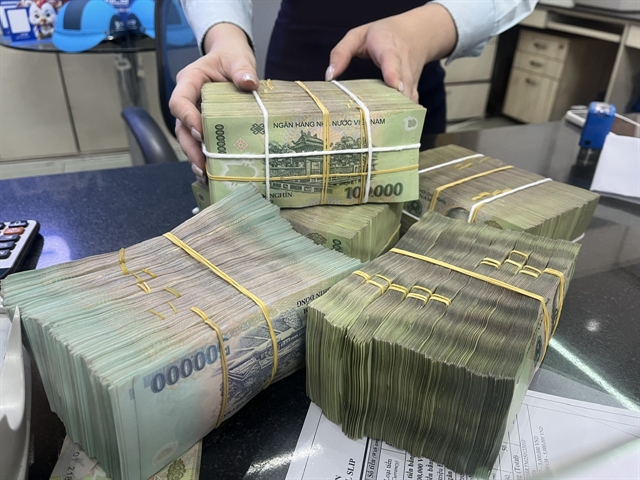
| Transaction at a private bank branch in HCM City. — VNS Photo Bồ Xuân Hiệp |
HCM CITY — Liquidity pressures in the banking system have intensified, with interbank interest rates surging sharply even as authorities move to stabilise market conditions.
Overnight interbank rates, a key gauge of short-term funding costs, jumped to around 12 per cent in recent sessions from about 4.5 per cent a week earlier, according to market data, signalling tightening liquidity across the system.
In response, the State Bank of Vietnam (SBV) has injected roughly VNĐ30 trillion (US$1.2 billion) into the banking system via open market operations, underscoring growing strains despite policy efforts to maintain stability.
The spike in interbank rates comes as the central bank has also urged lenders to stabilise deposit rates and comply with regulatory requirements, amid a recent wave of increases in retail funding costs.
Deposit rates at several banks have climbed to 8-9 per cent annually for terms of six months or longer, with some institutions offering higher effective rates, reflecting intensifying competition for funds.
Analysts say the latest developments point to deeper structural pressures, as credit growth continues to outpace deposit mobilisation, forcing banks to raise funding costs to maintain liquidity and meet regulatory ratios.
Liquidity buffers at some smaller- and mid-sized lenders have narrowed, increasing reliance on the interbank market, where borrowing costs have become more volatile in recent weeks.
Lingering risks from the corporate bond market and a gradual rise in bad loans are also contributing to funding pressures, prompting banks to adopt a more cautious stance on liquidity management.
While the central bank’s liquidity injections may help ease short-term stress, analysts say they are unlikely to fully offset underlying imbalances in the system.
Market participants expect deposit rates to continue rising in the near term, particularly for longer-term products, although the pace may moderate following recent policy guidance.
The developments show that Việt Nam’s banking system is entering a tighter liquidity phase, with implications for both borrowing costs and financial stability in the months ahead. — VNS
Economy
 Economy
 Economy
 Economy
 Economy
 Economy
 Economy
 Economy
 Economy
 Economy
 Economy
 Economy
 Economy
 Economy
 Economy