 Economy



Project to build big-data legal database approved
1.
 |
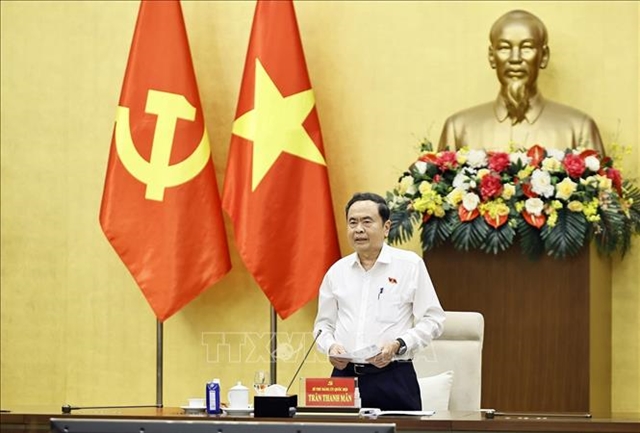
| Global index provider FTSE Russell has confirmed that Việt Nam will be upgraded from a frontier market to a secondary emerging market from September 21. — VNA/VNS Photo Trần Việt |
HÀ NỘI — Việt Nam is set to be upgraded from a frontier market to a secondary emerging market from September 21, global index provider FTSE Russell confirmed in its latest mid-cycle review, marking a milestone expected to draw billions of dollars in foreign investment and deepen the country’s integration into global capital markets.
The FTSE Russell Index Governance Board said it is “satisfied” with Việt Nam’s progress in implementing a global broker framework, a key requirement that allows foreign investors to trade via international intermediaries without opening local accounts.
The reclassification, first announced in October last year, will be carried out in four phases through September 2027.
Vietnamese equities will be gradually added to FTSE’s global equity indices, starting with a 10 per cent weighting. This will rise to 20 per cent in March 2027, 35 per cent in June 2027 and a final 35 per cent in September 2027.
The phased approach is intended to ensure a smooth transition and align with the market’s capacity to absorb capital inflows.
The State Securities Commission of Vietnam said the upgrade reflects coordinated efforts by the Government, regulators and market participants, alongside cooperation with international financial institutions.
The regulator added that the move is expected to enhance market liquidity and strengthen Việt Nam’s position in global financial markets.
Market insiders say the upgrade could attract significant foreign capital. Some securities firms estimate inflows of between US$6 billion and $8 billion, while research from HSBC suggests inflows could reach as high as $10.4 billion under an optimistic scenario, including both active and passive funds.
Analysts at HCM City Securities Corporation forecast that passive funds could bring in $300 million to $500 million during the September rebalancing. Meanwhile, SSI Securities Corporation estimates total passive inflows of about $1.67 billion spread over three to five quarters, similar to the experience of Saudi Arabia following its 2019 upgrade.
Việt Nam is projected to account for about 0.037 per cent of the FTSE Global All Cap Index, 0.024 per cent of the FTSE All-World Index, 0.35 per cent of the FTSE Emerging All Cap Index and 0.227 per cent of the FTSE Emerging Index.
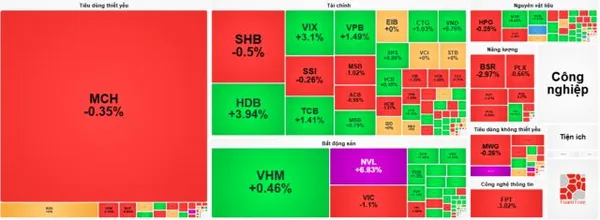
A total of 32 Vietnamese stocks are expected to qualify for inclusion in the FTSE Global All Index, including major blue chips such as Hòa Phát, Vietcombank, BIDV, Vingroup and Vinhomes.
Six months ago, FTSE Russell confirmed that Việt Nam had met all technical criteria for secondary emerging market status, pending improvements in accessibility for global investors.
The Ministry of Finance later issued Circular 08, allowing foreign investors to place orders through overseas brokerage firms, removing the requirement to open local accounts and eliminating pre-funding requirements before trading.
FTSE Russell is one of the world’s three leading index providers, alongside MSCI and S&P Dow Jones Indices, with its benchmarks widely used by asset managers, financial institutions and investors worldwide.
The firm classifies markets into four categories: developed, advanced emerging, secondary emerging and frontier. Several Asian markets, including China, India, Indonesia, the Philippines and Qatar, are already classified as secondary emerging markets. — BIZHUB/VNS
Economy
 Economy
 Economy
 Economy
 Economy
 Economy
 Economy
 Economy
 Economy
 Economy
 Economy
 Economy
 Economy
 Economy
 Economy