 Economy



Project to build big-data legal database approved
1.
 |
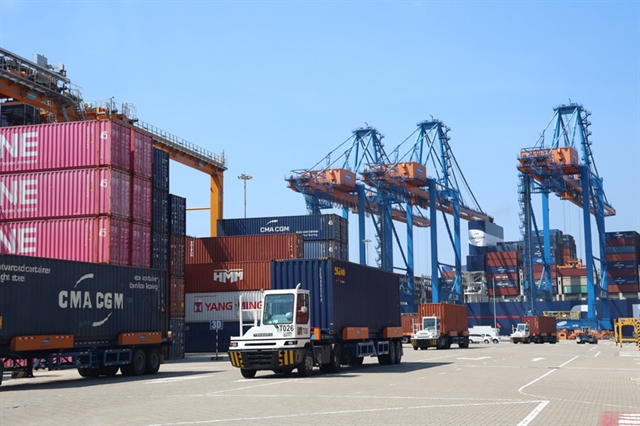
| The USD/VNĐ foreign exchange rate in the second quarter of 2026 is forecast to remain under pressure. —Photo vnbusiness.vn |
HÀ NỘI — As profits of enterprises are significantly eroded by foreign exchange and logistics costs, the use of derivative instruments to mitigate exchange rate risk is no longer an option, but a survival requirement for enterprises, experts have said.
The USD/VNĐ foreign exchange rate in the second quarter of 2026 is forecast to remain under pressure.
According to a recent monetary market report of the MB Securities Company (MBS), the US dollar index (DXY) has recorded its strongest growth month since July 2025. From 97.6 at the end of February, DXY surged by 3 per cent to 100.51 at the end of March.
The driving force behind the rise of DXY doesn't come from a single factor, but rather from the confluence of many complex macroeconomic factors.
The prolonged conflict in the Middle East directly threatened global energy supplies, pushing world oil prices to a peak of US$120 per barrel – the highest level in four years. Because oil is priced in the dollar, the increase in the oil price naturally becomes a springboard for the strength of the dollar.
In the domestic market, the foreign exchange market is under direct pressure from the upward trend of the international market. The interbank exchange rate in March increased by 1.1 per cent compared to the previous month to VNĐ26,345 per dollar. Notably, the dollar in the unofficial market saw a sharp increase of 5.1 per cent to VNĐ28,055 per dollar.
MBS’s experts forecast that the exchange rate will fluctuate in the range of VNĐ26,350 and VNĐ26,700 in the second quarter of 2026. Therefore, enterprises need to prepare measures to mitigate the negative impact of exchange rate fluctuations.
Nguyễn Quốc Kỳ, Chairman of Vietravel, believes that enterprises need to proactively use price hedging tools for both fuel and foreign currency to stabilise input costs.
Instead of relying entirely on the US dollar, enterprises are advised to negotiate payments in other currencies such as euro, Japanese yen or Chinese yuan in order to diversify concentrated risk.
Trần Thụy Quế Phương, Deputy Secretary General of the Vietnam Association of Seafood Exports and Producers (VASEP), recommends that enterprises integrate exchange rate risk into their long-term business strategies instead of just handling the situation.
Proactively negotiating risk sharing with foreign partners and maintaining a solid production foundation will be the key to overcoming this unstable period in the financial market.
According to Huỳnh Duy Sang, Director of ACB’s Financial Markets Division, commercial banks are currently stepping up consulting foreign exchange, helping enterprises optimise cash flow and shorten international payment times.
Sang notes that the rising exchange rate is a challenge, but also a test of the management capabilities of Vietnamese enterprises. In a world full of geopolitical and energy volatility, enterprises that know how to use financial tools as a ‘shield’ will not only survive but can also thrive when market conditions become favourable again. — BIZHUB/VNS
Economy
 Economy
 Economy
 Economy
 Economy
 Economy
 Economy
 Economy
 Economy
 Economy
 Economy
 Economy
 Economy
 Economy
 Economy