 Economy


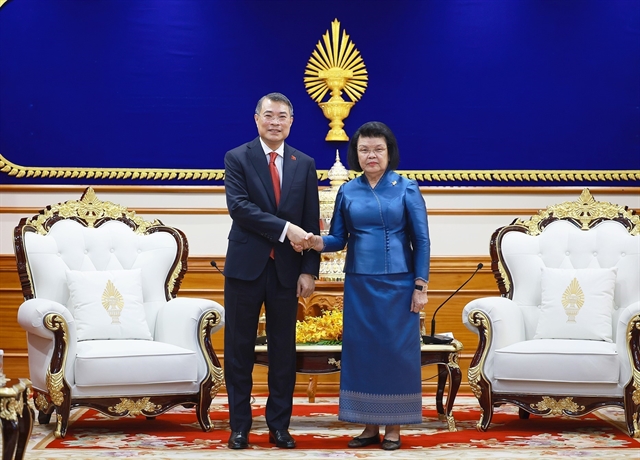
Vietnamese Prime Minister meets Cambodian National Assembly President
1.
|
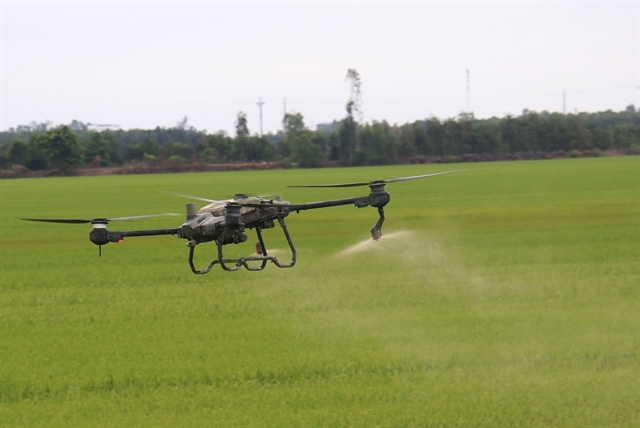
| A drone sprays pesticides over a rice field in Đồng Tháp Province. The technology helps cut pesticide use by 20–30 per cent and works 10–15 times faster than traditional spraying, saving VNĐ2–3 million (US$76–114) per hectare each rice crop. — VNA/VNS Photo |
ĐỒNG THÁP — Đồng Tháp Province is accelerating agricultural restructuring by applying high technology, strengthening value chains and expanding agro-tourism to raise incomes and boost exports.
The Cửu Long (Mekong) Delta province views agriculture as a key pillar for long-term growth and is building an ecological farming system that uses modern technology, strengthens value chains and opens opportunities for agricultural tourism.
Farmers have applied scientific advances to improve production efficiency and increase the value of farm produce.
Trần Văn Sống, who owns a 0.8ha durian orchard in Ngũ Hiệp Commune, said he has adopted modern cultivation techniques and a water-saving sprinkler irrigation system.
The orchard brings him an annual income of more than VNĐ1 billion (US$38,000) after costs, he said.
In the province’s largest dragon fruit growing area – including Tân Thuận Bình Commune and neighbouring communes of Chợ Gạo, An Thạnh Thủy and Mỹ Tịnh An – there are 64 export growing-area codes covering about 2,030ha.
The fruit is exported to markets such as China, South Korea, the US, Australia and New Zealand.
The Hung Thinh Phat Clean Agricultural Co-operative in Tân Thuận Bình Commune has developed dragon fruit areas meeting Vietnamese and global good agricultural practices (VietGAP and GlobalGAP) standards.
Nguyễn Trung Quý, its director, said the co-operative processes 60–100 tonnes of dragon fruit each month, along with more than 60 tonnes of other fruits for export to Japan, the US, South Korea and China.
These fruits are also supplied to supermarkets and retail chains nationwide, helping ensure stable outlets for co-operative members and local farmers, he said.
Nguyễn Công Thành, Chairman of Tân Thuận Bình Commune People’s Committee, said: “The commune is developing co-operatives and co-operative groups to gather farmers, provide training and transfer farming techniques in line with good agricultural practices (GAP).
“This also helps promote products and strengthen trade promotion activities for agricultural produce, aiming to raise the value chain of dragon fruit and support the sector’s sustainable development,” he said.
In rice production, the province has developed high-tech farming areas by applying rice transplanters combined with fertiliser placement and smart pest monitoring systems.
It is also participating in the Ministry of Agriculture and Environment’s project on the “Sustainable Development of One Million Hectares of High-Quality and Low-Emission Rice Associated with Green Growth in the Mekong Delta by 2030”.
Pilot models in the project in the 2025 summer–autumn crop in Mỹ Thành Commune showed profits rising by VNĐ3.9–5.3 million (US$148–201) per hectare, while production costs fell by VNĐ2.5–3.2 million ($95–121) per hectare compared with conventional farming.
|
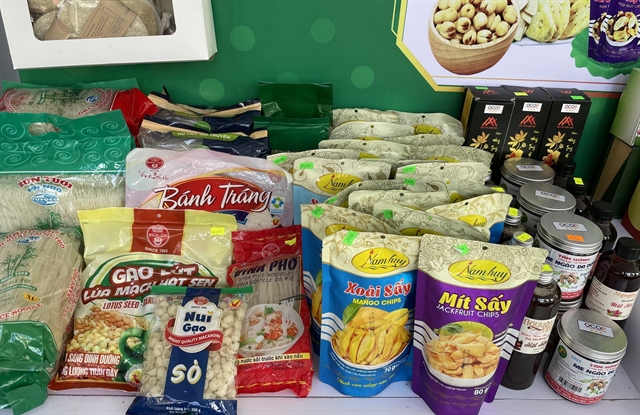
| Processed agricultural products for export, including dried jackfruit, rice macaroni, rice paper and fresh rice vermicelli, produced by enterprises in Đồng Tháp Province. — VNA/VNS Photo |
Sustainable practices
Alongside advanced techniques, farmers are adopting more sustainable practices.
One emerging model involves collecting rice straw to grow straw mushrooms instead of burning it after harvest.
Using rice straw for circular agricultural production, particularly mushroom cultivation, is seen as a practical solution. After cultivation, the remaining material can be used as organic fertiliser, helping close the production cycle.
For many years, burning rice straw has caused environmental and public health concerns. Thick smoke often covers fields, greenhouse gas emissions increase and beneficial organisms in the soil are destroyed, while a valuable agricultural by-product is wasted.
Đồng Tháp is focusing on developing value chains for key agricultural products for both domestic and export markets.
The province recorded export turnover of about $9.2 billion last year, slightly exceeding its annual target, according to its Department of Industry and Trade.
Agricultural and processed products continued to play an important role in the export structure.
To increase product value and improve market access, the province has accelerated the granting of growing-area codes and packing facility codes while strengthening food safety management.
It had 1,500 export-oriented growing areas with 3,449 codes covering nearly 100,000ha last year, producing fruits, rice, glutinous rice and vegetables.
It also had 462 export packing facility codes serving markets such as China, Australia, Japan, New Zealand, South Korea, the US, Malaysia and Singapore.
It is building a new generation of “professional farmers” able to adapt to digital transformation, climate change and international integration.
The “professional farmer” programme, launched in 2020, has gradually expanded across the province.
By the end of 2025, more than 121,000 farmers had registered to participate, with over 42,000 recognised as professional farmers.
|
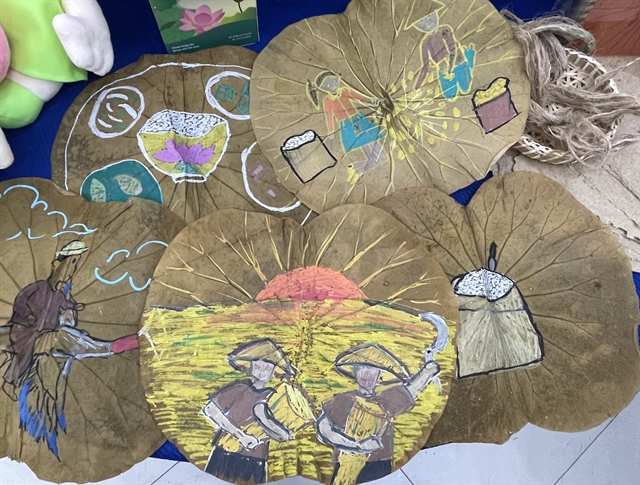
| Lotus leaves from an ecological farming model in Đồng Tháp Province are used as materials for painting. — VNA/VNS Photo |
Agro-tourism expands
With its vast lotus fields and fruit orchards, Đồng Tháp is developing agro-tourism and community-based tourism models to diversify rural livelihoods.
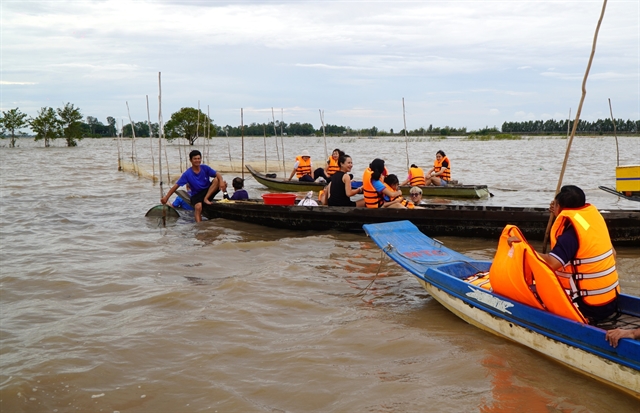
Located in the upstream Mekong Delta, the province has used the annual flood season, which is caused by rising Mekong River levels during the rainy season, to offer tourism services.
In Thường Phước Commune, a seasonal fish breeding model combined with tourism experiences has begun attracting visitors.
Tourists can observe traditional fishing activities and experience rural life.
|
| Farmers in Đồng Tháp Province’s Thường Phước Commune raise fish and other aquatic species in rice fields during the flood season and organise experiential tours for visitors. The model has begun to deliver positive results, attracting tourists, promoting the local image, and helping residents earn additional income. — VNA/VNS Photo |
Võ Phạm Tân, deputy director of the province Department of Culture, Sports and Tourism, said developing tourism linked with agriculture and local culture is opening a new direction.
It helps increase the value of agricultural products while creating additional income and sustainable livelihoods for rural residents, he said. — VNS
Economy
 Economy
 Economy
 Economy
 Economy
 Economy
 Economy
 Economy
 Economy
 Economy
 Economy
 Economy
 Economy
 Economy
 Economy