 Economy


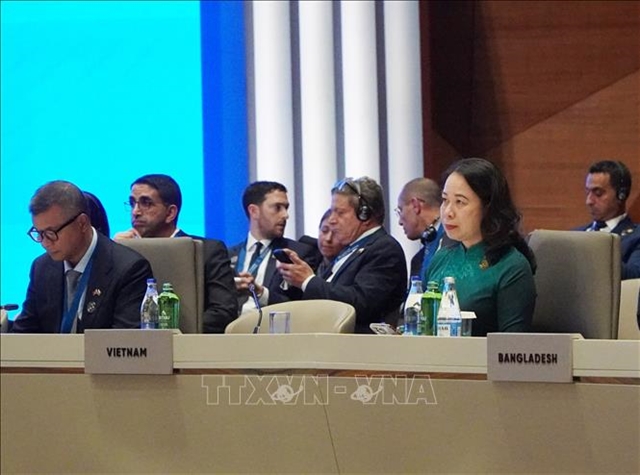
Vietnamese Vice President addresses 7th CICA Summit in Azerbaijan
1.
|
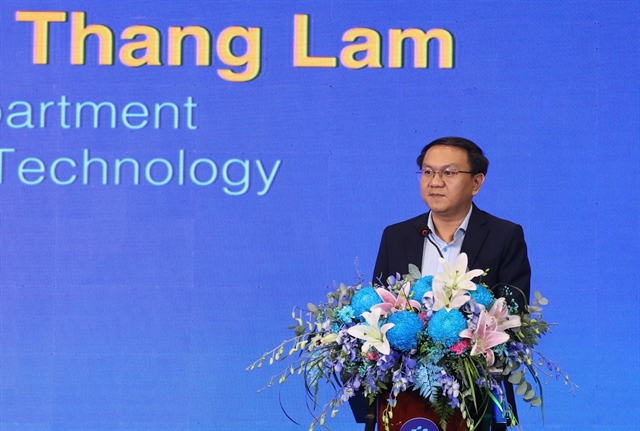
| Lâm Đình Thắng, Director of HCM City Department of Science and Technology, speaks at the opening ceremony, highlighting innovation and digital transformation as key drivers of national competitiveness. VNA/VNS Photo |
HCM CITY — An international gathering focusing on technology and innovation was held in HCM City on November 27, aiming to strengthen the city’s position as a dynamic hub for future development.
The event, titled “Technological Breakthroughs and Innovation – Creating the Next Generation for HCM City (HCMC NextGen)” was organised by the Department of Science and Technology of the city in cooperation with Silver Lion Enterprise Impact Singapore.
It brought together global experts, researchers, investors and business leaders to exchange ideas and form partnerships that support technological progress and the development of high quality human resources.
Speaking at the opening ceremony, Lâm Đình Thắng, director of the Department of Science and Technology, stressed that competitive advantages based on cheap labour or abundant natural resources are no longer sufficient in the global economy.
To maintain momentum and keep pace with rapid change, the city must shift to a new growth model powered by innovation, science, and digital transformation.
Knowledge and technological capability, he said, must become the foundation for development.
Discussions throughout the conference focused on essential drivers of future growth.
Delegates emphasised the importance of investing in advanced technologies such as artificial intelligence, semiconductor design, robotics, biotechnology, cloud computing and large scale data systems.
Stronger collaboration is needed between universities, research institutions, businesses and investment funds in order to accelerate research and development and to turn innovative ideas into products and services that help modernise the economy.
The city has already committed significant resources to this goal.
Nearly VNĐ2 trillion (US$80 million) is planned for investment in the coming years to improve data centres, upgrade digital infrastructure and strengthen electronic public administration.
Additional funds will support the establishment of modern laboratories, innovation centres and training facilities in strategic areas including high technology zones and new smart urban developments.
Delegates agreed that infrastructure alone cannot guarantee success.
The conference placed strong emphasis on education and human resource development as the foundation for meaningful and sustainable innovation.
Schools, universities and vocational institutions across the city are encouraged to reform curriculums to promote creativity, analytical thinking and digital skills.
Through scholarships and cooperation between the public and private sectors, HCM City hopes to build a workforce capable of mastering and leading next generation technologies.
Young innovators, including startup founders and student researchers, had the opportunity to present solutions in financial technology, environmental monitoring and smart transportation.
Many of these initiatives aim to address challenges facing the city today.
Local authorities promised to accompany young entrepreneurs through seed capital, access to technology facilities and guidance from experts, reinforcing the city’s intention to cultivate a strong innovation community.
Representatives from international corporations and business associations expressed confidence in the city’s direction.
They highlighted the city’s dynamic economy, skilled young population and strategic position in regional supply chains as major advantages.
Many noted that Việt Nam, and HCM City in particular, is emerging as a promising destination for research, high technology manufacturing and global investment.
Still, participants acknowledged that the road ahead will require consistent and coordinated effort.
The success of the city’s innovation strategy depends on clear policies, transparent governance, strong digital management and effective cooperation among government, businesses and scientific communities.
Issues such as data security, technology ethics and equal access to digital opportunities were also identified as priorities to ensure that progress benefits society as a whole.
The conference concluded with the signing of several cooperation agreements to expand advanced technology training and facilitate knowledge exchange.
These commitments include the development of centres specialising in artificial intelligence and semiconductor design, along with scholarship programmes for promising students and researchers to study abroad.
As HCM City advances toward its goals for 2030 and 2045, the message emerging from the event was clear: innovation must not only serve economic growth but also enhance the quality of life for current and future generations.
With strong leadership, strategic investment and continuous collaboration, the city aims to become a leading force in regional innovation and a model of sustainable technological development in Asia. — VNS
Economy
 Economy
 Economy
 Economy
 Economy
 Economy
 Economy
 Economy
 Economy
 Economy
 Economy
 Economy
 Economy
 Economy
 Economy