 Politics & Law

AI and EV Boom Draws $690 Million in Advanced Materials Investment Plans to Thailand
1.
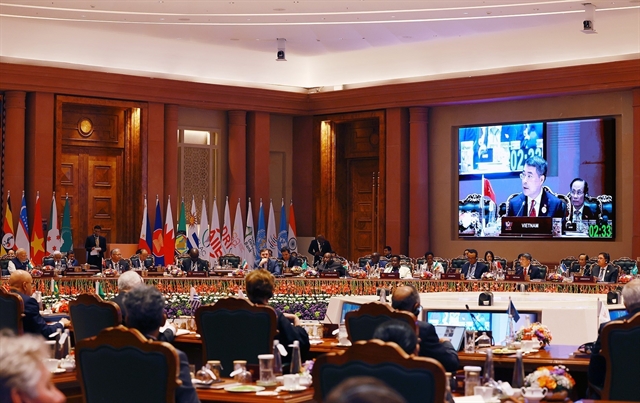 |
| Prime Minister Lê Minh Hưng addresses the main session of the 18th BRICS Summit in New Delhi, India on Sunday. — VNA/VNS Photo Dương Giang |
NEW DELHI — Prime Minister Lê Minh Hưng on Sunday proposed three key directions for BRICS's future development, and stressed Việt Nam's readiness to collaborate with the organisation of major emerging economies to build a future of peace, prosperity and sustainable development for all nations.
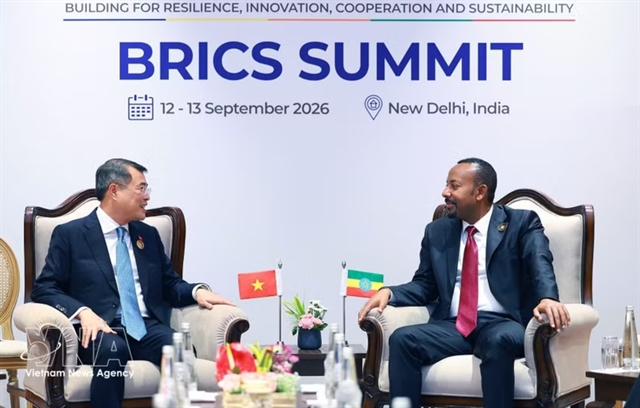
The Vietnamese Government leader was addressing the main session of the 18th BRICS Summit in New Delhi, India, which Việt Nam attended as a partner country.
This is the first time Hưng has attended a BRICS Summit and the second time Việt Nam has participated in the event as a BRICS partner, which demonstrates the country's growing role, stature and responsible contributions to global issues and the future of the region and the world.
With the theme 'Resilience, Innovation, Cooperation and Sustainability: Shaping the Future for Inclusive Global Growth', this year’s summit drew the participation of heads of states, governments and many high-ranking leaders from BRICS member states, partner countries and guest nations.
Addressing the session, the PM expressed his strong appreciation of the summit’s priorities and proposed three points for BRICS to consider in enhancing its role in the next few years.
First, he said, the organisation should shift from reacting to volatility to proactively enhancing the resilience and self-reliance of member economies.
This involves strengthening cooperation and helping developing nations bolster their capacity for flexible policymaking, governance and strategic forecasting, while simultaneously boosting labour productivity and economic dynamism.
It also includes timely crisis prevention and proactive responses to shocks, particularly in economic and financial sectors, as well as addressing contemporary cross-border challenges.
Next, BRICS should transition from simply expanding the scope of cooperation to revitalising traditional growth drivers and fostering new, inclusive and sustainable ones, Hưng said.
This can be achieved by strengthening policy coordination on trade and investment, opening markets and leveraging existing financial institutions, as well as mobilising additional long-term, cost-effective resources to ensure developing countries have fairer access to capital for digital and green transitions.
Third, cooperation opportunities within BRICS in science, technology and innovation should be translated into specific programmes and projects that serve the common interests of member nations.
This should be pursued through joint research, workforce training and technology transfer, particularly in high-impact fields such as artificial intelligence, digital technology, smart agriculture and clean energy.
Wrapping up his remarks, the PM noted that Việt Nam’s development orientation is centred on the people, institutional reform, modern governance and science and technology, while ensuring a balance between economic growth, social equity and environmental protection.
He asserted that Việt Nam had always stood ready to partner with BRICS in a spirit of responsibility, goodwill and substantive cooperation, aiming to forge a future of peace, prosperity and sustainable and inclusive development for all nations and people.
The host country and the leaders of the nations attending the summit expressed appreciation for Hưng's remarks.
Following the session, the BRICS New Delhi Declaration was adopted and released. In the declaration, member states and partners expressed "deep concern" over the continued escalation of tensions in the Middle East and West Asia, and over deliberate attacks on civilian infrastructure and peaceful nuclear facilities under full safeguards of the International Atomic Energy Agency.
"Nuclear safeguards, safety and security must always be upheld, including in armed conflicts, to protect people and the environment from harm," the declaration reads.
Established in 2009, BRICS brings together 11 major emerging markets of the world: Brazil, China, Egypt, Ethiopia, India, Indonesia, Iran, Russia, Saudi Arabia, South Africa and the United Arab Emirates.
Việt Nam has actively participated in BRICS-related activities over the years, making responsible contributions to shared global efforts, upholding multilateralism and international law and promoting solidarity and international cooperation.
It has also taken the initiative to join specific cooperation mechanisms and schemes aligned with its national priorities, helping to expand cooperation channels, enhance the exchange of experience and gain access to new initiatives and technological trends. — VNS
Politics & Law
 Politics & Law
 Politics & Law
 Politics & Law
 Politics & Law
 Politics & Law
 Politics & Law
 Politics & Law
 Politics & Law
 Politics & Law
 Politics & Law
 Politics & Law
 Politics & Law
 Politics & Law
 Politics & Law