 Politics & Law
Việt Nam, Switzerland to turn education, sci-tech, innovation into cooperation focus
1.
|
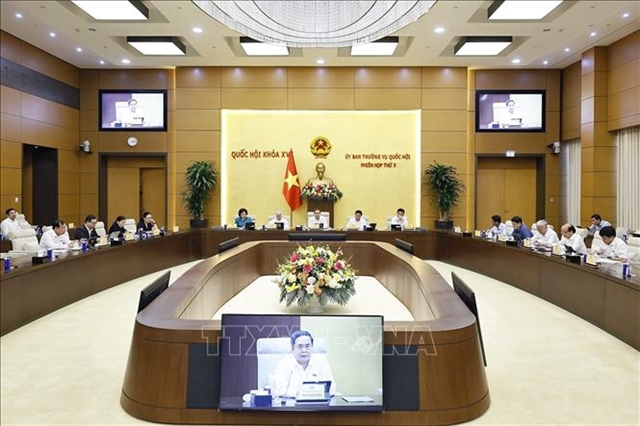
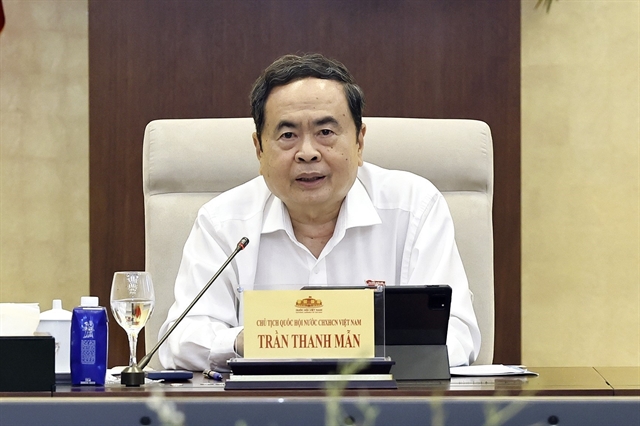
| NA Standing Committee on Tuesday discussed the draft revised Penal Code. — VNA/VNS Photo |
HÀ NỘI — The National Assembly (NA) Standing Committee continued its fifth session on Tuesday, discussing the draft revised Penal Code.
Presenting a summary of the Government’s submission, Deputy Minister of Public Security Lê Văn Tuyến highlighted the foundation for the law's revision.
He said that after nearly 10 years of implementation, several provisions of the current Penal Code have been found to have inadequacies. Some fail to cover newly emerging socially dangerous acts, while others are not fully consistent with specialised laws, criminal procedure legislation, the law on administrative violations, or international treaties to which Việt Nam is a party.
According to Tuyến, the revision focuses on four major areas. These include amending provisions on crimes, revising provisions on penalties, amending regulations on exclusion, postponement, and exemption of criminal liability and the statute of limitations, and revising provisions to ensure sound legislative technique.
A key proposal is to narrow the scope of capital punishment to six offences, along with issues related to capital punishment.
The draft also largely proposes doubling fines and monetary thresholds used to determine offences and sentencing brackets, taking into account changes in prices, wages, incomes, per-capita GDP, and socio-economic development conditions.
Notably, it expands the grounds for exclusion of criminal liability in research, testing and application of new technologies, controlled testing of technologies, processes, solutions, products, services and new business models in technology development and innovation, as well as in national defence and security tasks, and crime prevention and control by the armed forces
The draft also introduces provisions on postponing criminal prosecution, allowing time to remedy consequences of violations under specific conditions. Accordingly, a new basis for exemption from criminal liability will be added where prosecution has been postponed, the consequences have been fully remedied, and the action has generated economic, social, defence, or security benefits.
During the processing of crime reports and denunciations, criminal liability could be exempted where sufficient grounds exist, helping avoid unnecessary procedural steps and ensuring a humane and humanitarian criminal justice policy.
Another new element is the addition of nine offences, focusing on economic management, cybersecurity, high technology, the environment, public safety, and the proliferation of weapons of mass destruction.
The draft also adds new objective acts to existing offences, particularly those involving information technology, telecommunications networks, the economy and trade, and intellectual property. The provisions aim to close gaps in criminal law, prevent crimes from going unpunished, meet international integration requirements, and strengthen crime prevention and control under new circumstances.
Presenting the verification report, Chairman of the NA Committee on Legal and Judicial Affairs Phan Chí Hiếu said NA agencies agreed on the comprehensive revision of the Penal Code based on the political, legal, and practical grounds outlined in the Government's submission.
In general, the draft adheres to and institutionalises the Party's viewpoints and policies, while further specifying tasks related to judicial reform; building and improving the legal system on crime prevention and control; promoting a humane approach to offenders; advancing science, technology, innovation and digital transformation; and encouraging and protecting officials who dare to think, act and take responsibility for the common good.
The Committee on Legal and Judicial Affairs noted that the Penal Code is a fundamental piece of legislation, meaning a comprehensive revision would bring major changes to criminal policy and have broad impacts across all areas of social life.
Meanwhile, the third plenum of the Party Central Committee adopted important policies directly related to the Penal Code. It therefore called for continued study and review to fully institutionalise the latest viewpoints, objectives, and orientations of the Party and State.
Also, during the session, the NA Standing Committee discussed the draft revised Law on the Organisation of Criminal Investigation Agencies and the proposal to split the Ninh Thuận nuclear power project into independent projects. — VNA/VNS
Politics & Law
 Politics & Law
 Politics & Law
 Politics & Law
 Politics & Law
 Politics & Law
 Politics & Law
 Politics & Law
 Politics & Law
 Politics & Law
 Politics & Law
 Politics & Law
 Politics & Law
.jpg) Politics & Law
Politics & Law
 Politics & Law