 Politics & Law

A boost to the grassroots healthcare system
1.
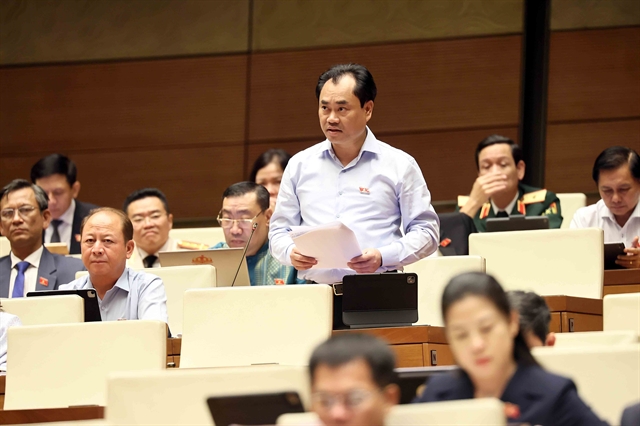 |
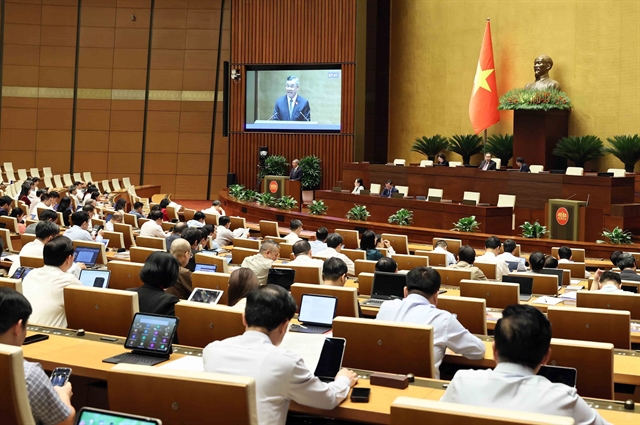
| Minister of Agriculture and Environment Trịnh Việt Hùng speaks to clarify some issues raised by NA deputies on Tuesday morning. — VNA/VNS Photo An Đăng |
HÀ NỘI — Local authorities should carefully review their registration of industrial land use to avoid situations where large areas are allocated but left unused, leading to waste, the agriculture and environment minister has warned, as Việt Nam reassesses how it plans for future industrial growth.
The warning was issued by Minister of Agriculture and Environment Trịnh Việt Hùng as he addressed the National Assembly on Tuesday morning during the first session of the 16th legislature in Hà Nội.
Hùng said that over the past decade, localities have utilised no more than seven per cent of industrial land earmarked under planning frameworks.
Registering excessive allocations without the capacity to implement them, he said, risks significant inefficiency and waste.
In some cases, localities are registering up to 20,000 ha of industrial land for the 2030–35 period.
Based on current land-use efficiency in industrial provinces such as Thái Nguyên and Bắc Ninh, 1,000 ha can attract around 100,000 workers.
That means 20,000 ha would require a workforce of roughly two million people.
“For a midland or mountainous province in the North, this is far from straightforward,” he said.
He cautioned that while many provinces aspire to expand industrial development, overly ambitious land-use plans, if not realised, ultimately result in wasted resources.
Addressing the long-standing issue of restructuring State-run agricultural and forestry enterprises, Hùng said it is one of the most pressing concerns nationwide.
To date, 161 out of 256 such companies have completed restructuring and reform.
Under Government Decree No. 118 on reorganising, reforming and improving the efficiency of agricultural and forestry companies, the Prime Minister is responsible for approving restructuring plans based on proposals submitted by the Ministry of Agriculture and Environment.
Once approved, implementation falls to local authorities.
So far, 40 out of 41 comprehensive plans have been approved by the Prime Minister, with only Hà Nội pending approval due to the need to align with the Capital Law and other relevant legal frameworks.
Hùng then called on the Ministry of Finance to support both his ministry and local authorities in expediting the process to avoid prolonged inefficiencies and land waste.
Agricultural restructuring
On the restructuring of the agricultural sector, Hùng said that in its report reviewing the five-year implementation of the 2021–25 restructuring plan, the ministry had incorporated additional tasks and solutions aimed at developing a modern, smart, sustainable, green and ecological agricultural system.
Taking into account feedback from National Assembly deputies during socio-economic discussions, the ministry will submit further recommendations to the Government and the Prime Minister to refine these tasks and measures, ensuring agriculture contributes more effectively to the country’s overall growth.
In particular, the ministry will prioritise revising and improving relevant legislation, implementing national and sectoral master plans more effectively and reforming governance, institutions and administrative procedures.
Looking ahead, Hùng said the sector would continue restructuring sub-sectors and key product groups to sustain growth momentum and contribute to the country’s targeted double-digit economic expansion.
Efforts will also focus on market development, expanding consumption channels, ensuring stable outlets for agricultural products, strengthening the domestic market and implementing an export development strategy.
In parallel, the ministry is promoting solutions to enhance research capacity, technology application and transfer, with a focus on innovation and digital transformation as well as improving vocational training for farmers and rural workers.
Strategic breakthroughs will also prioritise the development of rural and agricultural infrastructure systems, an effort that will require strong engagement and coordination from local authorities nationwide.
Referring to the recent visit by Party General Secretary and State President Tô Lâm to China, Hùng said the Ministry of Agriculture and Environment had signed export protocols for pomelo and lemon with China’s General Administration of Customs.
“This marked the first time the agency had signed such agreements directly with a Vietnamese ministry in the agricultural sector,” he said.
For durian exports, traceability systems have been implemented from cultivation areas to border checkpoints, significantly reducing customs clearance times from as long as 20 days previously to just five to six days in recent cases. — VNS
Politics & Law
 Politics & Law
 Politics & Law
 Politics & Law
 Politics & Law
 Politics & Law
 Politics & Law
 Politics & Law
 Politics & Law
 Politics & Law
 Politics & Law
 Politics & Law
 Politics & Law
 Politics & Law
 Politics & Law