 Life & Style
Data centre market faces energy challenges
1.
|
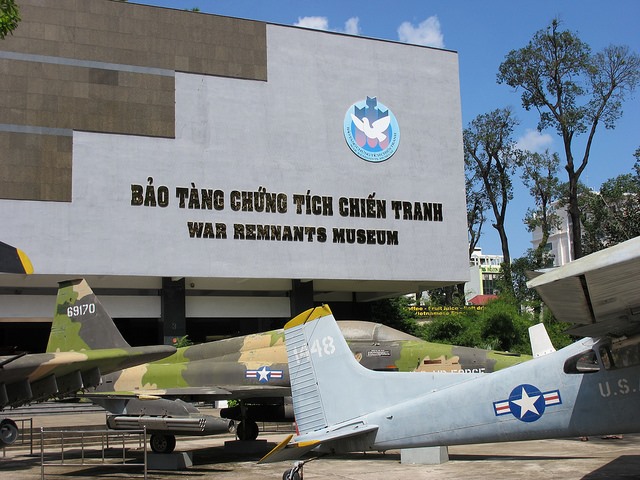
| At the War Remnants Museum, experiential programmes such as Imprints of Peace and Melodies of Peace have been integrated into exhibition spaces, offering a softer way to approach history. — VNA/VNS Photo |
HCM CITY — Cultural institutions in HCM City are undergoing a strong transformation, from the way they organise activities to how they engage audiences, in a bid to bring art and heritage closer to the public.
The Reunification Day (April 30) and May Day holiday this year saw a vibrant array of cultural and artistic activities across HCM City.
Notably, organisers have been moving away from traditional formats, instead proactively “reinventing” themselves through more accessible, highly interactive approaches that encourage direct public participation.
At the War Remnants Museum, experiential programmes such as Imprints of Peace and Melodies of Peace have been integrated into exhibition spaces, offering a softer way to approach history.
Beyond simply viewing artefacts, visitors can print dove symbols, representing peace, or listen to piano performances resonating within spaces filled with memories.
Lâm Ngô Hoàng Anh, deputy executive director of the museum, said these activities were designed to foster natural connections between generations and spread a message of peace.
“There are no longer boundaries between Vietnamese people and international friends, nor gaps between generations who lived through the war and those today, only hearts beating together for peace,” he said.
In practice, this renewed approach has resonated strongly with young people.
Visitor Lê Thị Huế Thanh described her experience as “both moving and intimate”, while expressing regret at missing the peace-printing activity.
“Such programmes help me not only understand history better but also feel more deeply the value of peace today,” she said.
Beyond museums, many cultural and arts organisations are also reshaping how they “tell stories” in more audience-friendly ways, from designing open, interactive spaces to offering free admission during holidays, all aimed at bringing the public closer to culture.
This trend extends to organisational methods as well.
During the holiday, the HCM City Arts Centre staged performances at the Phú Thọ Circus and Multi-purpose Theatre using online registration instead of physical ticket distribution. Within minutes of opening, all slots were fully booked.
Organisers said the system ensures transparency, fairness and better planning.
However, some challenges remain. Ngọc Na expressed disappointment at failing to secure a place despite careful attempts, hoping for additional shows.
Meanwhile, Nguyễn Mun from Cà Mau said she wanted to take her child to the circus but found the online registration process difficult.
Expanding access to heritage
While innovation in format helps bring audiences closer, digital transformation is opening another pathway, taking heritage and the arts beyond physical boundaries.
Phạm Thành Nam, director of the Tôn Đức Thắng Museum, said the institution has completed the digitisation of 100 per cent of its artefacts and documents, building a unified database for management, research and exhibition.
He emphasised that digital transformation is not merely a technical tool but a way for museums to adapt to new patterns of information consumption.
“Technology makes access easier, even for those unable to visit in person. But it is only a means, the core remains the value of artefacts and exhibition content,” Nam said.
Similarly, the War Remnants Museum is implementing multilingual audio guides, 3D digitisation of artefacts and virtual tour platforms. Some exhibition spaces have been scanned in 3D, enabling remote access while maintaining visual authenticity.
According to Hoàng Anh, combining technology with exhibition spaces not only enhances information accessibility but also deepens emotional engagement, particularly in conveying historical and humanitarian values.
At a broader level, the HCM City Museum is also accelerating digital transformation through professional cooperation with the Việt Nam Museum of Ethnology.
Developing digital platforms that integrate on-site and online exhibitions is seen as a key direction for expanding audience reach in the current context.
Beyond museums, technology is also reshaping how artistic activities are organised and disseminated. Online registration, social media promotion and hybrid online-offline experiences are becoming increasingly common.
With many programmes selling out rapidly, it is clear that technology not only supports operations but also creates strong ripple effects.
However, it also raises the need to balance innovation with accessibility, ensuring that technology serves as a bridge rather than a barrier for the public.
As innovation in format goes hand in hand with digital transformation, cultural institutions are evolving from custodians of memory into open spaces, where the public can access, interact with and accompany heritage in contemporary life. — VNS
Life & Style
 Life & Style
 Life & Style
 Life & Style
 Life & Style
 Life & Style
 Life & Style
 Life & Style
 Life & Style
 Life & Style
 Life & Style
 Life & Style
 Life & Style
 Life & Style
 Life & Style