 Economy

Bringing fallen heroes home: Keeping Việt Nam’s tradition of gratitude alive
1.
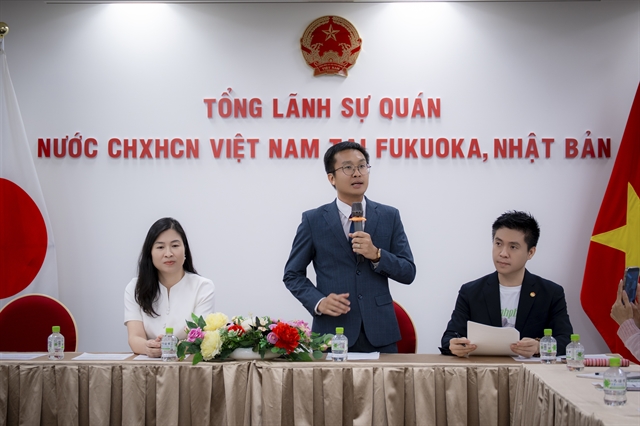 |
| Phạm Thanh Hoàng, President of the Vietnamese Business Association for Trade and Investment Promotion in Kyushu, Japan addressed the 2026 Vietnamese Entrepreneurs Gathering in Kyushu on Sunday. |
FUKUOKA — As Vietnamese enterprises in Japan diversify in both industry scope and operating scale, mutual solidarity and institutional support have emerged as vital foundations for long-term growth.
Opening the "2026 Vietnamese Entrepreneurs Gathering in Kyushu" on Sunday evening, October 11, at the Consulate General of Việt Nam in Fukuoka, Phạm Thanh Hoàng, President of the Vietnamese Business Association for Trade and Investment Promotion in Kyushu, underscored the strategic imperative of tighter linkages across the local diaspora.
"Cooperation must extend beyond immediate transactional deals to foster a reputable business community capable of pooling expertise, market intelligence, and shared resources," said Hoàng.
Organised on the occasion of the Vietnamese Entrepreneurs’ Day (October 13), the event themed "Connecting Entrepreneurs – Sharing Opportunities – Growing Together" provided a platform for practical discussions on bilateral commerce, supply chain resources, and the expanding role of Vietnamese corporate leaders as bridges between the two economies.
In her welcoming remarks, Consul General of Việt Nam in Fukuoka Trịnh Thị Mai Phương commended the community’s proactive approach to integration and its contributions to broader Việt Nam–Japan relations.
"The mission of these enterprises extends far beyond direct commercial operations; it lies in uniting the community, elevating Việt Nam’s national image, expanding partnerships with host prefectures, and forging pragmatic links between our two nations," Phương said.
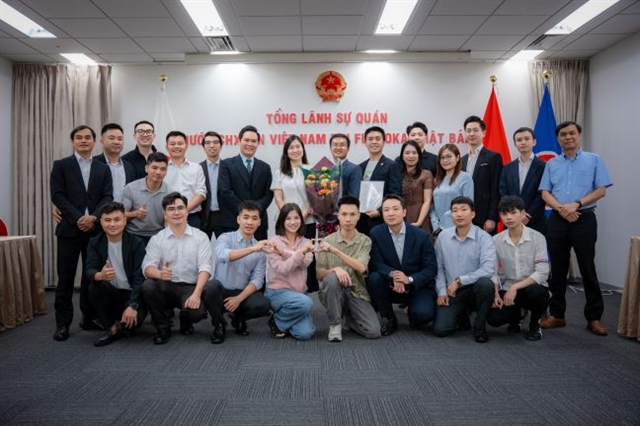 |
| The forum provided a platform for practical discussions on bilateral commerce, supply chain resources, and the expanding role of Vietnamese corporate leaders as bridges between the two economies. Photos courtesy of the Vietnamese Business Association for Trade and Investment Promotion in Kyushu, Japan |
Following the opening session, Member of the Vietnam Fatherland Front Central Committee, Honorary President of the Association Nguyễn Duy Anh moderated a panel discussion focusing on operational realities facing Vietnamese firms in Japan.
Topics included adapting to local commercial norms, regulatory and governance compliance, corporate reputation management, workforce development, market expansion, partner acquisition, and fostering cross-border alliances between Vietnamese and Japanese corporations.
Panel participants acknowledged that in a market characterised by exacting standards for quality, stability, compliance, and institutional trust, individual corporate drive is necessary but insufficient. Building an integrated business ecosystem—one that shares market intelligence, surfaces commercial leads, matches technical capabilities, and resolves operational friction—will help the Vietnamese business community overcome fragmentation, sharpen competitiveness, and secure a firmer market position.
Alongside expanding commercial opportunities generated by deepening Việt Nam–Japan bilateral ties, delegates candidly examined persistent challenges, including language barriers, distinct corporate cultures, difficulties recruiting specialised talent, legal compliance hurdles, capital access, market transparency, and brand building.
Participants called on the association to evolve beyond hosting periodic networking sessions into a permanent coordination hub connecting businesses with diplomatic representations, municipal governments, trade bodies, universities, industry associations, and commercial partners across both countries.
Organisers noted that the forum’s core philosophy remains mutual development through interconnectedness. Attendees gathered not only as commercial entities operating in the same market, but as stewards responsible for projecting a professional, law-abiding, and globally competitive image for Vietnamese business abroad. Sidebar meetings across commerce, services, higher education, human resources, and capital investment opened new avenues for bilateral economic cooperation.
The event marked an important evolution for the Vietnamese business community in Kyushu: shifting from individual adaptation toward pooled resources and collective value creation. This transition aligns with Việt Nam's overarching policies on mobilising overseas Vietnamese resources, reflecting a diaspora business community maturing inside a competitive international marketplace. VNS
Economy
 Economy
 Economy
 Economy
 Economy
 Economy
 Economy
 Economy
 Economy
 Economy
 Economy
 Economy
 Economy
 Economy
 Economy