 Economy


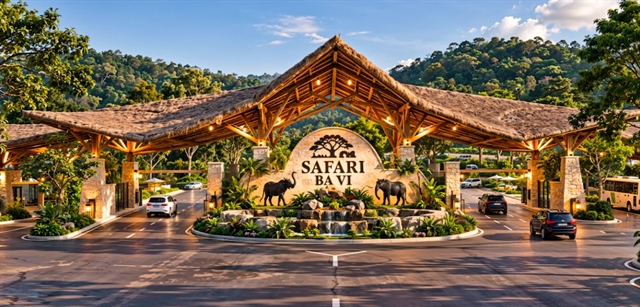
Hà Nội plans new safari park as part of major tourism push
1.
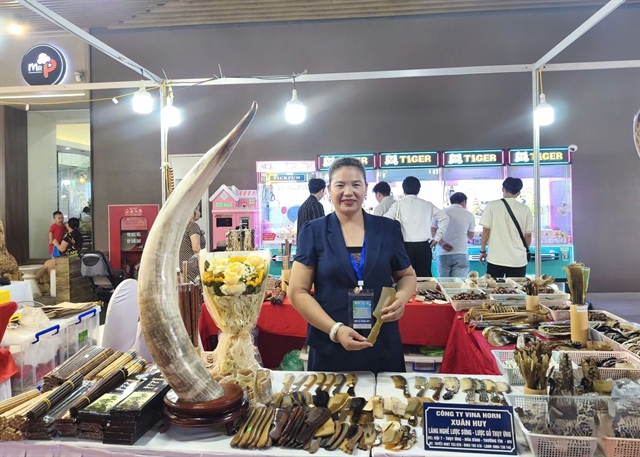 |
| Hà Nội has organised four exhibitions to showcase new and innovative handicraft products and designs. Rural industry plays an important role in the capital’s socio-economic development. — Photo moit.gov.vn |
HÀ NỘI — Hà Nội’s industrial promotion programme is shifting gears to aid rural industrial establishments. This seeks to equip them with upgraded technology and improved management capacity, plus develop products and expand markets, all with green and sustainable production goals.
Hoàng Minh Lâm, director of the Hà Nội Industrial Promotion Centre, said rural industries play important roles in the capital’s socio-economic development, with about 1,350 villages engaged in traditional trades and handicrafts.
The sector contributes to job creation, higher incomes and economic restructuring in the capital’s suburban areas, Lâm said.
Under Hà Nội’s approved industrial promotion programme for 2026-2030, science and technology, innovation, the green economy and the circular economy have been identified as key drivers of sustainable rural industrial development.
The programme focuses on supporting the adoption of advanced machinery and equipment, technology transfer, the development of outstanding rural industrial products and handicrafts, trade promotion, vocational training and management capacity building for production establishments.
According to Lâm, the Hà Nội Department of Industry and Trade works with relevant departments, agencies, local authorities and organisations each year to implement industrial promotion programmes based on the actual needs of rural industrial establishments.
Those programmes have gradually become a source of support for businesses and production establishments seeking to upgrade technology, improve product quality and expand their markets, he said.
In 2026, Hà Nội has supported 10 rural industrial establishments in investing in advanced and modern machinery and equipment. This is considered one of the measures with a direct impact on productivity, product quality and the operating efficiency of production establishments.
Hà Nội has also focused on improving business management capacity. So far this year, the city has organised 27 training courses covering business management, product design, import and export, sales, finance and related skills for more than 2,000 managers of businesses and rural industrial establishments.
Forums, conferences connecting supply and demand for raw materials, and study and experience-sharing programmes have continued to be organised to strengthen links among production establishments.
Trade promotion activities were also expanded both domestically and internationally. Hà Nội has organised four exhibitions showcasing new and creative handicraft products and designs, as well as the Hanoi City Fair of Outstanding Rural Industrial Products and the 2026 Hanoi International Handicraft and Gift Fair.
The city’s businesses and rural industrial establishments were also supported with participation at the Tokyo International Gift Show 2026 in Japan, Mega Show Part I 2026 in Hong Kong, and Vietnam Goods Week in Thailand.
In total, the trade promotion activities attracted nearly 1,200 booths from nearly 800 participating establishments and businesses, helping promote products, connect businesses and seek new markets.
Green and digital transformation
A notable feature of Hà Nội’s industrial promotion efforts is the increased integration of the programme with initiatives on energy efficiency, sustainable production and consumption, trade promotion, the 'Vietnamese people prioritise Vietnamese goods' campaign and programmes supporting businesses.
Through these efforts, rural industrial establishments are being supported in gradually adopting digital and green transformation, optimising product life cycles and improving access to distribution systems and e-commerce platforms.
Hà Nội will continue to implement industrial promotion measures more closely aligned with the actual needs of businesses and rural industrial establishments, Lâm said.
New initiatives capable of creating broader impacts and directly contributing to production, markets and competitiveness will be prioritised, he said.
The city will also promote the application of information technology, digital transformation and e-commerce, while strengthening links between industrial promotion and craft village development, tourism and business support programmes.
Hà Nội will also strengthen coordination with the Ministry of Industry and Trade, local authorities, industry associations and relevant organisations to implement inter-regional and inter-provincial industrial promotion activities. This is done in the spirit of greater international cooperation and helping rural industrial establishments access markets.
With this approach, Hà Nội expects the industrial promotion programme to continue supporting production upgrades, craft village development and stronger competitiveness for rural industrial products, contributing to the development of the capital’s suburban economy in a green and sustainable direction.
Hà Nội’s business support programmes are also being implemented in parallel with other formal bodies. The Hà Nội Investment Promotion and Business Support Centre under the Hà Nội Department of Finance, will continue to support businesses in the city in production, business operations and investment. The centre implements programmes to support SMEs and promote the development of the private sector in the city such as business incubation, start-up, digital transformation, human resource development, and business consultancy. — VNS
Economy
 Economy
 Economy
 Economy
.jpg) Economy
Economy
 Economy
 Economy
 Economy
 Economy
 Economy
 Economy
 Economy
.jpeg) Economy
Economy
 Economy
 Economy