 Economy


Vietnamese writer, illustrator nominated for 2028 Hans Christian Andersen Award
1.
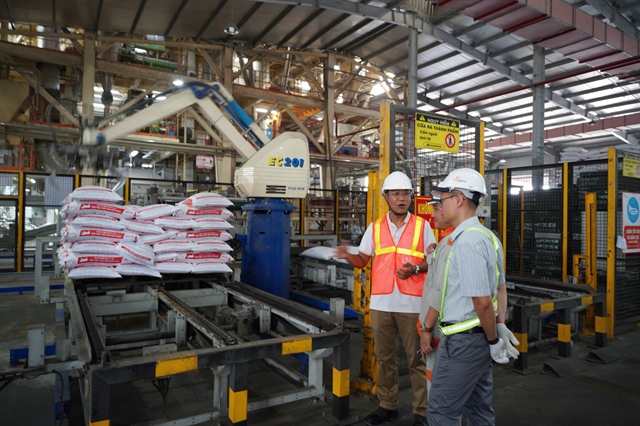 |
| Workers at a feed mill of Japfa Vietnam in Phú Thọ Province. — VNS Photos Thanh Hải |
PHÚ THỌ — As Việt Nam's livestock industry accelerates its transition towards professionalism, biosecurity and sustainability, Japfa Comfeed Vietnam Limited Company (Japfa Vietnam) continues to invest in management systems, technology and contract farming models to optimise efficiency across its entire value chain.
With biosecurity, product quality, workplace safety and environmental responsibility as its foundations, the company is steadily strengthening its integrated Feed-Farm-Food closed-loop model. This approach creates greater value for farmers while delivering safe, high-quality products to consumers.
Building an EHS culture for a safe and sustainable workplace
As part of a transformation strategy launched in 2024, which focuses on comprehensively restructuring operations to adapt to market changes and support sustainable growth, Japfa Vietnam has identified the development of a safe, healthy and sustainable working environment as a key priority.
Building on this foundation, the company has systematically strengthened its Environment, Health and Safety (EHS) management system, embedding EHS standards into daily operations across its nationwide network of feed mills and business units.
According to Nguyễn Văn Quốc Cường, EHS Manager at Japfa Vietnam, the system is built on four pillars: leadership commitment, risk assessment and control, legal compliance, and continuous improvement. These pillars foster a proactive safety culture where every employee plays an active role in identifying and mitigating workplace hazards.
To support this, the company focuses on hazard identification and risk control while stepping up training, emergency response preparedness, and employee safety education. Occupational health, workplace safety and risk prevention are integrated into day-to-day operations to create a safer and more proactive working environment.
At its feed mills, the company has implemented the 6S programme to create a more systematic, organised and safe working environment.
Reflecting on its practical impact, Trần Thị Anh, Warehouse Assistant Manager at Japfa’s Phú Thọ Factory, shared that 6S not only helps maintain a clean workplace but also contributes to standardising processes, raising employee awareness, and facilitating the early detection of potential safety hazards.
“By integrating risk management, environmental protection, occupational health, and operational efficiency, we are building a comprehensive, long-term EHS system. Human safety, environmental responsibility and operational efficiency need to go hand in hand - meeting safety and environmental requirements while supporting the company’s sustainable development goals”, Cường emphasised.
Partnering with farmers to develop sustainable coloured chicken farming
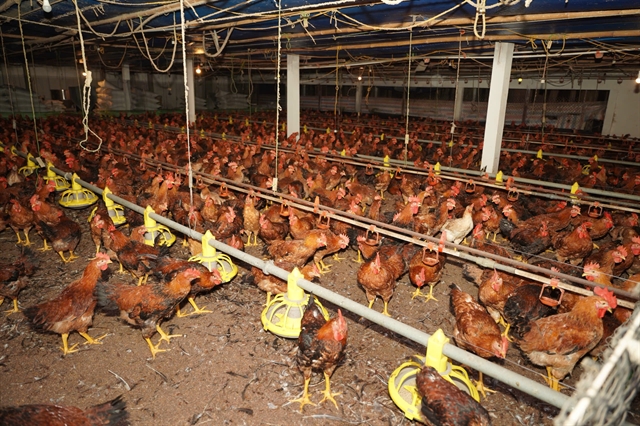 |
| A coloured chicken farm in Bất Bạt Commune, Hà Nội. — VNS Photos Thanh Hải |
Alongside investments in and upgrades to its production infrastructure, Japfa Vietnam is expanding its contract farming model for coloured chickens, fostering close partnerships with local farmers. The company currently works with nearly 700 farming households nationwide, supplying over 40 million commercial-coloured chickens to the market each year.
The model combines the suitability of local chicken breeds with the genetic strengths of imported breeds to produce coloured chickens with good health, high uniformity, flavourful meat and an appealing appearance, meeting consumer preferences and demand in different local markets.
Through a modern closed-house farming system, partner households receive comprehensive support from Japfa, including day-old chicks, feed, technical guidance, and husbandry protocols. Strict environmental and biosecurity controls help improve livability rates, flock quality, and overall production efficiency.
Importantly, the company’s product off-take policy enables farmers to plan production more proactively, reduce risks arising from market fluctuations and invest in expanding their flocks with greater confidence.
As a result, the partnership between the company and farmers goes beyond the provision of production inputs, moving towards long-term collaboration and shared value across the production chain.
Beyond its economic returns, the partnership also contributes to job creation and the transfer of advanced farming techniques and technologies, while helping partner households strengthen their production capacity and increase their income.
Through these efforts, Japfa Vietnam is gradually contributing to more stable and sustainable livelihoods for farmers and supporting the development of local livestock farming.— VNS
Economy
 Economy
 Economy
 Economy
 Economy
 Economy
 Economy
 Economy
 Economy
 Economy
 Economy
 Economy
 Economy
 Economy
 Economy