 Economy


General Secretary and President Tô Lâm witnesses exchange of Việt Nam-Denmark cooperation agreements
1.
|
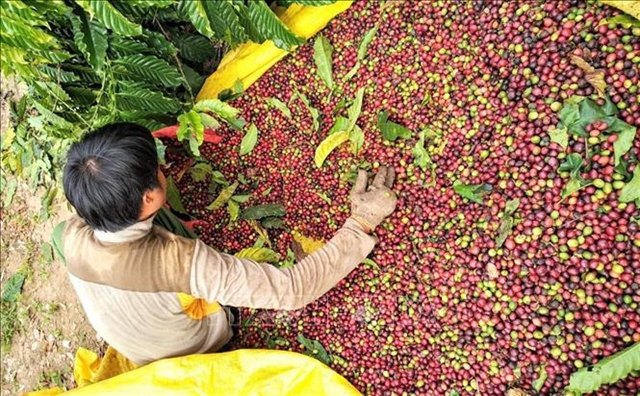
| Việt Nam's coffee industry expects stronger export growth in the second half of 2026, driven by increased investment in deep processing and the competitive advantage of complying with the EU Deforestation Regulation. — VNA/VNS Photo |
HCM CITY — Despite weaker export earnings in the first half of the year as global coffee prices retreated from last year's highs, Việt Nam remains optimistic about achieving around US$9 billion in exports in 2026, supported by higher production, growing investments in value-added processing, and the advantages from complying with the European Union Deforestation Regulation.
According to the Agency of Foreign Trade, Việt Nam exported 1.05 million tonnes of coffee worth $4.81 billion in the first six months of the year, up 7.4 per cent in volume but down 13.8 per cent in value compared to the same period last year.
Nguyễn Nam Hải, chairman of the Vietnam Coffee and Cocoa Association (VICOFA), said the earnings fell sharply because of plunging coffee prices after the prices of the past three years encouraged farmers in many countries to expand cultivation, causing supply to recover strongly.
The 2026-27 global crop is expected to be around 189 million bags, while consumption is projected at 179 million bags, leaving a surplus of around 10 million bags and creating downward pressure on prices.
But Hải said there were several factors that could support the market in the months ahead.
Heavy rainfall had slowed the harvest in Brazil, temporarily limiting supply from reaching the market, and weather forecasts suggested El Niño could return in late 2026 and continue into 2027, potentially affecting flowering and reducing production not only in Brazil but also in major Asian producers such as Việt Nam, Indonesia, and India, he said.
But coffee prices were increasingly influenced by speculators, he said, pointing to the large daily price swings on both the robusta and Arabica exchanges, which cause volatility.
“Prices can rise by more than US$320 per tonne in one trading session and then fall sharply over the following days," he said.
Despite the uncertain market environment, VICOFA expects Việt Nam's coffee production to increase by 8-10 per cent this year. Based on forecasts from local authorities and businesses, the industry is targeting approximately $9 billion in exports this year compared to the record $8.92 billion in 2025.
Hải said prospects for the second half of the year would depend largely on increasing the share of processed coffee products, which generate significantly higher value than exports of raw beans.
Now 91.7 per cent of the country’s coffee exports are still green coffee beans, while instant coffee and other value-added products account for only 8.3 per cent of export volume, though they account for 17 per cent of earnings.
He told Việt Nam News: "This demonstrates the significant value-added potential of deep processing. Increasing the proportion of processed products will substantially improve export value."
According to Hải, many Vietnamese coffee companies have recognised the growing opportunities in products such as instant coffee, roasted coffee, and blended coffee as consumer demand expands in both traditional and emerging markets.
China has become one of the most promising destinations for these products.
Demand for instant and roasted coffee has been rising rapidly among Chinese consumers, particularly younger generations, creating new export opportunities for Vietnamese producers.
Many Vietnamese processors have already secured export orders to China through December 2026, while others are struggling to meet the demand because their processing capacity has reached its limits.
So, domestic coffee enterprises have accelerated investment in new processing facilities while expanding existing production lines to increase output of higher-value products.
Hải said this trend would play an increasingly important role in improving Việt Nam's export structure over the coming years.
|
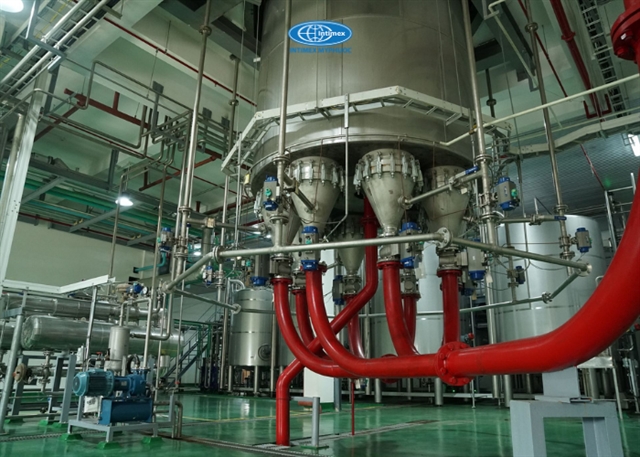
| An instant coffee processing plant in HCM City. — Photo courtesy of Intimex Group |
Besides expanding processed coffee exports, Hải said Việt Nam's classification by the EU as a low-risk country under the EU Deforestation Regulation (EUDR), enabling EU importers to apply simplified due diligence requirements, would provide a significant competitive advantage for Vietnamese exporters.
Europe is currently the largest market for Vietnamese coffee, accounting for about 55 per cent of export volumes, with the 27 EU member states accounting for over 45 per cent.
Since EUDR was introduced in 2023, the Ministry of Agriculture and Environment has established a roadmap to help local authorities and businesses prepare for its implementation.
Hải said: "The EU has classified Việt Nam as one of the countries with the lowest EUDR risk. Foreign buyers are actively purchasing EUDR-compliant Vietnamese coffee at a premium of about $50 per tonne over conventional coffee. This gives Việt Nam a significant competitive advantage in boosting export value."
But he acknowledged that challenges remained.
Only 35-40 per cent of Việt Nam's coffee-growing areas fully meet EUDR traceability requirements, meaning further efforts are needed to expand compliant production areas, according to Hải.
He also stressed the need to strengthen the international branding of Vietnamese coffee.
Although Việt Nam is the world's second largest coffee producer and exporter, the quality and value of its coffee, particularly robusta, have yet to gain the recognition they deserve in global markets. — VNS
Economy
 Economy
 Economy
 Economy
 Economy
 Economy
.jpeg) Economy
Economy
 Economy
 Economy
 Economy
 Economy
 Economy
 Economy