 Economy


General Secretary and President Tô Lâm witnesses exchange of Việt Nam-Denmark cooperation agreements
1.
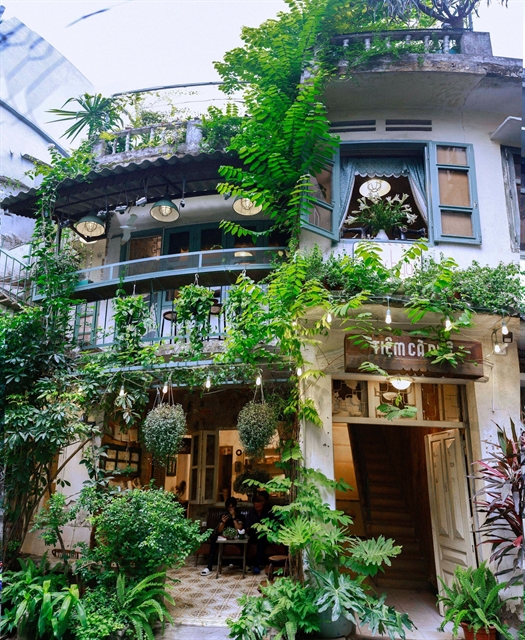 |
| A coffee shop in an alley off Hà Nội's Thái Thịnh Street. — Photo laodong.vn |
HÀ NỘI — Small eateries tucked away in Hà Nội's narrow alleys are drawing customers and benefiting from rents as much as 70 per cent lower than those at prime street-front locations, even as major restaurant chains give up costly premises amid weak consumer demand.
The contrast reflects a broader shift in the city's food and beverage sector, with businesses reassessing the value of high-visibility locations as high rents, changing shopping habits and tighter controls on sidewalk use weigh on traditional street-front outlets.
Street-front squeeze
At around 7pm, Thọ Xương Alley, less than two metres wide and a short walk from Hà Nội's St. Joseph's Cathedral, is busy with customers. A small coffee shop, tucked between densely packed buildings and accessible only through the narrow passage, can fill every table on weekends despite space and staffing constraints.
The situation is much different on some of the city's formerly sought-after commercial streets.
A 1,000-square-metre venue on Phó Đức Chính Street, taken by the Sơn Dương mountain goat restaurant chain as a flagship outlet, lost about VNĐ600 million (US$22,800) after three months, according to its owner Tống Bá Thành.
Including a forfeited deposit and unrecoverable renovation costs, the outlet's total loss exceeded VNĐ2 billion, Thành told baodautu.vn.
Thành said he chose the site partly because it was among the few premises on the street offering a large open-plan layout, although he was aware of the high rent.
The outlet lost an average of VNĐ200 million a month and closed after three months. About VNĐ600 million of the deposit was forfeited following early termination, while around VNĐ1 billion spent on kitchen renovations and electrical infrastructure could not be recovered.
Another outlet on Khuất Duy Tiến Street closed after 11 years, not primarily because of the rent but because the ageing building could not be substantially renovated. Load-bearing walls restricted changes to the layout and product displays, leaving the premises increasingly out of step with younger consumers' preferences.
Thành's chain, which had expanded to more than 10 outlets in Hà Nội and neighbouring provinces after more than a decade of operations, had six Hà Nội locations being offered for lease transfer by mid-2026, with monthly rents ranging from VNĐ35 million to VNĐ300 million.
He acknowledged that market conditions were only part of the chain's difficulties, noting that other restaurant businesses continued to operate successfully in the same environment.
Why alleyway businesses thrive
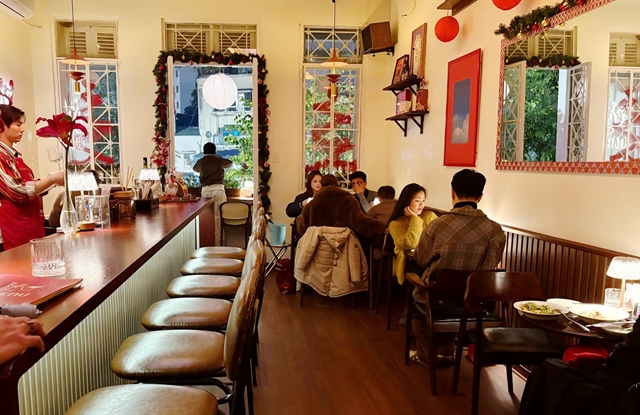 |
| A European restaurant tucked away in a narrow alley in Hà Nội's Cửa Nam Street. —Photo dantri.com.vn |
Eateries tucked away in Hà Nội's alleys are showing that lower-profile locations can offer a more sustainable business model than costly street-front premises.
Thanh Lam, a veteran of the food and beverage industry, said rents for alleyway premises can be 40-70 per cent lower than those for street-front locations, depending on the area. That has given owners more room to invest in interior design and product quality, helping build customer loyalty rather than relying on passing traffic.
Alleyway premises are also more widely available, allowing businesses to find spaces that better match their concepts and budgets. But the trade-off is a greater need to build brand recognition and attract customers deliberately, rather than depending on visibility from the street.
The experience of Hiền Chung, who runs a wonton noodle shop, illustrates the shift.
After two consecutive rent increases at her former street-front location, she faced another 30-40 per cent increase when considering a move elsewhere. She eventually relocated the business to her family's home in an alley off Minh Khai Street.
Sales fell to just 10-20 bowls a day during the first month, but Chung said she was relieved no longer to face a monthly commercial rent bill.
To make up for the lack of visibility, she put up signs at the alley entrance and enlisted her children to promote the shop on social media so customers could find it.
The shift highlights a trade-off between rent and marketing costs. While alleyway businesses save on premises, they need to invest more in digital marketing, online food delivery platforms and map-based reviews to build a customer base.
The trend also challenges a long-held belief in Hà Nội that a street-front location is almost a guarantee of strong revenue. Owners of prime properties have often preferred leaving premises vacant rather than accepting lower rents, helping keep asking prices elevated even as consumer spending patterns changed and online shopping expanded.
The result is an increasingly visible mismatch: shops remain shuttered on some of the city's busiest streets while lower-cost businesses in less prominent locations continue to attract customers.
For Hà Nội's F&B sector, the contrast suggests a shift towards more disciplined decisions on location, with businesses placing greater emphasis on cash flow and customer loyalty rather than treating a prime address as a guarantee of success.
For consumers, that could mean some of the city's popular food and drink spots become harder to find, with more successful businesses operating inside alleys rather than on main roads. — VNS
Economy
.jpg) Economy
Economy
 Economy
 Economy
 Economy
 Economy
 Economy
 Economy
 Economy
 Economy
.jpg) Economy
Economy
 Economy
 Economy