 Economy



Hà Nội adorned in red ahead of Liberation Day
1.
|
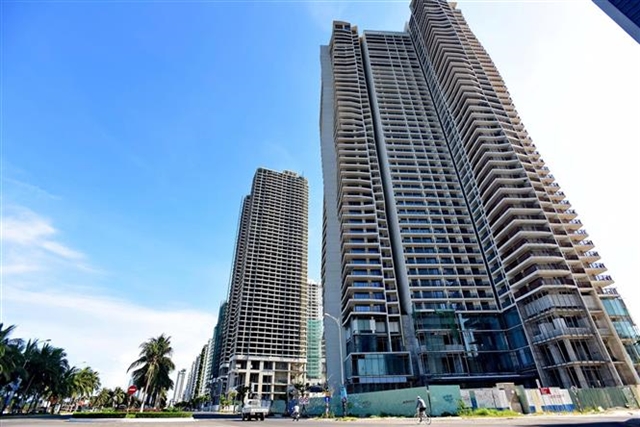
| Soleil Ánh Dương Đà Nẵng condotel and hotel project on Phạm Văn Đồng Street, An Hải Ward in Đà Nẵng City. — VNA/VNS Photo |
HÀ NỘI — More than 720 real estate firms dissolved in the first quarter of 2026, even as a surge in new entrants pointed to early signs of recovery in a market still under pressure, according to the Ministry of Construction, citing data from the National Statistics Office under the Ministry of Finance.
A total of 726 real estate companies ceased operations in the January–March period, roughly double the level recorded a year earlier. Over the same period, 1,563 new firms were established, a rise of 54.1 per cent year-on-year, indicating continued investor interest despite persistent challenges.
The ministry reported about 139,855 successful real estate transactions in the quarter, equivalent to 92.4 per cent of the previous quarter and up 3.9 per cent from a year earlier.
Apartments and individual houses accounted for 30,857 transactions, down both quarter-on-quarter and year-on-year. Land plots continued to dominate activity with 108,998 transactions, maintaining a steadier pace.
Prices remained elevated in major cities, particularly in the mid- and high-end apartment segments. High-end properties saw limited transactions due to high asking prices, suggesting a widening gap between price expectations and buyers’ capacity, which could lead to price adjustments.
The ministry said macroeconomic headwinds continued to weigh on the sector. Globally, tighter monetary policy, trade volatility and geopolitical risks have affected capital flows. Domestically, high financing costs, an unsettled corporate bond market and mounting financial pressure have constrained developers’ ability to implement projects.
However, recent improvements to the legal framework have begun to ease longstanding bottlenecks, helping to unlock stalled projects and support new supply.
The Government has issued a series of resolutions and directives aimed at stabilising the market, focusing on legal reviews of projects, promoting social housing, improving access to credit alongside risk controls and enhancing transparency. These measures are expected to gradually restore stability and support more sustainable growth. — BIZHUB/VNS
Economy
 Economy
 Economy
 Economy
 Economy
 Economy
 Economy
 Economy
 Economy
 Economy
 Economy
 Economy
 Economy
 Economy
 Economy