 Politics & Law
Top Vietnamese leader highlights new horizon for Việt Nam–Denmark cooperation
1.
|
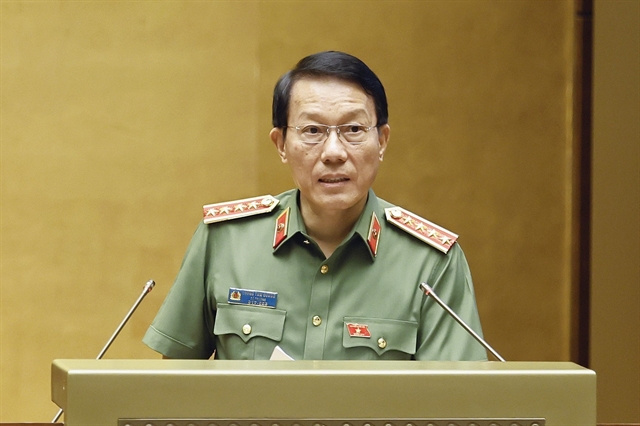
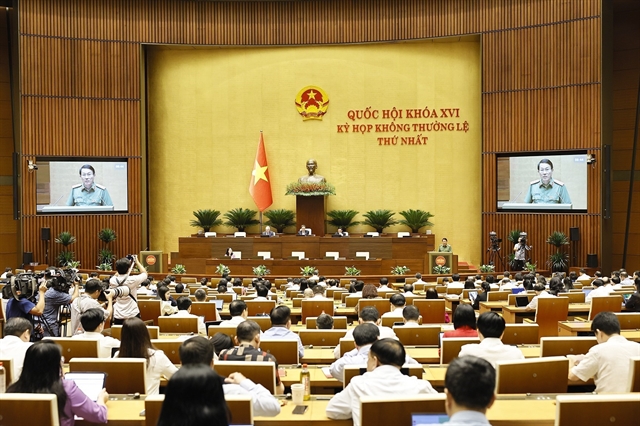
| Minister of Public Security General Lương Tam Quang presents a summary of the Government’s submission on the draft revised Penal Code in Hà Nội on Thursday. — VNA/VNS Photo Doãn Tấn |
HÀ NỘI — The Government has proposed retaining the death penalty for only four offences: treason, murder, terrorism and illegal production of narcotics instead of the current 10.
The move is being made to narrow the scope of the country’s harshest punishment in line with progressive legislative trends.
The proposal was put forward on Thursday morning by Minister of Public Security General Lương Tam Quang, who, authorised by the Prime Minister, presented a summary of the Government’s submission on the draft revised Penal Code as the National Assembly continued its first extraordinary session.
Quang said the revision was based on important Party resolutions, conclusions and directives, particularly those concerning judicial reform, building a socialist rule-of-law State, reforming lawmaking and enforcement, fighting crime, corruption, wastefulness and misconduct, and gradually narrowing the scope of the death penalty.
“Narrowing the scope institutionalises the Party’s policy, is in line with progressive legislative trends, and enhances Việt Nam’s position in international cooperation on criminal justice, extradition and mutual legal assistance,” he said.
The current Penal Code provides for the death penalty as the highest sentence for 10 offences.
The Government has proposed abolishing the death penalty for six offences: rioting; rape of a person under 16; illegal trading in narcotic substances; crimes against humanity; war crimes; and terrorism aimed at opposing the people’s administration, which is expected to be merged with the offence of terrorism.
Other proposed amendments
In addition to provisions concerning the death penalty, the draft revised Penal Code proposes doubling fines and the monetary thresholds used to determine criminal liability and sentencing brackets for various offences.
The draft would expand the application of non-custodial reform in the basic sentencing framework for 10 offences.
Another new provision highlighted by Quang concerns organised crime, including a new offence of establishing or participating in an organised criminal group.
The draft adds nine new offences, focusing on areas including economic management, cybersecurity, high technology, the environment, public safety and the proliferation of weapons of mass destruction.
It would also add new objective elements to existing offences, particularly those involving information technology, telecommunications networks, the economy, trade and intellectual property, in an effort to close gaps in criminal law, prevent criminals from escaping prosecution, meet the requirements of deeper international integration and strengthen crime prevention and control under new circumstances.
Quang also said the draft would also broaden the scope of exemptions from criminal liability in the research, testing and application of new technologies.
It proposes expanding such exemptions to cover controlled testing of new technologies, processes, solutions, products, services and business models in technological development and innovation.
The draft would also broaden exemptions from criminal liability in the performance of national defence and security duties and in crime prevention and control by the armed forces.
The Government has proposed that the National Assembly consider and give opinions on the draft Code during the first extraordinary session and adopt it at the legislature's second session in October 2026. The Code is expected to take effect on March 1, 2027.
Scrutiny body urges caution
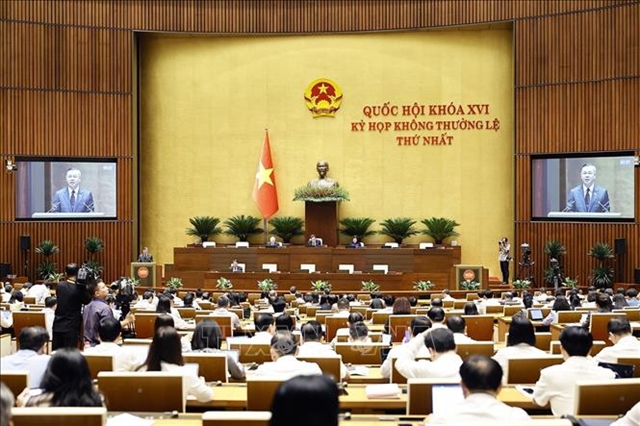
Presenting the appraisal report, Phan Chí Hiếu, Chairman of the National Assembly’s Committee on Legal and Judicial Affairs, said the committee agreed on the need to fundamentally and comprehensively revise the Penal Code.
The appraisal body also supported provisions allowing the temporary suspension of criminal prosecution and exemption from criminal liability for certain violations causing economic losses when the actions are carried out for socio-economic development or national defence and security purposes, involve no corruption and generate socio-economic benefits for localities or the country.
However, the committee called for a review of relevant areas to clearly identify which offences would be eligible for the proposed leniency policy.
The appraisal body also said the policy should not apply to all types of offences. Particular care must be taken to prevent progressive criminal justice policies from being exploited to legitimise economic violations.
Regarding the narrowing of the scope of the death penalty, Hiếu said the committee supported the continued reduction in the number of offences punishable by death.
However, many committee members called for careful consideration of the proposal to abolish the death penalty for four offences: illegal drug trafficking, rape of a person under 16, crimes against humanity, and war crimes.
Hiếu stressed that the issue should be carefully assessed to avoid undermining the deterrent and preventive effectiveness of criminal law and its enforcement.
“This is aimed at avoiding adverse impacts on the effectiveness of crimedeterrence, prevention and handling, and must be considered in relation to the dangerous nature of the offences and the effectiveness of the overall measures to prevent and combat particularly serious crimes,” Hiếu said. — VNS
Politics & Law
 Politics & Law
 Politics & Law
 Politics & Law
 Politics & Law
 Politics & Law
 Politics & Law
 Politics & Law
 Politics & Law
 Politics & Law
 Politics & Law
 Politics & Law
 Politics & Law
 Politics & Law
 Politics & Law