 Politics & Law
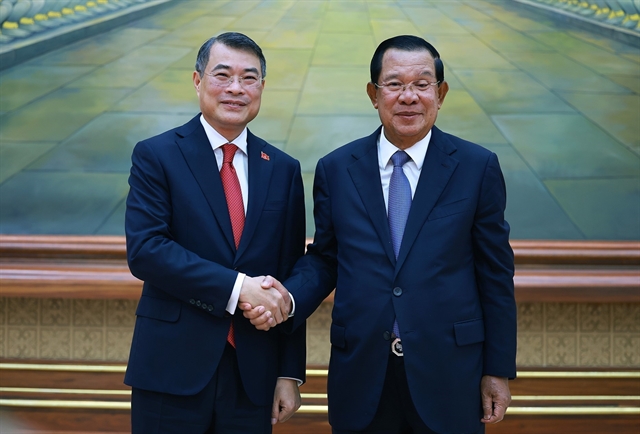
PM Hưng meets with Cambodian People's Party, Senate leader Hun Sen
1.
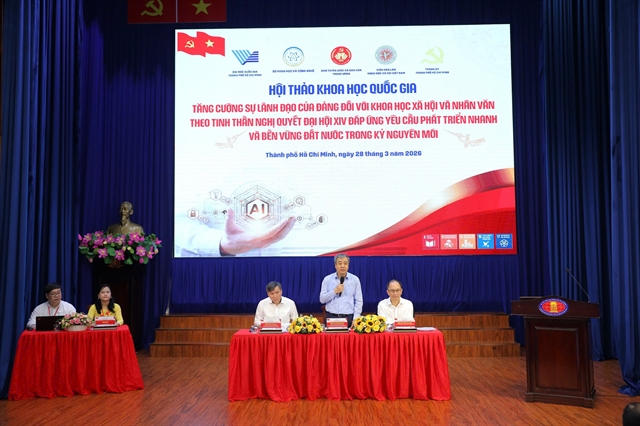 |
| Ngô Đông Hải, deputy head of the Party Central Committee’s Commission for Information, Education and Mass Mobilisation, speaks at the national symposium on social sciences and humanities in HCM City on March 28. — Photos Courtesy of VNU-HCM |
HCM CITY — Strengthening institutional and policy frameworks is key to unlocking the full potential of social sciences and humanities within Việt Nam’s national knowledge system and supporting the country’s rapid and sustainable development in the new era, Ngô Đông Hải, deputy head of the Party Central Committee’s Commission for Information, Education and Mass Mobilisation, said at a national symposium in Hồ Chí Minh City on March 28.
The conference, themed “Strengthening the Party’s leadership over social sciences and humanities in line with the Resolution of the 14th National Party Congress to meet the requirements of rapid and sustainable national development in the new era,” took place at the University of Social Sciences and Humanities under Việt Nam National University-HCM City (VNU-HCM).
The event was jointly organised by the Party Central Committee’s Commission for Information, Education and Mass Mobilisation, the Ministry of Science and Technology, the Vietnam Academy of Social Sciences, the HCM City Party Committee and VNU-HCM to implement the Resolution of the 14th National Party Congress and Politburo Resolution No. 57-NQ/TW issued on December 22, 2024, on science and techonology development.
Hải emphasised that social sciences and humanities play a crucial role in shaping policies, strengthening ideological foundations and providing scientific evidence for national development, adding that mechanisms and policies should continue to be refined to fully unlock the sector’s potential in the national innovation and digital transformation ecosystem.
The conference attracted hundreds of participants, including leaders, policymakers, scientists and experts from ministries, research institutes, universities and businesses, with more than 80 scientific papers presented.
Speaking at the opening session, Professor Nguyễn Thị Thanh Mai, chancellor of VNU-HCM, highlighted the foundational role of social sciences and humanities in explaining social issues, forecasting development trends and directly contributing to policy-making, cultural development and ideological consolidation.
“In the context of rapid technological advancement, innovation and digital transformation, the sector needs to be repositioned through interdisciplinary research, stronger connections with real-world data and closer engagement with national development priorities.”
Professor Lê Văn Lợi, President of the Vietnam Academy of Social Sciences, said investment in social sciences and humanities remains modest compared to their strategic role.
He called for increased funding, greater mobilisation of social resources and the development of national basic survey databases to strengthen research and policy advisory capacity.
“It is essential to build a digital data ecosystem for social sciences and humanities, including open research databases and artificial intelligence-powered analytical tools to enhance forecasting and strategic consultation,” he said.
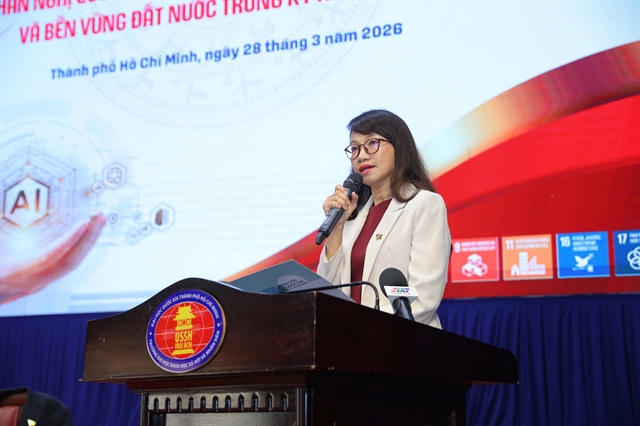 |
| Professor Nguyễn Thị Thanh Mai, chancellor of Vietnam National University-HCM City, delivers the opening speech at the national scientific conference on social sciences and humanities in HCM City on March 28. |
Professor Tạ Ngọc Tấn, former director of the Hồ Chí Minh National Academy of Politics and former permanent vice chairman of the Central Theoretical Council, emphasised the need to strengthen the Party’s leadership over social sciences and humanities in the context of innovation and digital transformation.
“The field must play a more active role in providing theoretical and practical foundations for national development strategies.”
Discussions also focused on the rapid development of artificial intelligence, with experts highlighting the role of social sciences and humanities in addressing ethical, cultural and legal issues, building value frameworks and improving institutions to ensure responsible and sustainable technological development.
Participants pointed out limitations in funding, management mechanisms, research coordination and the development of strong think tanks, and proposed solutions to build strategic advisory research groups closely linked with policy-making agencies, businesses and local authorities.
Key recommendations included improving institutional and policy frameworks, reforming leadership and management methods, developing high-quality human resources, accelerating digital transformation in research and strengthening international cooperation and linkages.
Concluding the event, Hải said recommendations from the conference would be compiled and submitted to central authorities to support future policy-making and implementation in line with the Resolution of the 14th National Party Congress. — VNS
Politics & Law
 Politics & Law
 Politics & Law
 Politics & Law
 Politics & Law
 Politics & Law
 Politics & Law
 Politics & Law
 Politics & Law
 Politics & Law
 Politics & Law
 Politics & Law
 Politics & Law
 Politics & Law
 Politics & Law